The Simple Trick for Perfectly Peeled Hard-Boiled Eggs Every Time
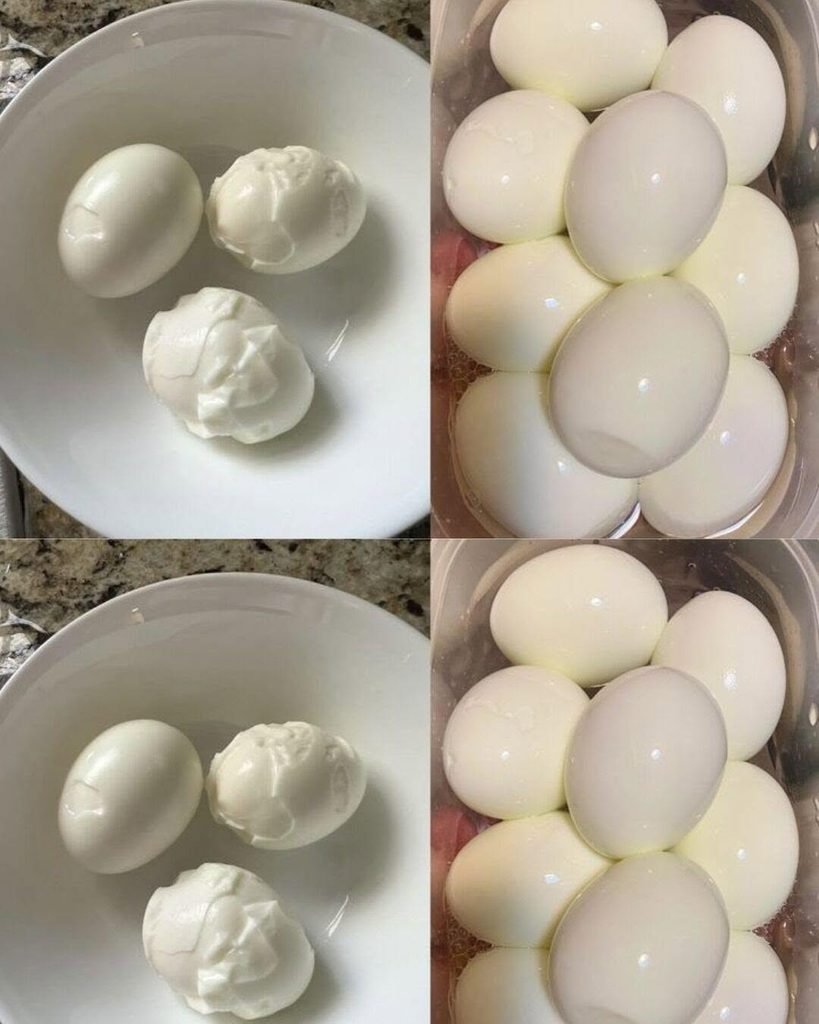
Few kitchen tasks are more frustrating than peeling a hard-boiled egg and watching half the white come away with the shell.
You start with what looks like a perfectly cooked egg, tap it against the counter, peel away a little shell, and suddenly the surface looks rough, torn, and uneven.
Sometimes the shell practically falls off. Other times, it seems glued to the egg.
So what is the secret?
There are several factors that make peeling easier, but one of the most useful things to understand is that the age of the egg, the cooking method, and the cooling process all matter.
The good news is that you don’t need an expensive gadget or complicated technique.
With the right approach, you can make hard-boiled eggs that are much easier to peel and have a smoother, cleaner surface.
Why Are Some Eggs So Difficult to Peel?
The main reason has to do with the relationship between the egg white, the membranes underneath the shell, and the freshness of the egg.
A fresh egg has a relatively low pH in its albumen, or egg white. As the egg gets older, carbon dioxide gradually escapes through the shell, causing the pH of the egg white to increase.
That change can affect how strongly the egg white adheres to the inner membrane.
As a result, very fresh eggs can sometimes be harder to peel cleanly after boiling.
This is one reason cooks who regularly prepare hard-boiled eggs often prefer eggs that have been stored for a while rather than eggs that were just purchased.
That doesn’t mean old or spoiled eggs should be used.
The eggs should still be properly refrigerated and within their safe period.
The point is simply that an extremely fresh egg isn’t always the easiest egg to peel.
The Most Reliable Method
If your goal is a smooth, attractive hard-boiled egg, try this general method:
Start with refrigerated eggs.
Bring water to a boil.
Carefully lower the eggs into the hot water.
Cook until the yolks reach the level of doneness you want.
Immediately transfer the eggs to very cold water.
Let them cool thoroughly.
Crack the shell all over.
Roll the egg gently to loosen the shell.
Begin peeling from the wider end.
Peel under a little running water if necessary.
The combination of cooking in already-hot water and rapid cooling afterward can make the eggs easier to peel.
Why Starting in Boiling Water Can Help
There are several ways to cook hard-boiled eggs.
Some people place cold eggs into cold water and then bring everything to a boil.
Others heat the water first and then carefully add the eggs.
Starting with already-boiling water can make the cooking process more predictable and, according to research on egg peeling, can produce eggs that are easier to peel than some cold-start methods.
However, dropping cold eggs directly into boiling water can cause cracking.
The solution is to lower them carefully with a spoon or another suitable utensil.
If your eggs are particularly cold, handle them gently.
The Ice Bath Is More Important Than Many People Realize
Once the eggs are cooked, don’t leave them sitting in the hot water.
Immediately transfer them to a bowl of very cold water.
Adding ice can make the water especially cold.
Why does this help?
First, it rapidly stops the cooking process.
Without rapid cooling, the eggs can continue cooking from residual heat, which can lead to overcooked whites or yolks.
Second, rapid cooling causes the egg to contract slightly.
That can help create a small separation between the cooked egg and the inner shell membrane.
It doesn’t guarantee a perfect peel every single time, but it can make the process considerably easier.
How Long Should Eggs Stay in the Ice Bath?
Give them enough time to become thoroughly chilled.
Around 10 to 15 minutes is a practical starting point.
If you’re preparing a large batch, make sure there is enough cold water surrounding the eggs.
If the water becomes warm quickly, adding more ice can help maintain the temperature.
The goal isn’t simply to cool the outside of the shell.
You want the egg itself to become cold.
The Wider End Has a Secret Advantage
Take a look at a raw egg.
One end is usually more rounded and wider than the other.
That’s the end you want to start peeling from.
There is an air cell between the shell membranes at the wider end of the egg.
Once you crack the shell there, you may find it easier to get your fingers underneath the membrane and begin removing the shell.
This tiny air pocket can give you a convenient starting point.
Instead of trying to pick away tiny pieces of shell from the narrow end, start at the wider end and work outward.