Swish This Mixture in Your Mouth to Remove Coffee and Tea Stains? What You Should Know
Coffee and tea are among the most common causes of tooth discoloration. Over time, their pigments can leave teeth looking yellow, brown, or dull, especially when they are consumed regularly.
That is why viral posts promising a simple homemade mouth rinse that can “erase coffee stains” are so appealing.
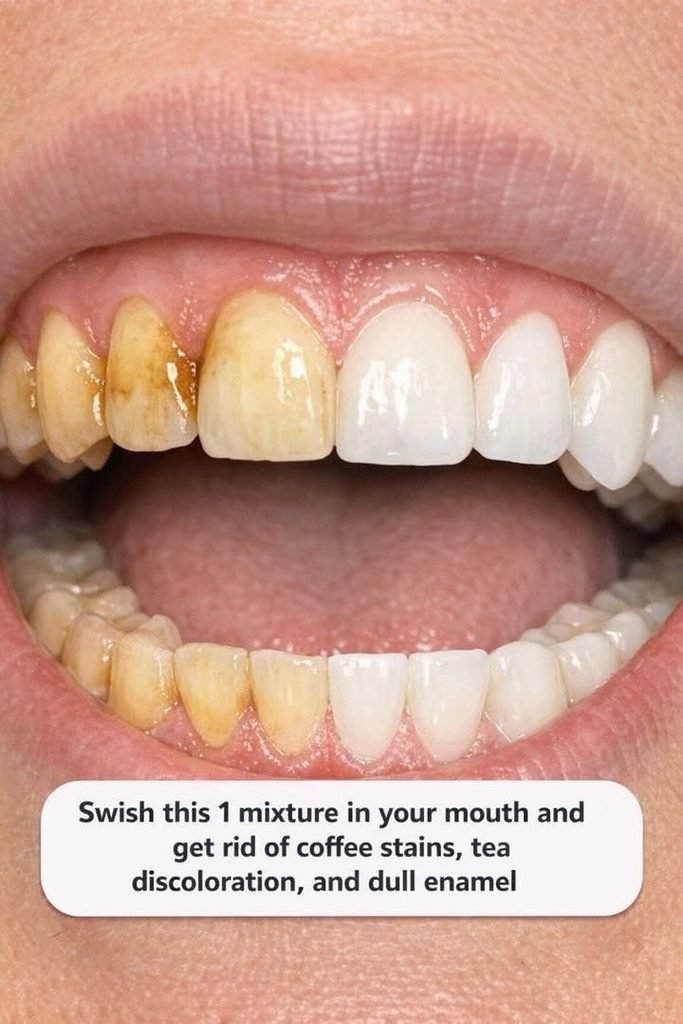
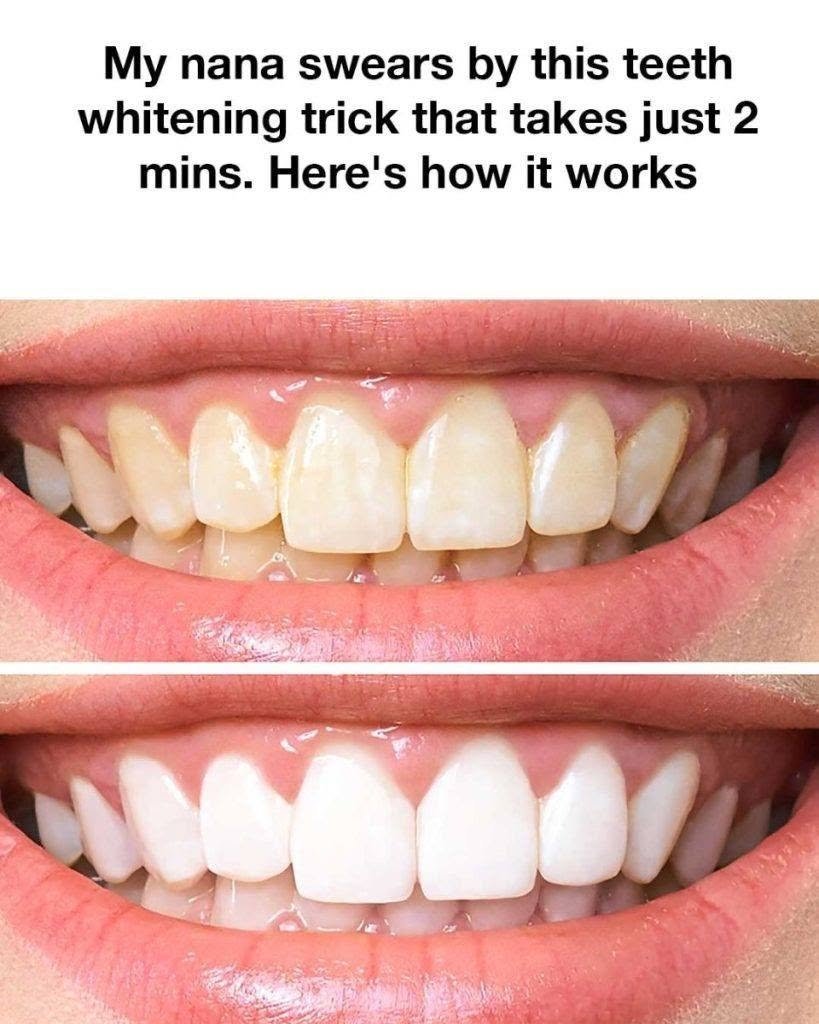
The image shows a dramatic before-and-after style comparison, with one side of the teeth appearing significantly more yellow than the other. The accompanying message claims that one mixture can remove coffee stains, tea discoloration, and restore dull enamel.
There is an important problem with this claim: the image does not identify the mixture or provide enough information to establish that the result is genuine.
More importantly, not every homemade mouth rinse is safe for teeth and gums.
Some ingredients commonly promoted online can irritate the mouth, damage enamel, or create other problems when used too frequently.
The good news is that there are safer and more reliable ways to reduce staining and maintain a naturally brighter smile.
Why Do Coffee and Tea Stain Teeth?
Coffee and tea contain compounds called chromogens and tannins that can contribute to tooth discoloration.
These compounds can attach to or interact with the outer surface of teeth.
Tea can be particularly noticeable because certain teas contain substantial amounts of tannins.
Coffee can also gradually contribute to surface staining when consumed frequently.
The staining doesn’t necessarily mean that the teeth are unhealthy.
A person can have healthy teeth that are naturally yellowish or that have developed surface stains from years of consuming coffee or tea.
Not All Yellow Teeth Are Stained
This is an important distinction.
Natural tooth color varies considerably from person to person.
Teeth are not naturally pure white.
The outer enamel is relatively translucent, and the underlying dentin has a naturally yellowish color.
As enamel becomes thinner with age, more of the underlying dentin can become visible.
This means that some yellowing isn’t something that can simply be “washed away.”
If the discoloration comes from inside the tooth rather than surface staining, a homemade rinse is unlikely to solve the problem.
What Is the Difference Between Surface Stains and Internal Discoloration?
Surface Stains
These occur on or near the outside of the tooth.
Common contributors include:
Coffee
Tea
Tobacco
Certain foods
Some beverages
Plaque buildup
Poor oral hygiene
Professional cleaning and appropriate whitening methods can sometimes improve this type of discoloration.
Internal Discoloration
This occurs deeper within the tooth.
It can be associated with:
Aging
Certain medications
Dental trauma
Changes that occurred while teeth were developing
Natural tooth color
Certain dental conditions
Internal discoloration may require professional treatment rather than a simple mouth rinse.
Can a Homemade Mixture Whiten Teeth?
That depends entirely on the ingredients.
Some substances can temporarily make teeth appear cleaner by removing surface debris.
Others may actually damage the tooth surface.
The fact that something is found in a kitchen doesn’t make it appropriate for regular dental use.
This is particularly important because tooth enamel does not grow back once it has been permanently lost.
A whitening method that produces a short-term visual improvement but damages enamel is not a good trade-off.
Be Careful With Lemon or Other Acidic Ingredients
One common online whitening trick involves lemon juice or other acidic substances.
Acids can temporarily make teeth appear different by interacting with deposits on the tooth surface, but repeated acid exposure can contribute to dental erosion.
Dental erosion is different from ordinary staining.
Instead of merely removing a stain, acid can gradually wear away tooth structure.
This may lead to:
Increased sensitivity
Greater visibility of the underlying dentin
Changes in tooth shape
Rougher tooth surfaces
Increased vulnerability to further damage
Using an acidic liquid as a daily mouth rinse is therefore not a good whitening strategy.
What About Vinegar?
Vinegar is another ingredient frequently promoted in homemade dental recipes.
Although vinegar is useful in cooking and household applications, it is acidic.
Regularly exposing teeth to acidic liquids can contribute to enamel erosion.
There is no need to use vinegar as a mouthwash simply because a social-media post claims that it removes stains.
The risk is particularly concerning when acidic products are used repeatedly or held in the mouth for extended periods.
What About Baking Soda?
Baking soda is different from strong acids.
It is mildly abrasive and alkaline and is included in some commercial toothpastes.
However, there is a major difference between a professionally formulated toothpaste containing controlled amounts of baking soda and repeatedly swishing or scrubbing the teeth with homemade mixtures.
Using excessive amounts or aggressively rubbing baking soda against the teeth can be unnecessarily abrasive.
If you want the benefits of baking soda for stain removal, a properly formulated toothpaste is a safer and more predictable approach.
What About Hydrogen Peroxide?
Hydrogen peroxide is used in some professionally formulated whitening products.
That does not mean that any concentration of hydrogen peroxide is safe to use as a homemade mouth rinse.
Concentration, exposure time, frequency, formulation, and individual oral health all matter.
Improper use can cause irritation of the gums and soft tissues and can increase tooth sensitivity.
If you want peroxide-based whitening, a dental product specifically designed for oral use is preferable to experimenting with concentrated household products.