If You Have This Plant in Your House, Here’s What You Should Know About It
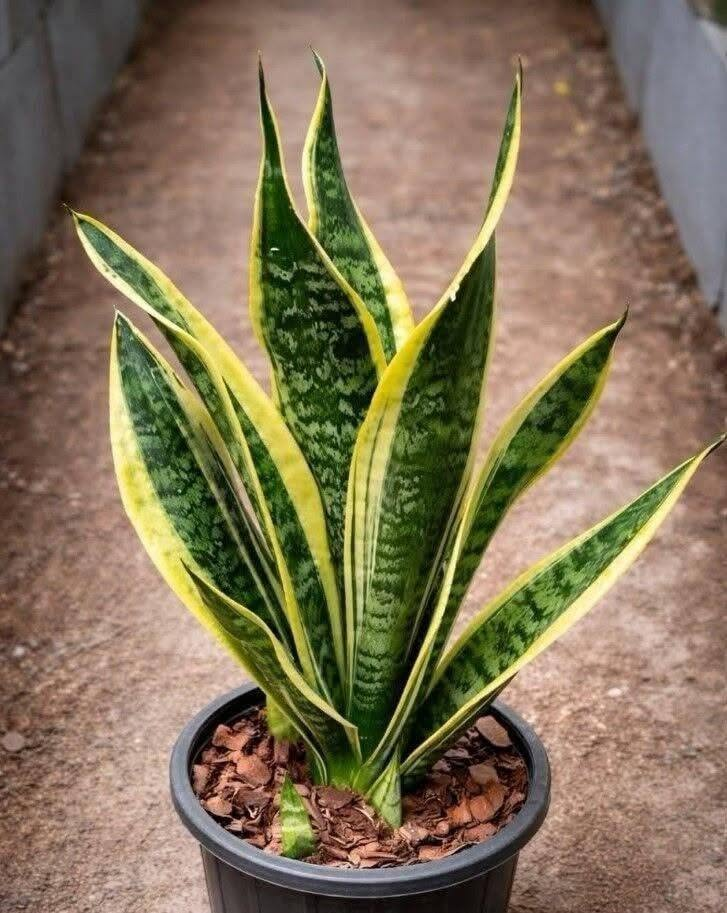
The plant in the photograph is a snake plant, commonly known as Sansevieria and now botanically classified as Dracaena trifasciata. The variety shown has tall, upright green leaves with distinctive yellow edges.
It is one of the most popular indoor plants in the world because it is attractive, long-lived, and relatively easy to care for.
Viral posts often say that having a snake plant in your home means you have a “natural air purifier,” a plant that brings luck, removes toxins, produces oxygen at night, or provides numerous other special benefits.
Some of these claims have a small basis in plant biology, while others are greatly exaggerated.
The real story is actually more interesting.
Why Is the Snake Plant So Popular?
Snake plants are remarkably adaptable.
They can tolerate periods of dry soil, relatively low indoor light, and occasional neglect better than many other houseplants.
Their upright growth also makes them convenient for homes where space is limited.
Instead of spreading widely across a table, the leaves grow upward, creating a tall architectural appearance.
The yellow-edged variety in the photograph is particularly attractive because the bright margins contrast with the dark green center of the leaves.
It Can Live for Many Years
One of the most appealing things about a snake plant is its longevity.
With appropriate care, a snake plant can remain in a home for many years.
It may gradually produce new shoots from the base, eventually forming a larger cluster.
That means a small plant purchased in a relatively small pot can eventually become a substantial indoor plant.
However, long life doesn’t mean that the plant can survive absolutely anything.
The biggest threat is often excessive watering.
The Number-One Mistake: Too Much Water
Snake plants have thick leaves that store water.
This allows them to tolerate dry periods.
Because of this adaptation, they don’t need to be watered as frequently as many tropical houseplants.
A common mistake is treating the plant as though it needs water every few days.
If the soil remains constantly wet, the roots may become damaged.
Once root problems develop, the leaves can become soft, yellow, or unstable.
How to Water a Snake Plant
Don’t rely solely on a calendar.
Instead, check the soil.
Push a finger into the upper portion of the potting mix.
If the soil is still noticeably damp, wait.
If it has dried substantially, the plant may be ready for water.
When you do water it, water thoroughly enough to moisten the root area, then allow excess water to drain away.
Never leave the pot sitting in a tray of stagnant water for long periods.
Light: Low Light Doesn’t Mean No Light
Snake plants are famous for tolerating low-light conditions.
That’s true, but there’s an important distinction.
A plant can survive in low light without necessarily growing quickly or looking its best.
For healthier growth, give it bright, indirect light when possible.
A location near a bright window can work very well.
If the plant has been kept in a very dark corner, moving it gradually toward brighter light can encourage stronger growth.
Avoid suddenly placing a plant that has adapted to darkness under intense direct sunlight, because the leaves may become scorched.
Does the Snake Plant Purify the Air?
This is one of the most common claims associated with the plant.
You may see posts saying that snake plants remove dangerous chemicals from your home and dramatically improve indoor air quality.
There is some scientific background behind the idea that plants can absorb certain gases under particular conditions.
However, viral posts often take laboratory findings and present them as though placing a few plants around a normal home will replace ventilation or air filtration.
That’s not realistic.
A houseplant should not be considered a substitute for:
fresh-air ventilation
proper filtration
reducing smoke
controlling indoor pollutants
fixing mold or moisture problems
maintaining heating and cooling equipment
The snake plant is still a wonderful indoor plant, but its greatest benefit for most people is that it is beautiful and easy to maintain.