Purple Deadnettle (Lamium purpureum): A Hidden Gem of Medicinal and Practical Uses
Purple deadnettle, scientifically known as Lamium purpureum, is a small wild plant that many people walk past without noticing. It often grows in gardens, lawns, fields, roadsides, and disturbed areas, especially during cooler parts of the year.
Despite its delicate appearance, purple deadnettle has a long history of traditional use and is sometimes gathered as a wild edible green. Its leaves, young shoots, and flowers have attracted attention because the plant contains various nutrients and naturally occurring plant compounds.
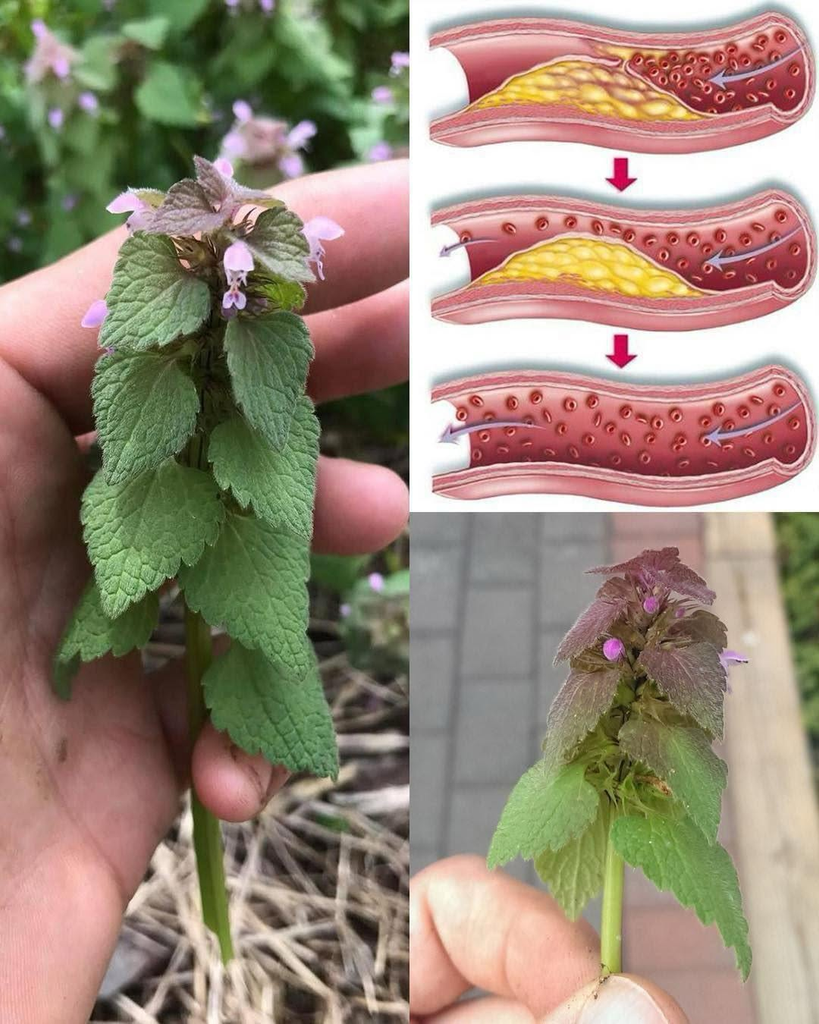
The plant shown in the image appears consistent with purple deadnettle, recognizable by its green, textured leaves, reddish-purple coloration near the upper leaves, and small pinkish-purple flowers.
However, one important point should always come first with wild plants:
A photograph alone should not be considered enough to guarantee a plant’s identity.
Many wild plants can look similar, particularly at different stages of growth. Anyone planning to eat or prepare a wild plant should confirm its identity using multiple reliable characteristics and, when uncertain, consult an experienced local botanist or knowledgeable forager.
What Is Purple Deadnettle?
Purple deadnettle belongs to the mint family, Lamiaceae.
Its scientific name is Lamium purpureum.
Despite the word “nettle” in its common name, purple deadnettle is not the same as stinging nettle.
That distinction is important.
Stinging nettles have tiny hairs that can cause a painful stinging sensation when touched. Purple deadnettle does not have the same stinging hairs.
The plant is generally small and low-growing, although its stems can become more upright as it develops.
One of its most recognizable characteristics is the reddish or purplish coloration around the upper leaves.
Its flowers are usually pink, purple, or reddish-purple and have the tubular shape associated with many members of the mint family.
Why Is It Called “Deadnettle”?
The name can be confusing.
Purple deadnettle resembles some nettles in its leaves and overall appearance, but it doesn’t have the stinging hairs associated with true stinging nettles.
“Dead” in this context doesn’t mean that the plant is poisonous or dead.
It essentially refers to the fact that the plant resembles a nettle but does not sting.
This is why the term deadnettle is used for several plants in the Lamium group.
What Does Purple Deadnettle Look Like?
Correct identification is extremely important before consuming any wild plant.
Purple deadnettle commonly has:
Soft green leaves
Wrinkled or textured leaf surfaces
Opposite leaves along the stem
Reddish or purplish upper leaves
Small pink-to-purple flowers
A square-ish stem typical of many mint-family plants
A low-growing or somewhat upright growth habit
The upper leaves often show more purple coloration than the lower leaves.
This can make the plant particularly noticeable in early spring or during cooler seasons.
Purple Deadnettle vs. Stinging Nettle
The two plants can be confused by people who are unfamiliar with them.
Stinging nettle typically has fine hairs capable of causing a sting.
Purple deadnettle lacks those characteristic stinging hairs.
The flowers are also different.
Purple deadnettle produces attractive small flowers around the upper portions of the plant, while stinging nettles have much less conspicuous flowers.
If you are uncertain about identification, don’t eat the plant.