The Bones in My Cooked Chicken Are Dark Gray or Black — Is That Dangerous?
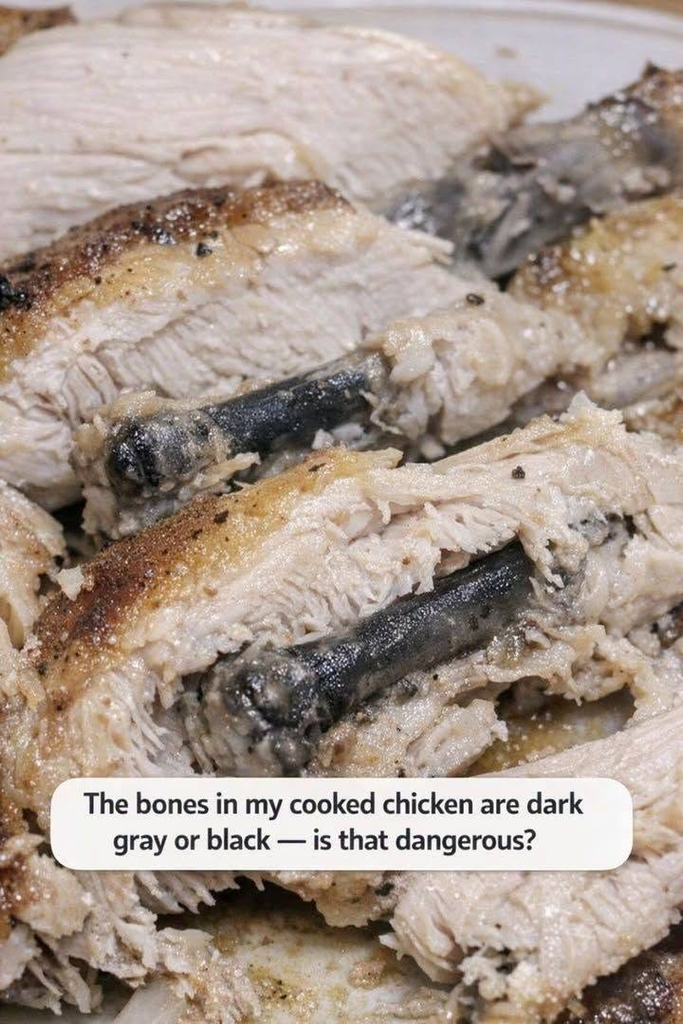
Have you ever prepared a chicken dinner, cut into the meat, and noticed that the bones look dark gray, brown, or almost black? Perhaps you expected the bones to remain white after cooking and wondered whether something was wrong with the chicken.
This can be surprising, especially when the meat looks perfectly normal but the bones near the joints or inside the legs appear unusually dark.
The good news is that dark bones in properly cooked chicken are usually harmless. In many cases, the discoloration comes from natural pigments in the bone marrow that seep through the bones during cooking. This is particularly common in young chickens, whose bones have not yet fully hardened.
However, the color of the bones alone cannot establish whether chicken is safe to eat. Proper cooking, safe storage, and attention to signs of spoilage are all important.
Understanding why this happens can help you decide when the discoloration is normal and when you should be more cautious.
1. Why Do Chicken Bones Turn Dark Gray or Black?
One of the main reasons chicken bones darken during cooking is the movement of natural pigments from the bone marrow into the surrounding tissues.
Bone marrow contains pigments associated with blood cells. In young chickens, the bones may not yet be fully calcified, meaning they have not developed the same degree of hardness as the bones of older birds.
Because these bones are still relatively porous, pigments from the marrow can seep through them and into nearby meat.
When the chicken is cooked, these pigments may become darker, creating a gray, brown, or nearly black appearance around the bones.
This discoloration is especially noticeable around the legs, thighs, joints, and other areas where bones are close to the meat.
Why young chickens are more affected
Many chickens sold for meat are slaughtered while they are still young.
At this stage, their bones may not have developed a fully hardened outer structure. This makes it easier for marrow pigments to pass into the surrounding tissues.
As a result, dark discoloration can appear even when the chicken has been handled correctly and cooked thoroughly.
The appearance may be more noticeable when the meat is cut open, particularly around the joints.
Dark bone coloration caused by marrow pigments is generally a cosmetic issue rather than a sign that the chicken has spoiled.
2. Can Freezing Make Chicken Bones Darker?
Yes. Freezing and thawing can contribute to the appearance of dark bones in chicken.
When chicken is frozen, changes in the tissues can allow marrow pigments to move more readily through the porous bones of young birds.
During cooking, those pigments may become darker and more visible.
This can happen even when the chicken has been frozen and stored properly.
For example, you might purchase frozen chicken drumsticks, thaw them safely, and cook them for dinner. When you cut into one, the bone may appear much darker than you expected.
That appearance alone does not mean the chicken has gone bad.
Freezing can also affect the quality of meat if it is poorly wrapped or stored for a long time. Air exposure may cause freezer burn, which often appears as dry, pale, or grayish-brown patches on the surface.
Freezer burn generally affects texture and flavor rather than making properly frozen chicken unsafe.
However, chicken that was stored improperly, thawed at room temperature for an extended period, or left unrefrigerated too long may pose a food-safety risk regardless of its appearance.
3. Is It Safe to Eat Chicken With Black Bones?
In many cases, yes.
If the dark color is caused by natural bone-marrow pigments, the chicken has been stored safely, and the meat has reached a safe internal temperature, the discoloration itself is not a reason to discard it.
However, it is important to distinguish between harmless discoloration and signs that the chicken may be spoiled or undercooked.
Dark bones alone cannot tell you whether the chicken is safe.
Consider the following factors:
Was the raw chicken kept refrigerated or frozen appropriately?
Was it thawed safely?
Was it cooked thoroughly?
Does the meat have an unusual or unpleasant odor?
Is the surface unusually sticky or slimy?
Was the cooked chicken left at room temperature for too long?
If the chicken was handled safely and cooked thoroughly, dark bones are often harmless.
If you have doubts about how the chicken was stored or cooked, do not rely on the color of the bones to make the decision.
4. The Most Important Safety Rule: Check the Internal Temperature