Cutting open an avocado and finding brown, gray, black, or stringy areas can be surprising. Sometimes the inside looks completely different from the smooth green flesh you expected. You may see dark lines, discoloration around the pit, brown patches, or a soft, almost mushy texture.
The good news is that not every dark spot inside an avocado means the fruit is spoiled.
Avocados naturally change as they ripen, and the flesh can undergo oxidation after being exposed to air. At the same time, an avocado that has been stored too long can develop genuine spoilage.
Knowing the difference can help you decide whether to eat it, remove a damaged section, or throw the entire fruit away.
Why Does an Avocado Turn Brown?
One of the most common reasons avocado flesh turns brown is oxidation.
When you cut an avocado, its flesh comes into contact with oxygen in the air. Enzymes naturally present in the fruit react with oxygen, causing the exposed flesh to gradually turn greenish-brown or brown.
This is similar to what happens when you cut an apple and leave it on the counter.
The browning itself does not automatically mean that the avocado is dangerous.
If the avocado otherwise smells fresh, has a normal texture, and shows no signs of mold or decay, a small amount of surface browning can often simply be removed.
What About the Dark Lines in the Avocado?
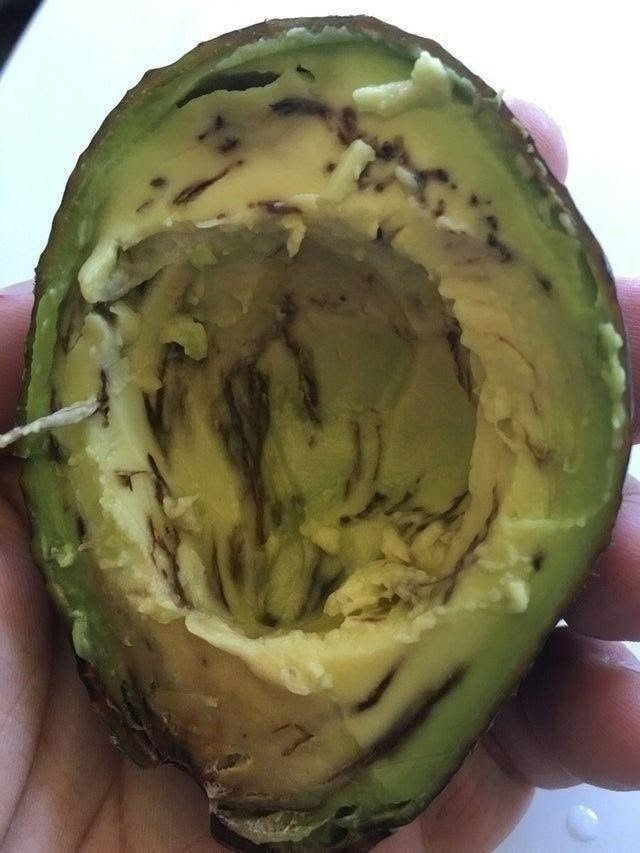
The avocado in the photograph has noticeable dark lines and discoloration throughout the flesh.
These dark streaks can sometimes be associated with bruising, over-ripening, oxidation, or natural changes in the fruit’s flesh.
Avocados also contain vascular tissue—small channels that transport water and nutrients through the developing fruit. In some avocados, these structures can become more visible as the fruit ages.
Therefore, dark fibers or streaks do not automatically prove that the avocado is contaminated.
The important thing is to examine the entire fruit rather than judging safety from one dark mark.
When Is Brown Avocado Still Safe?
An avocado may still be perfectly usable when the flesh has a few brown areas but otherwise looks and smells normal.
For example, you may cut open an avocado and find:
A small brown patch near the surface
Slight browning around the edges
A few darker fibers
Mild discoloration caused by bruising
Brown flesh where the avocado was exposed to air
Slightly darker flesh around the pit
If the rest of the avocado is firm enough for its ripeness, smells normal, and has no mold or obvious decomposition, you can usually cut away the affected portion and use the remaining good flesh.
The flavor and texture may not be as good as those of a perfectly fresh avocado, but discoloration alone is not enough to conclude that the fruit is unsafe.
When Should You Throw the Avocado Away?
There are certain signs that indicate the avocado has gone beyond ordinary ripening.
Discard the avocado if you notice obvious mold, particularly if mold has spread through the flesh.
Other warning signs include:
A strong rotten or fermented odor
Extensive black or dark areas combined with decomposition
Extremely slimy or watery flesh
Significant leaking
Extensive tissue breakdown
Unusual growths
Visible mold
A clearly unpleasant or rotten taste
When an avocado has extensive spoilage, it is better not to try to rescue it by removing a small section.
Mold Is Different From Ordinary Browning
This distinction is extremely important.
A brown patch is not necessarily mold.
Mold may appear as fuzzy, powdery, or unusually colored growth on the surface or inside the fruit. It can appear white, green, blue, gray, or other colors depending on the organism.
If you see obvious mold on a soft fruit such as an avocado, the safest choice is to discard the fruit rather than simply cutting away a small visible spot.
Soft foods can allow mold and its associated contamination to extend below the area that is visibly affected.
Do not smell moldy food closely to determine whether it is safe.
What If the Avocado Is Very Soft?
An avocado naturally becomes softer as it ripens.
A ripe avocado should generally have some give when gently pressed.
However, there is a difference between a ripe avocado and one that is decomposing.
A ripe avocado can be:
Soft but cohesive
Creamy
Green or yellow-green inside
Mildly nutty or buttery in smell
An overripe or spoiled avocado may be:
Extremely mushy
Watery
Slimy
Dark throughout
Leaking
Strong-smelling
Sour or fermented
Texture should therefore be considered together with smell and appearance.
What Does a Good Avocado Look Like Inside?
A healthy ripe avocado generally has creamy flesh ranging from pale yellow near the center to green closer to the skin.
The exact color depends on the variety and ripeness.
Some avocados may have slightly darker green or yellow areas.
The flesh should generally be cohesive and creamy rather than watery or slimy.
Small imperfections are common and do not necessarily indicate a problem.
What About Brown Spots Near the Pit?
Brown discoloration around the pit is relatively common.
It can occur because of bruising, over-ripening, temperature changes, or other physiological changes in the fruit.
If the discoloration is limited and the surrounding flesh looks and smells normal, you can usually remove the affected area.
If the entire area around the pit is dark, mushy, wet, or foul-smelling, the avocado may be spoiled.
Again, the entire appearance matters more than one isolated spot.
What About Stringy Avocado Flesh?
Some avocados develop stringy or fibrous flesh.
This can be caused by the variety of avocado, growing conditions, maturity, or how the fruit ripened.
Stringiness can make the avocado unpleasant to eat, but it does not automatically mean that the fruit is unsafe.
If the flesh is stringy but otherwise smells normal and shows no mold or decomposition, it may simply be a textural issue.
You can remove particularly fibrous sections and use the smoother flesh.
Can You Eat an Avocado That Has Been Bruised?
A bruise does not necessarily make an avocado unsafe.
Avocados can become bruised during transportation, handling, or storage.
Bruised flesh may become brown, gray, or darker than the surrounding flesh.
If the damage is localized, simply cut away the affected area.
However, if bruising is accompanied by a rotten smell, widespread mushiness, liquid leakage, or mold, discard the fruit.
How to Tell if an Uncut Avocado Is Ripe
Before cutting an avocado, you can often get an idea of its ripeness by gently pressing it.
A ripe avocado generally gives slightly under gentle pressure.
An extremely hard avocado is usually underripe.
An avocado that feels extremely soft, collapses under light pressure, or has damaged and leaking areas may be overripe or spoiled.
Color can sometimes help, but it is not a perfect ripeness test because avocado varieties have different skin colors when ripe.
Some remain green, while others become much darker.
What About the Stem End?
The small stem area at the top of an avocado can provide another clue about ripeness.
If the stem cap comes away easily, the flesh underneath can sometimes provide an indication of the fruit’s condition.
A greenish area may indicate a ripe fruit, while a brown or very dark area may suggest over-ripening.
However, this is not a definitive food-safety test.
The inside of the avocado still needs to be inspected after cutting.
How Should You Store an Avocado?
Storage can make a significant difference.
An unripe avocado can generally be kept at room temperature until it begins to soften.
Once ripe, refrigeration can slow further ripening and help extend its usable life.
After cutting an avocado, the exposed flesh is more vulnerable to oxidation.
To slow browning, keep the cut avocado covered and refrigerated.
Some people use lemon or lime juice on the exposed surface because the acidity can slow enzymatic browning. This can help with appearance, although it does not make spoiled food safe.
How Long Does a Cut Avocado Last?
There is no single exact number of days that applies to every avocado.
Storage temperature, ripeness, handling, and how well the fruit is protected from air all make a difference.
A cut avocado should be refrigerated rather than left at room temperature for an extended period.
Before eating leftovers, inspect them for changes in smell, texture, mold, and overall appearance.