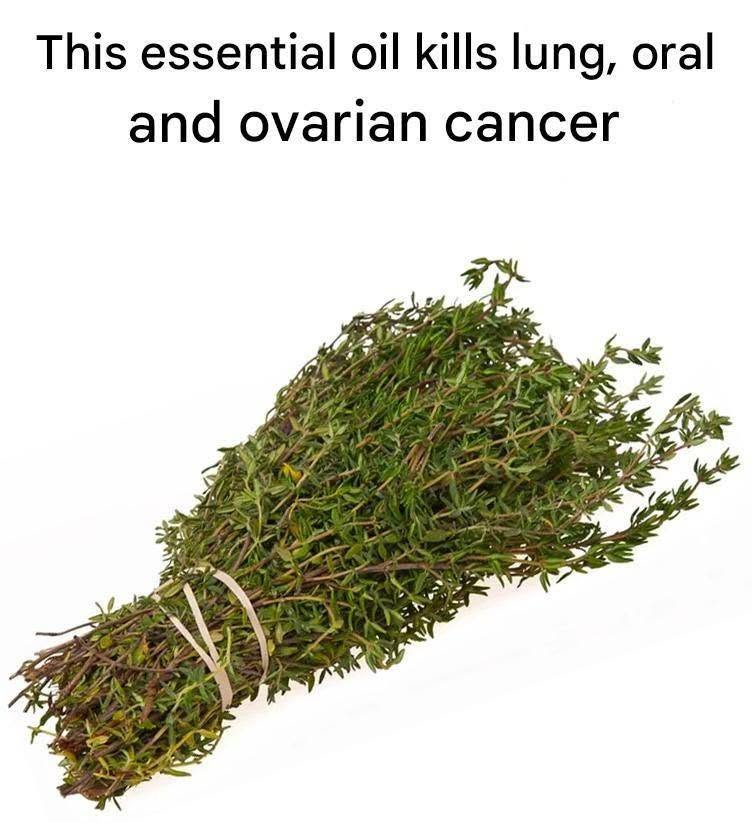
Thyme Essential Oil and Cancer: What Science Really Says About Its Potential Health Benefits
Thyme is one of the most familiar herbs in kitchens around the world. Its distinctive aroma and rich flavor make it a popular ingredient in soups, roasted vegetables, sauces, and traditional recipes. However, this small aromatic plant has attracted attention for another reason: its naturally occurring compounds are being investigated for their potential biological and medicinal properties.
Among these compounds, thymol and carvacrol have become particularly interesting to researchers.
Some laboratory studies suggest that these substances may affect the growth and survival of certain cancer cells. This has led to growing interest in thyme essential oil and its possible applications in future cancer research.
But does thyme essential oil really kill lung, oral, and ovarian cancer?
Can a simple herb provide protection against serious diseases? And what is the difference between promising laboratory findings and treatments that have actually been proven to work in people?
Understanding the science behind thyme can help separate interesting discoveries from exaggerated health claims.
1. What Is Thyme and Why Has It Attracted Scientific Interest?
Thyme, scientifically known as Thymus vulgaris, is an aromatic plant belonging to the mint family.
It is native to Mediterranean regions and has been used for centuries in cooking and traditional herbal preparations.
The plant contains several naturally occurring compounds, including:
Thymol.
Carvacrol.
Linalool.
p-Cymene.
Rosmarinic acid.
Flavonoids.
The exact chemical composition depends on the thyme variety, growing conditions, harvesting methods, and extraction process.
Thyme essential oil is generally obtained through steam distillation of the plant’s above-ground parts.
Researchers have become interested in this oil because some of its chemical components demonstrate antimicrobial, antioxidant, and anti-inflammatory activities in experimental settings.
More recently, scientists have investigated whether certain compounds found in thyme could influence biological processes involved in cancer development.
However, laboratory activity does not automatically mean that consuming or applying thyme oil can treat cancer in humans.
2. Thymol: The Natural Compound Researchers Are Studying