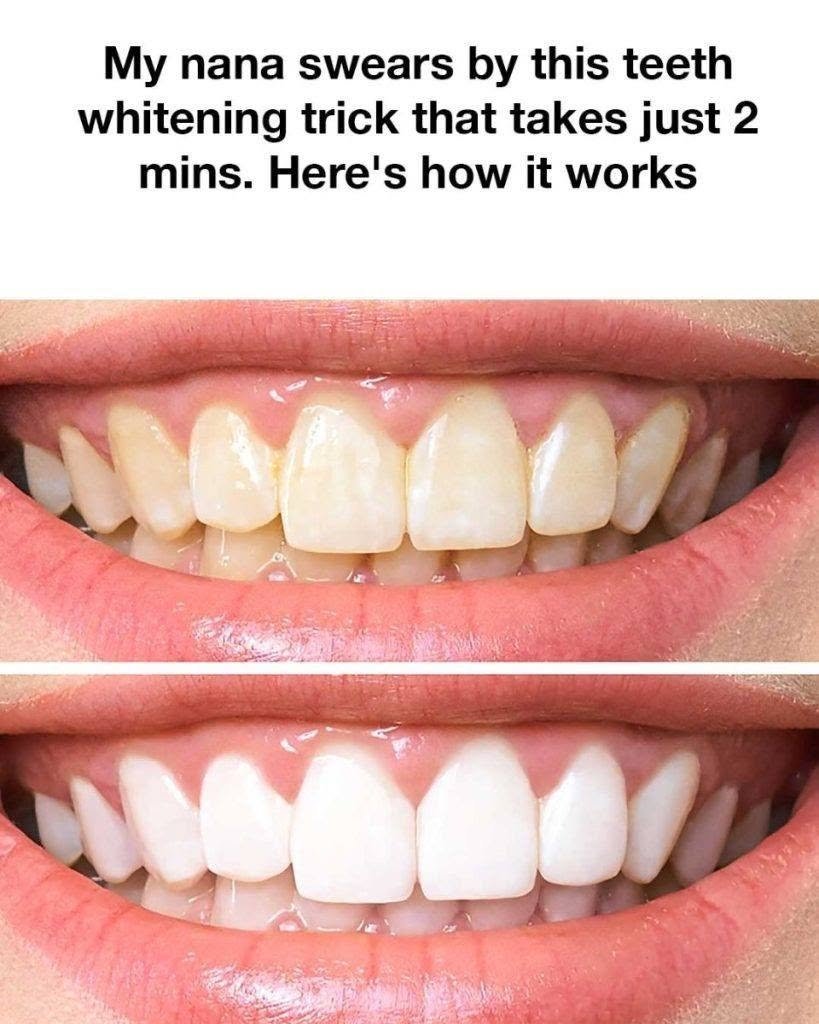
A Radiant Smile in Sixty Seconds: The Little-Known Rice-Based Method
A toothbrush cannot effectively reach every space between teeth.
Dental floss or appropriately sized interdental brushes help remove plaque and food particles from these areas.
Cleaning between your teeth once daily is an important part of maintaining healthy gums.
5. Avoid Tobacco Products
Smoking and other tobacco use can cause significant tooth discoloration.
Tobacco also increases the risk of gum disease, oral cancer, and other serious health problems.
Avoiding tobacco benefits both your oral health and your overall well-being.
6. Be Careful With Acidic Foods and Drinks
Frequent exposure to acidic beverages, including soft drinks and some fruit juices, can weaken enamel.
After consuming acidic foods or drinks, rinse with water and wait approximately 30 to 60 minutes before brushing.
This gives softened enamel time to recover from the immediate acid exposure.
7. Visit Your Dentist Regularly
Professional dental examinations can identify problems before they become more serious.
A dentist can also determine whether discoloration is caused by surface stains, tartar, enamel changes, or another dental condition.
Professional cleaning may improve the appearance of teeth by removing accumulated plaque and tartar.
7. Natural Tooth Color: Why Your Teeth May Not Be Perfectly White
Many people believe that healthy teeth should be completely white.
However, natural teeth come in different shades.
The outer enamel is slightly translucent, allowing the underlying dentin to influence the overall appearance of the tooth.
Dentin naturally has a yellowish color.
As people age, enamel may gradually become thinner through normal wear, making the underlying dentin more visible.
This is one reason teeth can appear more yellow over time, even when someone maintains good oral hygiene.
Other factors can also influence tooth color, including genetics, certain medications, dental injuries, and previous dental treatments.
Trying to eliminate every trace of natural yellow coloration through aggressive brushing or homemade whitening mixtures can damage the teeth.
A healthy smile does not have to look artificially white.
8. What Should You Avoid When Trying Homemade Teeth Whitening Remedies?
Social media frequently promotes inexpensive ingredients as alternatives to commercial dental products.
Unfortunately, some popular remedies may cause more harm than benefit.
Be particularly careful with the following:
Lemon juice: Its high acidity can weaken enamel and increase the risk of erosion.
Vinegar: Frequent exposure to acidic vinegar can damage tooth enamel.
Baking soda mixtures: Baking soda is included in some formulated dental products, but homemade mixtures are not necessarily appropriate substitutes for fluoride toothpaste.
Charcoal powders: Evidence supporting charcoal toothpaste for whitening is limited, and some products may be abrasive.
Uncontrolled rice powder: Grinding rice into particles and rubbing them against teeth has not been established as a safe or effective whitening treatment.
Aggressive brushing: Applying excessive pressure can damage gums and contribute to enamel and root-surface wear.
The safest approach is to choose dental products specifically formulated for oral use.
9. When Should You Consider Professional Teeth Whitening?
If you are unhappy with the color of your teeth, a dentist can help determine the most appropriate treatment.
Professional whitening products generally use hydrogen peroxide or carbamide peroxide.
These ingredients work through chemical processes that help break down certain types of tooth discoloration.
However, whitening is not appropriate for everyone.
People with untreated cavities, gum disease, exposed roots, or significant dental sensitivity may need treatment before considering whitening.
It is also important to understand that whitening products do not change the color of crowns, fillings, veneers, or other artificial dental materials.
A dentist can evaluate your teeth and explain what results are realistic.
Professional guidance is especially important when discoloration affects only one tooth or appears suddenly.
10. Healthy Gums Are Just as Important as White Teeth
A beautiful smile involves much more than tooth color.
Healthy gums provide essential support for the teeth.
Healthy gum tissue is generally firm and does not bleed easily during normal brushing or flossing.
Redness, swelling, tenderness, persistent bad breath, and bleeding can be signs of gum inflammation.
One common cause is the accumulation of plaque along the gumline.
If plaque remains in place, it can harden into tartar, which cannot be removed effectively with an ordinary toothbrush.
Professional dental cleaning may be necessary.
Ignoring persistent gum symptoms can allow gum disease to progress and potentially affect the supporting tissues around the teeth.
Therefore, maintaining healthy gums should be a priority alongside keeping teeth clean.
Final Thoughts: The Best Secret to a Beautiful Smile
The idea of achieving a radiant smile with ordinary rice in just 60 seconds is certainly interesting, especially because rice is affordable and available in almost every kitchen.
However, there is currently no convincing scientific evidence that rice water or rice powder can whiten teeth.
Rather than relying on viral home remedies, the most effective way to maintain a healthy-looking smile is to combine regular brushing, fluoride toothpaste, daily cleaning between the teeth, a balanced diet, and professional dental care.
If you want noticeably whiter teeth, dentist-approved whitening treatments are a more reliable option.
Remember that your natural tooth color is not a measure of your health, beauty, or personal hygiene.
A truly beautiful smile begins with healthy enamel, comfortable gums, and good daily habits.
Sometimes, the simplest routine is more valuable than any secret ingredient.