How to Support Colon Health Naturally: Safe Ways to Relieve Constipation and Improve Digestion
Water helps the digestive system function normally and supports the movement of stool through the intestines.
When the body does not receive enough fluid, stool may become harder, particularly in people who are already prone to constipation.
However, drinking excessive amounts of water does not automatically produce more bowel movements.
The goal is to maintain adequate hydration according to your individual needs.
Practical Ways to Stay Hydrated
Keep water available throughout the day and drink regularly, especially during hot weather or after physical activity.
Foods such as soups, fruits, and vegetables also contribute to total fluid intake.
If you are increasing your fiber intake, adequate fluid consumption becomes particularly important.
People who have been advised to restrict fluids because of heart failure, kidney disease, or another medical condition should follow their healthcare professional’s guidance rather than forcing themselves to drink extra water.
3. Try a Comfortable Toilet Position
The position you use on the toilet can influence how easily stool passes.
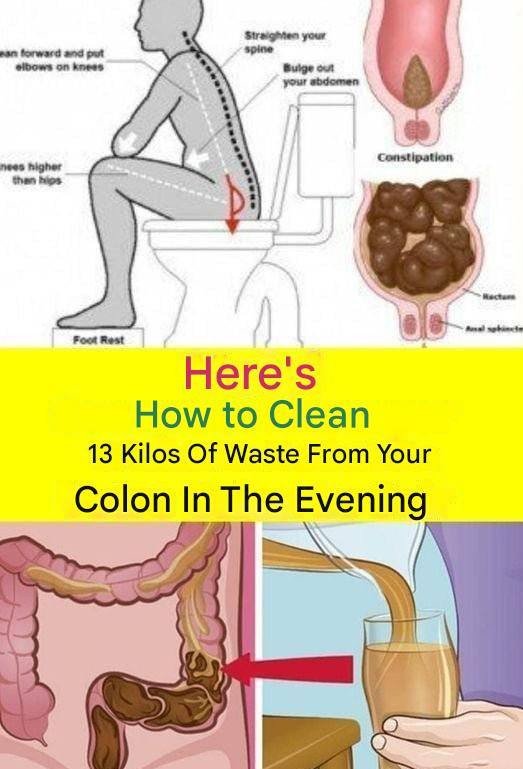
The illustration in the supplied image shows a person sitting with the feet supported and the knees positioned above the hips.
For some people, this position makes bowel movements more comfortable because it changes the angle of the rectum and may reduce the effort needed to pass stool.
How to Try This Position
Step 1: Sit comfortably on the toilet.
Keep your feet supported rather than allowing them to dangle.
Step 2: Place your feet on a stable footstool.
The stool should be secure and should not slide when you move.
Step 3: Lean forward slightly.
Rest your elbows on your thighs if comfortable.
Step 4: Relax your abdominal and pelvic muscles.
Breathe normally rather than holding your breath.
Step 5: Avoid forceful straining.
Allow the bowel movement to occur naturally.
A footstool can help some people, but it is not a cure for every form of constipation. If you regularly need to strain or cannot pass stool comfortably, additional treatment may be necessary.
4. Establish a Regular Bathroom Routine
The bowel has natural patterns, and some people find it easier to have a bowel movement at a consistent time each day.
The urge to pass stool is often stronger after meals because eating stimulates movement in the digestive tract.
This response is known as the gastrocolic reflex.
You can use this natural pattern to establish a comfortable routine.
For example, consider allowing yourself some unhurried bathroom time after breakfast.
Sit comfortably, relax, and respond when you feel the urge to go.
Do not ignore the urge repeatedly, because delaying bowel movements can contribute to constipation in some people.
At the same time, avoid sitting on the toilet for long periods while trying unsuccessfully to pass stool.
If nothing happens after several minutes, get up and try again when the urge returns.
5. Eat Foods That Naturally Support Regularity
A varied diet containing fruits, vegetables, whole grains, and legumes can help support digestive health.
Some foods are particularly useful because they contain fiber or substances that may help soften stool.
Prunes
Prunes are dried plums that contain fiber and naturally occurring sorbitol.
Sorbitol can draw water into the intestines, which may help soften stool.
Prunes can be a practical food-based option for people who experience occasional constipation.
However, eating large quantities may cause gas, cramping, or diarrhea.
Start with a modest portion and see how you tolerate it.
Kiwifruit
Kiwifruit provides fiber and has been studied for its potential effects on bowel regularity.
Some people find that eating kiwifruit regularly helps improve stool frequency and consistency.
It can be eaten whole, added to breakfast, or included in a fruit salad.
Individual responses vary, and people with relevant food allergies should avoid it.
Pears and Apples
Pears and apples contain fiber, and some varieties also provide sorbitol.
Eating the whole fruit generally provides more fiber than drinking the juice.
Wash the fruit before eating, and retain the peel when appropriate and comfortable for your digestion.
Beans and Lentils
Beans and lentils provide fiber and other nutrients that support a balanced diet.
If you do not regularly eat legumes, begin with small portions because they can initially increase gas.
Rinsing canned beans and cooking dried legumes thoroughly may help some people tolerate them more comfortably.