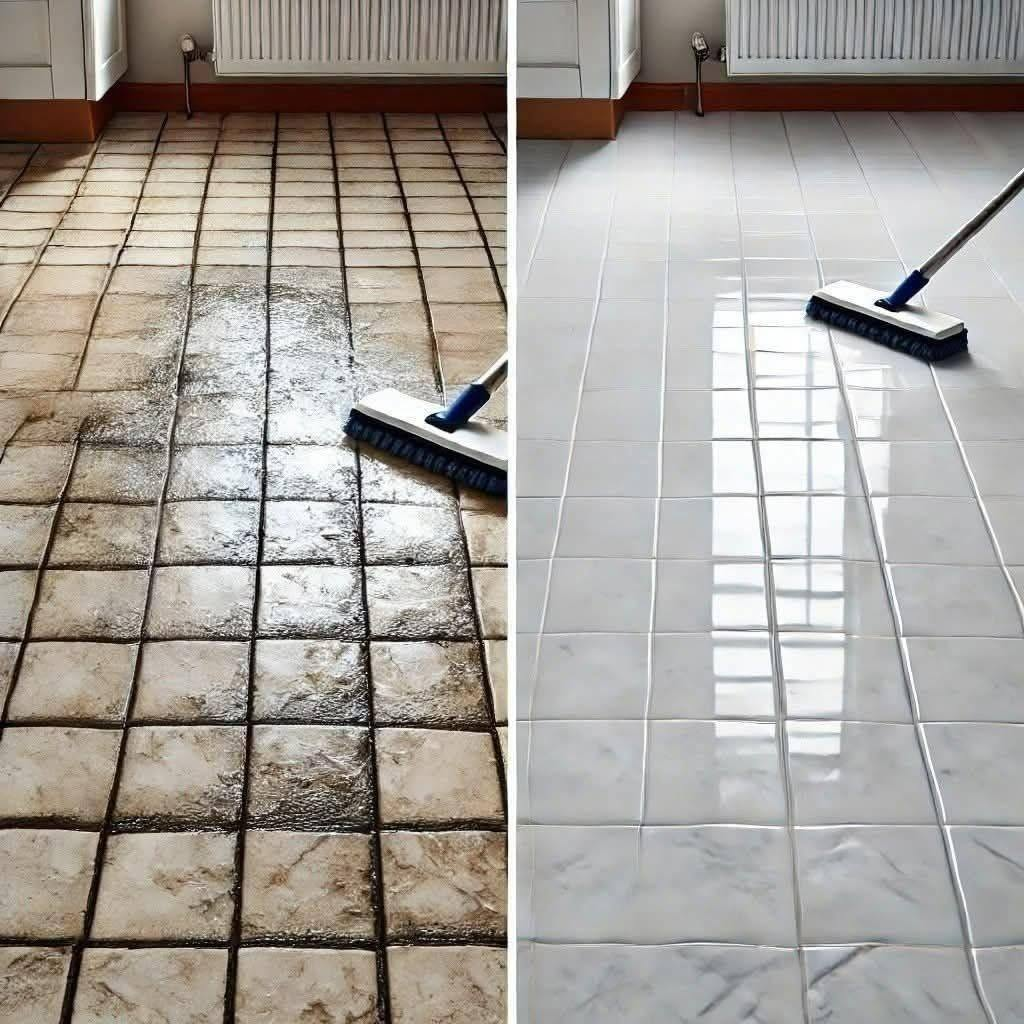
I Didn’t Believe This Floor Trick Until I Tried It… Now I’ll Never Go Back
Baking soda does not create a permanent shiny coating.
A floor may look brighter after dirt and residue are removed, but that’s different from polishing.
If your floor has a specific finish, use a product designed for that finish if polishing is appropriate.
Never assume that an aggressive homemade recipe will improve the appearance of a finished floor.
Some surfaces become dull precisely because they have been repeatedly exposed to inappropriate cleaners.
A Better Way to Keep Floors Clean for a Week
Rather than searching for a magical ingredient, combine several simple habits.
Keep Dirt Outside
Place a good doormat at entrances.
If possible, remove outdoor shoes before walking through the home.
Clean Spills Immediately
Don’t wait until the next scheduled cleaning.
Fresh spills are usually easier to remove than dried residue.
Sweep or Vacuum Regularly
Removing dry dirt prevents it from being redistributed by a wet mop.
Mop According to Traffic
High-traffic areas may need cleaning more frequently than bedrooms or rarely used rooms.
Use the Correct Cleaner
The right product for the flooring material is generally more important than adding extra ingredients.
Don’t Overwet Floors
Excess water can damage some flooring materials and create unnecessary drying problems.
Wash or Replace Mop Heads Regularly
A dirty mop can spread soil around instead of removing it.
This is an often-overlooked part of floor hygiene.
What If You Have Children or Pets?
When cleaning homes with children or pets, pay attention to product residues.
Follow the instructions for any commercial cleaning product you use.
Keep buckets and cleaning solutions out of reach.
Don’t leave wet floors unattended where someone could slip.
And don’t assume that a homemade mixture is automatically harmless simply because its ingredients are commonly found in a kitchen.
Pets can also lick floors, particularly if food odors or residues remain.
Allow surfaces to dry and follow appropriate product directions.
Is the “Clean for a Whole Week” Claim True?
Not as a universal rule.
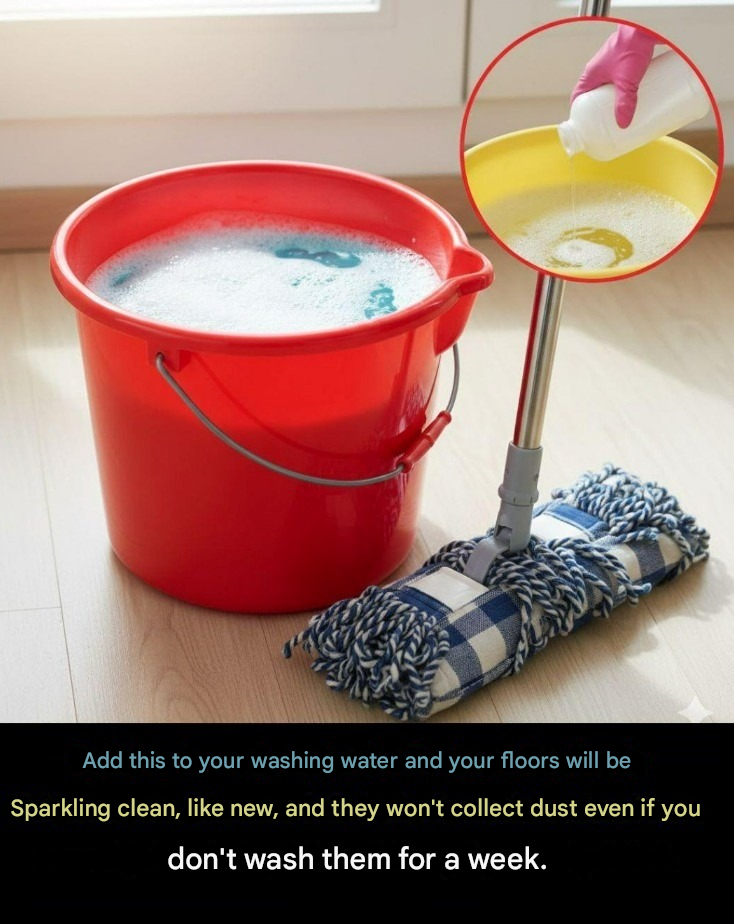
No mop-water recipe can guarantee that every floor will remain clean for seven days.
How long a floor stays visibly clean depends on:
Number of people in the home
Pets
Foot traffic
Weather
Outdoor conditions
Flooring type
Dust levels
Cooking activity
Cleaning frequency
Whether shoes are worn indoors
A quiet room used by one person may stay clean much longer than an entrance hallway used by a family and several pets.
So the viral claim should be treated as an exaggeration rather than a guarantee.
The Real Lesson Behind the Viral Trick
There is nothing wrong with experimenting with simple household cleaning methods—as long as the method is appropriate for the surface.
Baking soda can be useful.
It can help with certain residues and odors, and it is inexpensive.
But it isn’t a magic ingredient that creates a dirt-proof floor.
The best results usually come from using the correct cleaner in the correct concentration, using the right amount of water, removing loose dirt first, and maintaining the floor regularly.
And before putting any homemade mixture on your floor, make sure you know what the floor is made of.
Final Thoughts
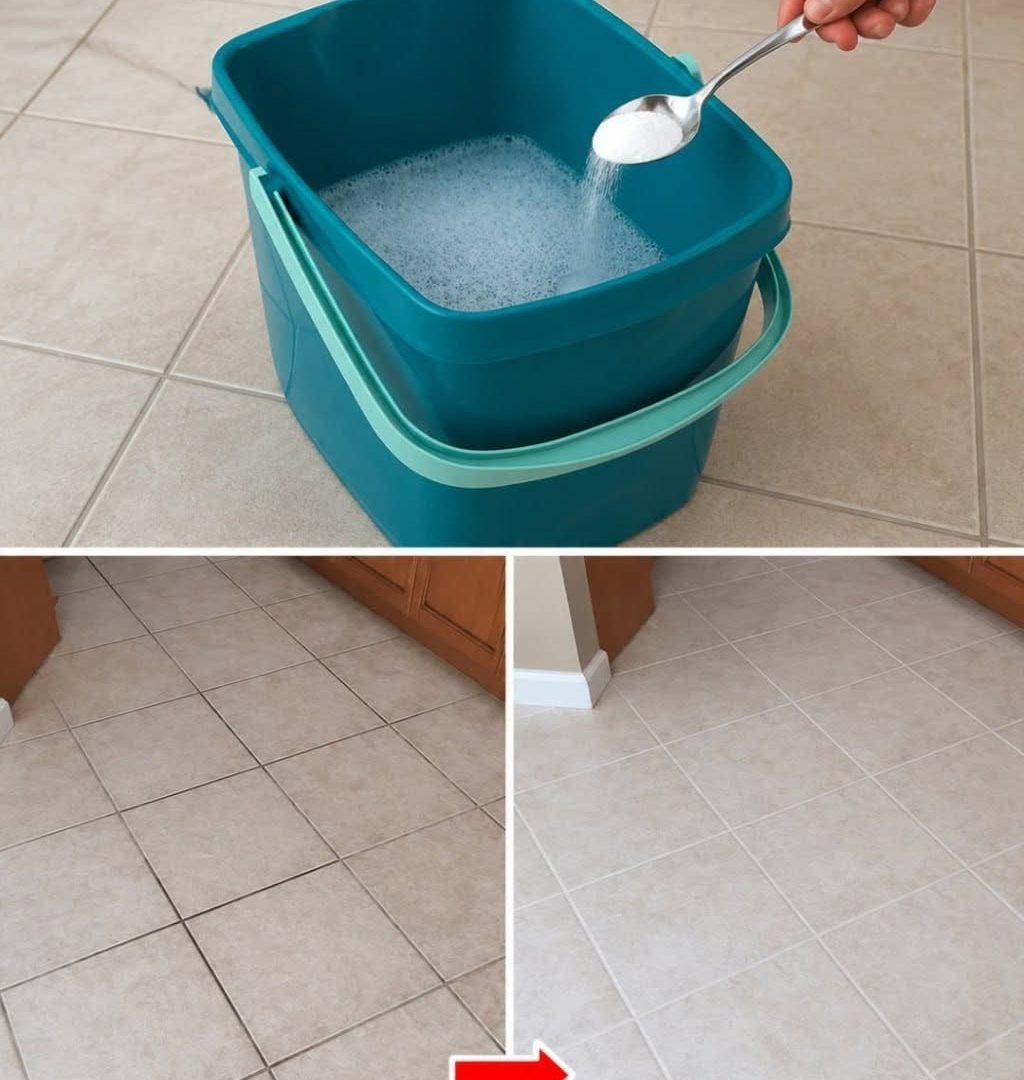
Adding a small amount of baking soda to mop water may help with cleaning or odors on some compatible, sealed hard floors, but the popular claim that it will keep every floor perfectly clean for an entire week is not something you should take literally.
The type of flooring matters.
The cleaning solution matters.
The amount of water matters.
And your cleaning technique matters.
For ceramic or other durable sealed surfaces, a mild cleaning approach may work well. For laminate, hardwood, natural stone, and other sensitive materials, it’s better to follow the manufacturer’s care instructions rather than experimenting with viral recipes.
Most importantly, don’t mix baking soda with random household chemicals, especially bleach or ammonia-containing products.
The best “floor-cleaning secret” isn’t necessarily a mysterious powder.
It’s a simple routine: remove dry dirt, clean with an appropriate product, avoid excessive water, rinse away residue when necessary, and deal with spills before they become stubborn stains.
That approach may not sound as exciting as a viral cleaning hack, but it is much more likely to keep your floors looking clean without damaging them.