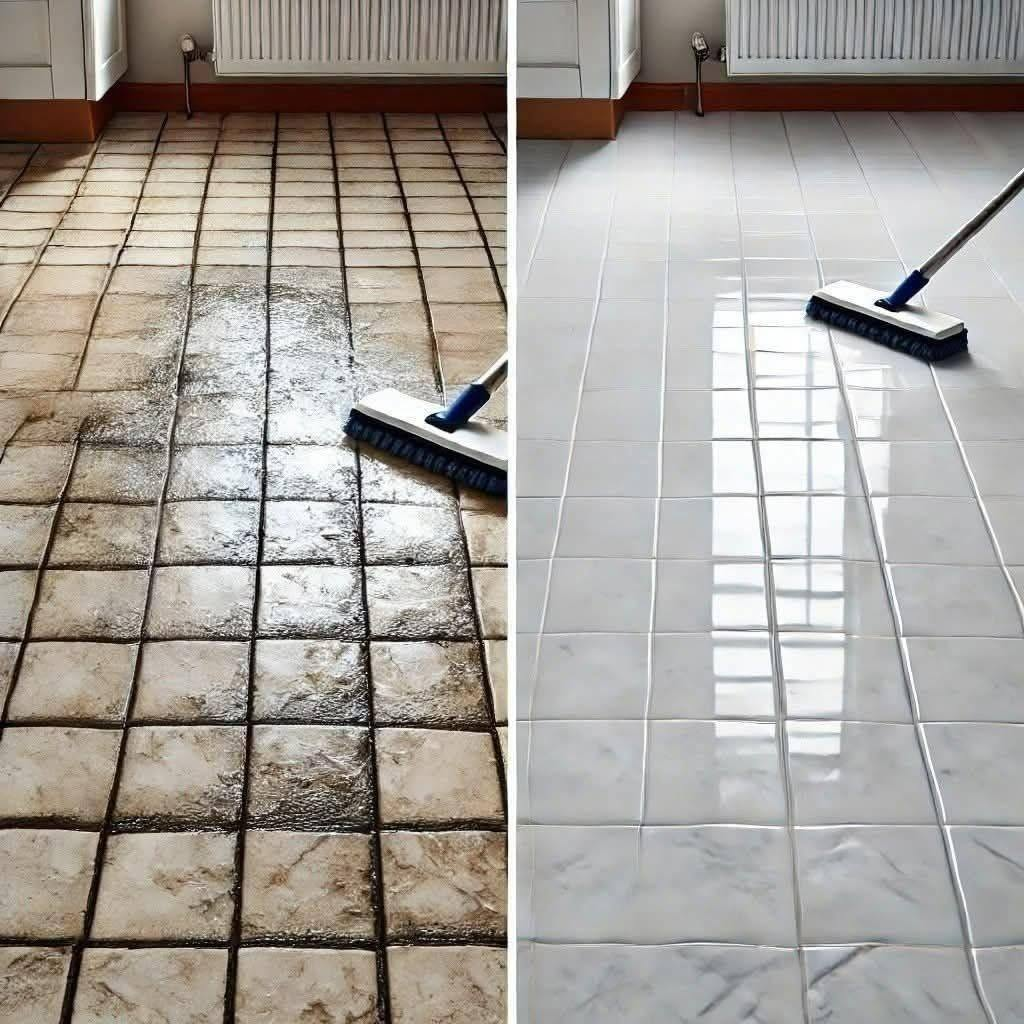
I Didn’t Believe This Floor Trick Until I Tried It… Now I’ll Never Go Back
This is where many online cleaning recipes become confusing.
You may see recommendations to combine baking soda and vinegar.
When mixed, they react and produce bubbles because an acid is reacting with an alkaline substance.
The bubbling looks impressive, but that doesn’t mean the combination is automatically a superior floor cleaner.
Much of the reaction simply neutralizes the two ingredients.
More importantly, never mix cleaning chemicals indiscriminately.
Especially avoid combining household cleaning products containing bleach with acids such as vinegar, or with ammonia-containing products.
Dangerous gases can be produced.
A simple cleaning routine is usually safer than a complicated mixture containing many ingredients.
Can Baking Soda Remove Bad Odors?
This is one area where baking soda can be useful.
Baking soda is widely used as a household deodorizing ingredient.
If a floor has an unpleasant smell caused by residues, cleaning the source of the odor is more important than simply covering it up with fragrance.
For example, pet accidents, food residue, dampness, and spills need to be properly cleaned.
Baking soda may help with some odors, but it won’t solve an underlying moisture or contamination problem.
What About Greasy Kitchen Floors?
Kitchen floors can accumulate a mixture of cooking oils, food particles, and ordinary household dirt.
A suitable floor cleaner designed to remove grease may be more effective than relying solely on baking soda.
Baking soda can sometimes assist with light residue, but it shouldn’t be treated as a substitute for a properly formulated degreasing product when heavy grease is involved.
And remember that a greasy floor isn’t just unattractive—it can also become slippery.
Can Baking Soda Disinfect the Floor?
This is an important distinction.
Baking soda is not a general-purpose disinfectant.
Cleaning and disinfecting are different processes.
Cleaning physically removes dirt, oils, and many microorganisms from a surface.
Disinfection involves using an appropriate product under specific conditions to kill or inactivate certain microorganisms.
If you’re cleaning an ordinary household floor, routine cleaning may be all that’s necessary.
But if you’re dealing with a situation where disinfection is specifically needed, use an appropriate disinfectant according to its label rather than assuming baking soda will do the same job.
Why Floors Sometimes Look Dirty Again Quickly
If your floor seems to become dirty immediately after cleaning, the problem may not be the cleaning solution.
Several everyday factors can contribute.
Shoes
Shoes bring outdoor dirt into the house.
A good doormat and removing shoes near the entrance can significantly reduce floor contamination.
Pets
Pets can track soil, moisture, and debris indoors.
Keeping paws reasonably clean after outdoor activity can help.
Cooking
Grease and tiny food particles can settle around the kitchen.
Using an appropriate kitchen cleaner and cleaning spills promptly can prevent buildup.
Dust
Dust continuously settles on surfaces.
No mop mixture can stop airborne dust from returning.
Sticky Residue
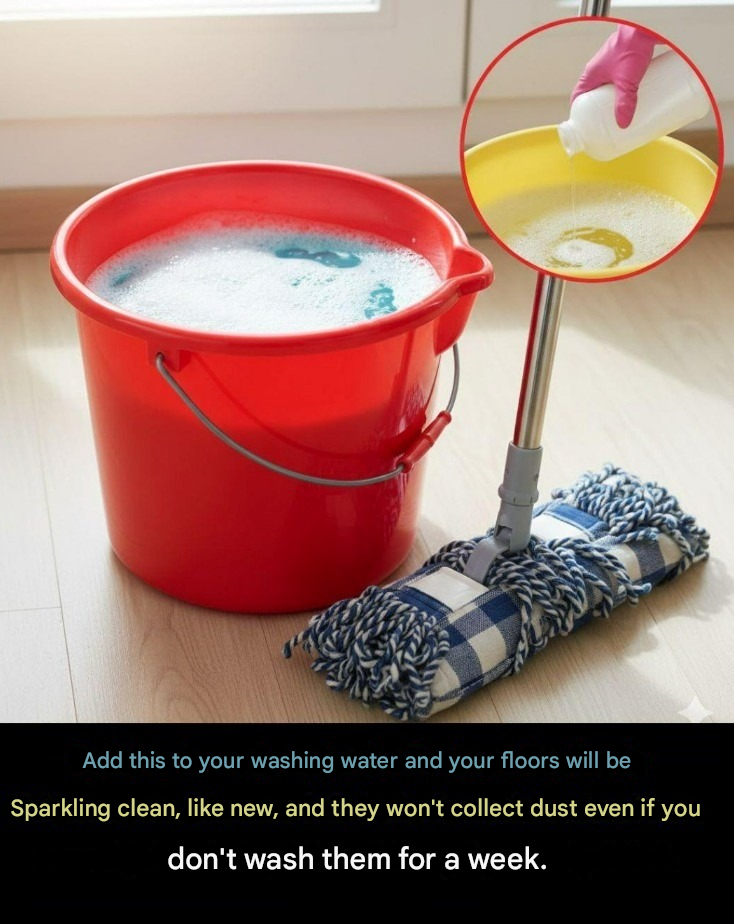
Using too much cleaning product can actually make a floor seem dirty faster because residue attracts or holds onto dust.
Sometimes the solution is less product, not more.
The Secret May Be Your Mop Technique
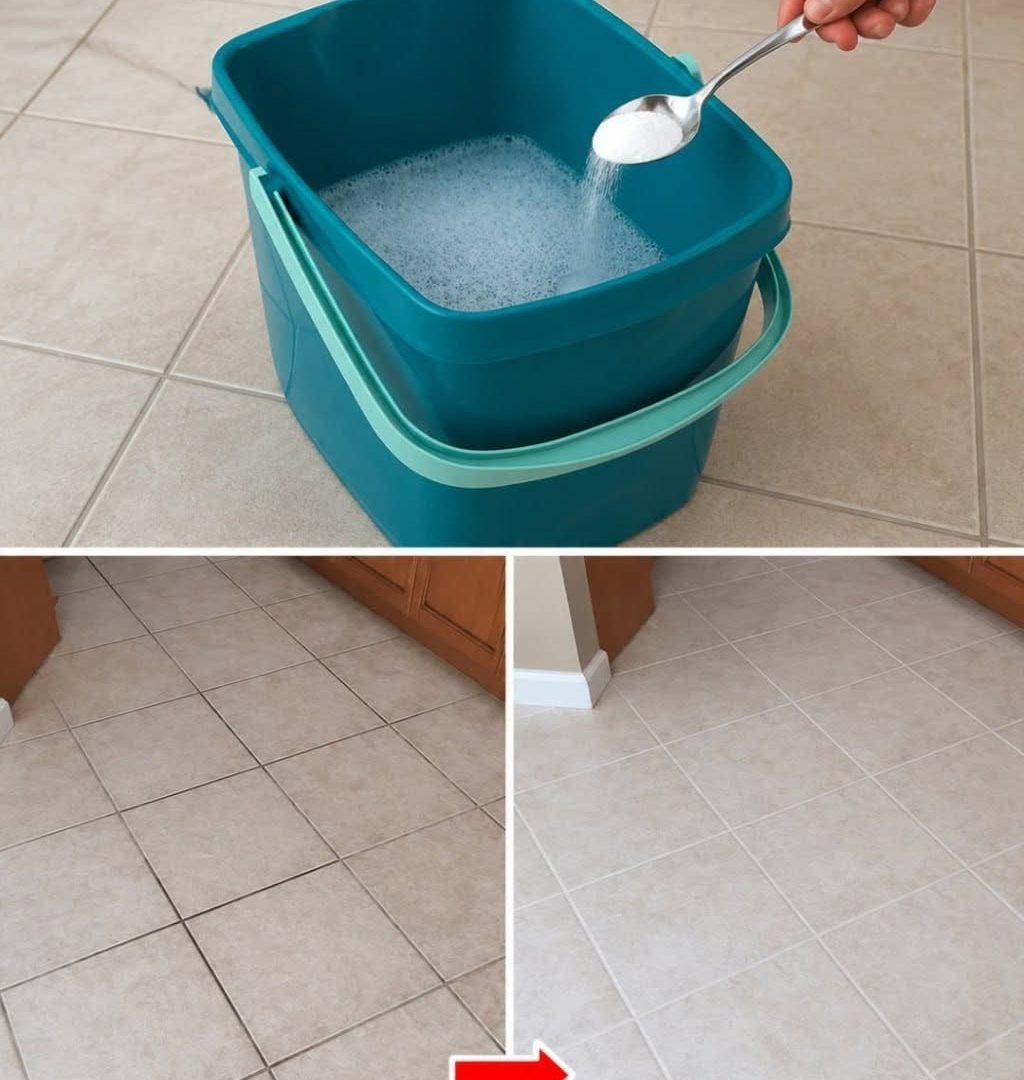
The viral image focuses on the powder, but your cleaning technique may matter much more.
A good routine includes:
Remove loose dirt first.
Use the appropriate cleaning solution.
Don’t oversaturate the floor.
Change dirty mop water when necessary.
Rinse the mop frequently.
Clean high-traffic areas more often.
Allow the floor to dry properly.
These habits can make a much bigger difference than adding a “secret ingredient.”
Don’t Use Too Much Baking Soda
A common mistake with homemade cleaning recipes is assuming that more is better.
It isn’t.
A large amount of baking soda can leave powdery or cloudy residue.
It may also require additional rinsing.
If you’re experimenting with a compatible sealed floor, start with a small amount rather than dumping a large quantity into the bucket.
If the floor looks dull or leaves a white film after drying, discontinue the mixture and clean according to the flooring manufacturer’s recommendations.