If You Have a Heart Attack at Home Alone, What Should You Actually Do?
The message in this image is designed to grab attention: “If you’re having a heart attack and you’re home alone, do this in 10 seconds—it could save your life.”
Heart attacks are medical emergencies, and knowing what to do when you are alone can genuinely make a difference. However, there is no reliable 10-second trick, coughing technique, breathing exercise, or body movement that can stop a heart attack.
The safest response is much simpler: recognize the warning signs, call emergency medical services immediately, and follow the instructions given by the emergency dispatcher.
A heart attack happens when blood flow to part of the heart muscle becomes blocked. Without enough oxygen-rich blood, heart muscle can become damaged. The faster treatment begins, the more heart muscle may be protected.
What Is a Heart Attack?
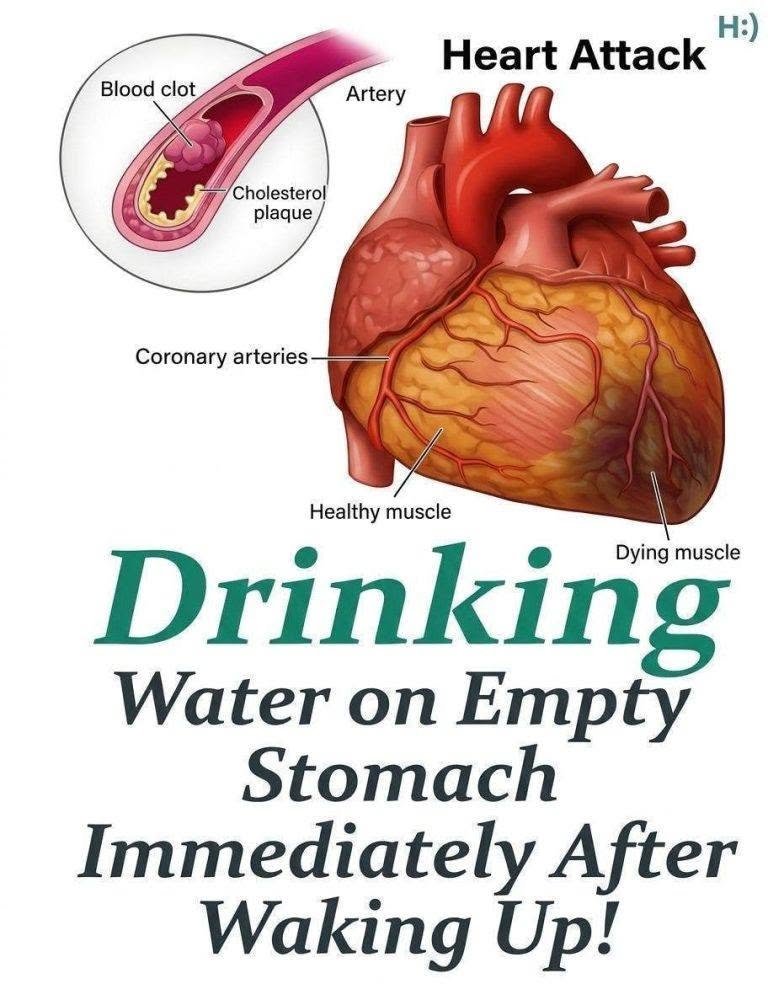
A heart attack, medically known as a myocardial infarction, occurs when blood flow through one of the arteries supplying the heart becomes blocked or severely restricted.
A common cause is the buildup of fatty deposits inside an artery. A blood clot can form on a ruptured plaque and obstruct blood flow.
The result can be damage to the heart muscle.
A heart attack is not the same thing as cardiac arrest.
During a heart attack, the heart usually continues beating, although the person may develop dangerous rhythm problems. Cardiac arrest occurs when the heart suddenly stops pumping blood effectively.
A heart attack can sometimes lead to cardiac arrest, which is why immediate medical attention is so important.
The Most Important “10-Second” Action
If you think you are having a heart attack while home alone, the most important action is to call your local emergency medical service immediately.
Do not spend several minutes searching the internet for a trick.
Do not wait to see whether the symptoms disappear.
Do not attempt to drive yourself to the hospital if emergency medical help is available.
When you call, clearly explain that you think you may be having a heart attack and give your exact location so emergency responders can reach you.
If you are unable to speak normally, use whatever emergency communication options are available in your area.
The goal is to get professional medical help moving toward you as quickly as possible.
What Does a Heart Attack Feel Like?
The symptoms can vary considerably.
The classic symptom is discomfort in the center or left side of the chest.
People may describe it as:
Pressure
Tightness
Squeezing
Fullness
Heaviness
Burning
Pain
The discomfort may last several minutes or disappear and return.
But chest pain is not the only possible symptom.
A heart attack can also cause discomfort in the:
Arm
Shoulder
Back
Neck
Jaw
Upper abdomen
Some people experience shortness of breath, sweating, nausea, dizziness, or unusual weakness.
Heart Attacks Don’t Always Look Like the Movies
One of the most dangerous misconceptions is that every heart attack causes dramatic, crushing chest pain.
That’s not true.
Some people experience relatively mild symptoms.
Others may mainly notice shortness of breath, nausea, unusual fatigue, dizziness, or discomfort in the back or jaw.
Symptoms can also be different in women and older adults, although there is considerable overlap between people of different sexes and ages.
This is why unusual symptoms should not automatically be dismissed simply because there is no severe chest pain.
What If You’re Not Sure It’s a Heart Attack?
You don’t need to diagnose yourself before calling for help.
If symptoms could represent a heart attack, it is safer to treat the situation as an emergency.
Emergency medical professionals can assess you and determine what is happening.
Many other conditions can cause chest discomfort, including acid reflux, anxiety, muscle problems, lung conditions, and other medical issues.
But trying to distinguish them yourself at home can waste valuable time.
A person having a heart attack may not know with certainty what is happening.
That’s precisely why emergency evaluation is necessary.