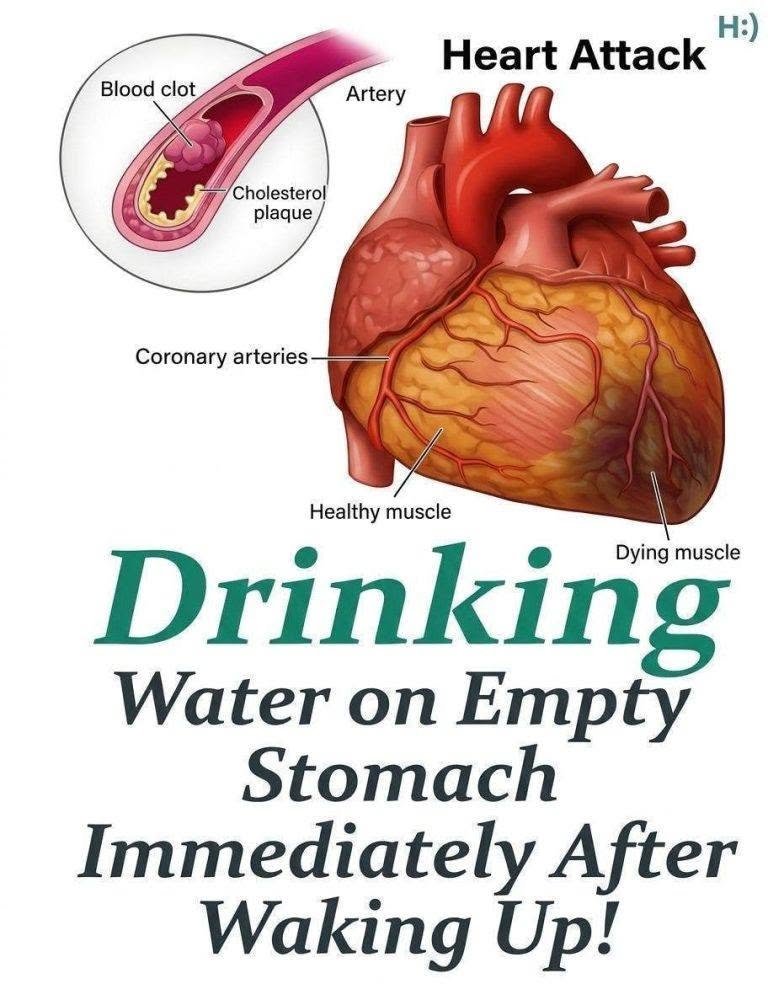
If You Think You’re Having a Heart Attack While Home Alone, Do This Immediately
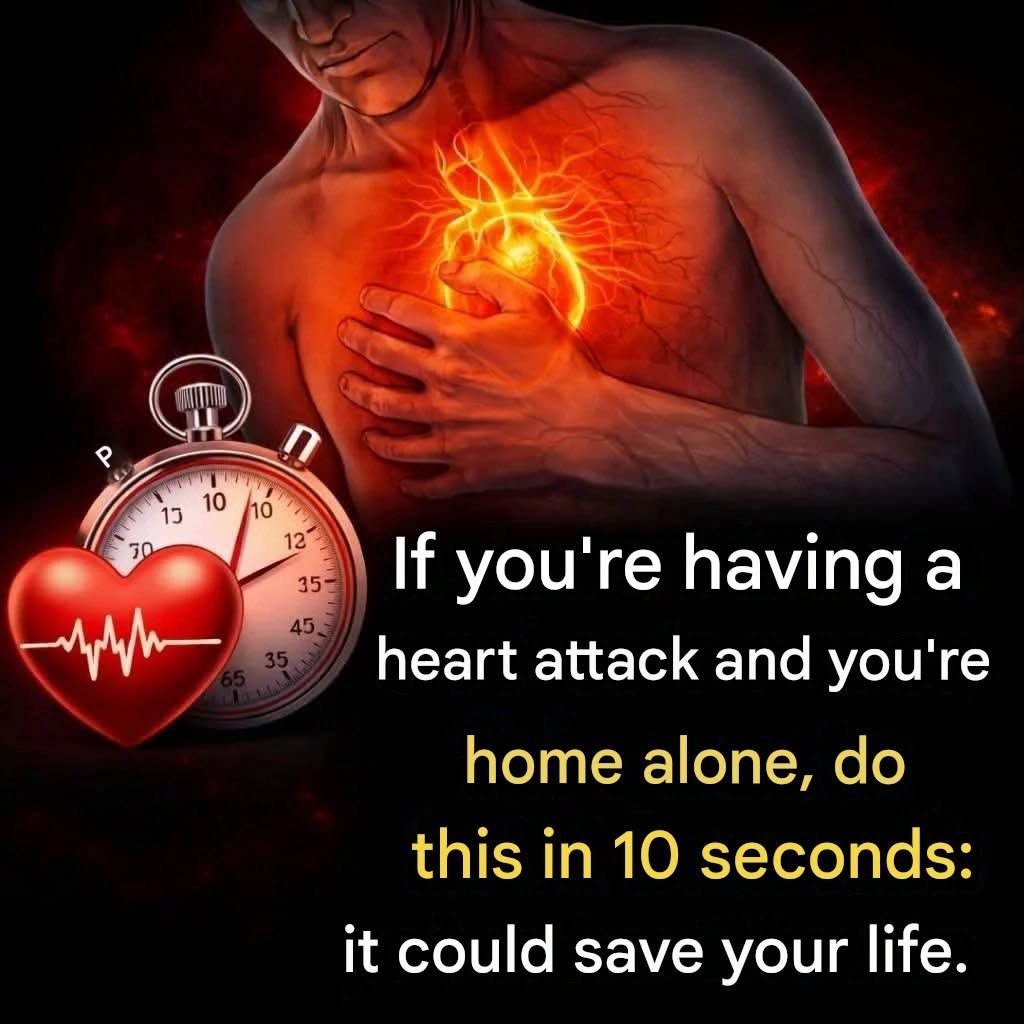
The message in the image makes a dramatic promise: “If you’re having a heart attack and you’re home alone, do this in 10 seconds.”
There is an important correction to that claim.
There is no proven 10-second maneuver that can stop or reverse a heart attack, and one popular internet suggestion—forcefully coughing over and over, sometimes called “cough CPR”—is not recommended by the American Heart Association. Coughing should not be used as a substitute for emergency medical treatment. (www.heart.org)
What you do in the first few minutes can matter enormously, however. If you think you’re having a heart attack while alone, the priority is to get emergency medical help immediately.
First: Know the Warning Signs
A heart attack doesn’t always begin with dramatic, crushing chest pain.
Possible symptoms include:
Pressure, squeezing, fullness, or pain in the center of the chest
Pain or discomfort in one or both arms
Pain in the back, neck, jaw, or stomach
Shortness of breath
Cold sweating
Nausea or vomiting
Lightheadedness
Unusual tiredness
A rapid or irregular heartbeat
Symptoms can be mild at first and may come and go. The American Heart Association advises getting emergency help if you have warning signs rather than waiting to see whether they disappear. (www.heart.org)
Women can also experience symptoms such as unusual fatigue, nausea, shortness of breath, or discomfort in the back, shoulder, or jaw, sometimes without the classic severe chest pain people expect.
The Most Important “10-Second” Action
If you suddenly develop symptoms that could indicate a heart attack, don’t spend those first seconds trying a social-media trick.
Call your local emergency medical service immediately.
In the United States, that is 911. In other countries, use the appropriate emergency number.
The American Heart Association emphasizes that calling emergency medical services is often the fastest way to begin lifesaving treatment because emergency teams can start care and arrange rapid transport.
If you’re alone, put the phone on speaker so you can follow the dispatcher’s instructions while remaining available to act.
Don’t Drive Yourself to the Hospital
If you suspect a heart attack, driving yourself is generally not the safest option.
You could suddenly become much more seriously ill while driving.
Emergency medical personnel can begin treatment during transport and can respond if your condition deteriorates. The American Heart Association specifically recommends calling emergency medical services rather than trying to get yourself to the hospital.
Sit Down and Rest
After calling for emergency help, stop exerting yourself.
Sit somewhere comfortable with your back supported and avoid unnecessary walking or physical activity while waiting for help. The NHS similarly advises sitting and resting while waiting for emergency assistance. (nhs.uk)
If you are alone, keep your phone nearby and follow the emergency operator’s instructions.
What About Aspirin?
This is an area where online advice can become confusing.
Some emergency guidance recommends chewing an aspirin during a suspected heart attack if the person is able to take aspirin safely and isn’t allergic to it.
However, aspirin isn’t appropriate for everyone. It can cause serious bleeding and may be unsuitable for people with certain medical conditions, allergies, or other circumstances.
So don’t interpret this as:
“Everyone with chest pain should automatically take aspirin.”
If you are experiencing symptoms now, tell the emergency operator what is happening and follow their instructions regarding aspirin.
And importantly, taking aspirin must never delay the emergency call.
What You Should NOT Do: “Cough CPR”
One of the most persistent heart-attack myths online is that repeatedly coughing very forcefully can somehow keep the heart beating or clear a blockage.
It cannot.
The American Heart Association states that “cough CPR” does not work as a treatment for a heart attack and isn’t recommended for the public.