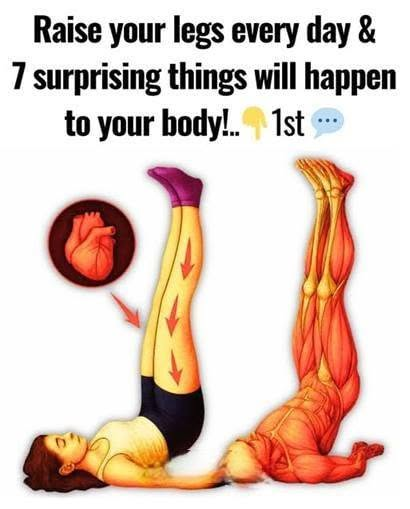
Raise your legs every day & 7 surprising things will happen to your body!
Sometimes, the simplest wellness habits can make a surprisingly positive difference in how we feel. You don’t always need an intense workout, expensive equipment, or complicated routines to give your body a little extra care. One example is a gentle position that has become increasingly popular: lying on your back with your legs raised against a wall.
This simple exercise, often called the Legs-Up-the-Wall Pose, involves lying comfortably on the floor or a yoga mat and extending your legs vertically against a wall. Your hips remain close to the wall, your upper body rests on the floor, and your arms can relax naturally beside you.
Although it may look unusual at first, this position can provide several benefits, particularly for people who spend long hours sitting or standing. It is also a gentle way to relax after a busy day.
But what actually happens when you raise your legs every day? Here are seven potential benefits, along with some important things to know before making it part of your daily routine.
1. It May Help Relieve Tired and Heavy Legs
One of the most noticeable benefits of elevating your legs is that it may help relieve the sensation of tiredness and heaviness in your lower limbs.
People who spend most of their working hours standing, walking, or sitting may experience uncomfortable legs by the end of the day. This can happen because fluid tends to accumulate in the lower extremities, particularly when someone remains in the same position for extended periods.
When you lie down and raise your legs above the level of your heart, gravity helps fluid move away from the lower legs.
This temporary change in position may make your legs feel lighter and more comfortable.
It can be especially soothing after:
Standing for several hours.
Walking long distances.
Spending the entire day sitting at a desk.
Traveling for extended periods.
Doing physically demanding activities.
Although leg elevation can provide temporary relief, persistent heaviness, swelling, or discomfort should not automatically be attributed to fatigue. These symptoms can sometimes indicate an underlying medical condition that deserves attention.
2. It May Help Reduce Mild Swelling in the Feet and Ankles