These Are the Reasons Why You Might Have Leg Cramps at Night
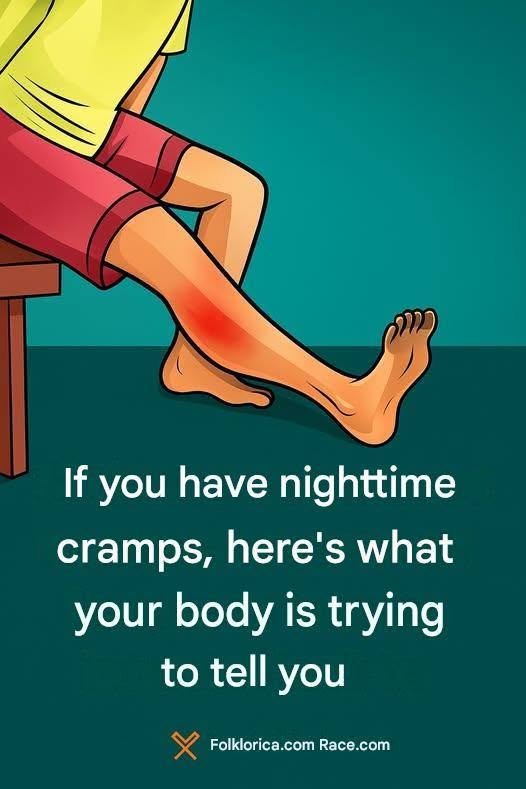
Waking up in the middle of the night with a sudden, painful cramp in your calf or foot can be an awful experience.
One moment you’re sleeping peacefully, and the next your muscle suddenly becomes hard, tight, and extremely painful. You may instinctively grab your leg, stretch your foot, or get out of bed trying to make the pain stop.
These episodes are called night leg cramps or nocturnal leg cramps.
They most often affect the calf, but they can also happen in the feet or thighs. A cramp may last only a few seconds or several minutes, and the muscle can remain sore afterward. (Mayo Clinic)
The good news is that night leg cramps are usually harmless.
However, frequent cramps can sometimes be associated with dehydration, muscle fatigue, inactivity, certain medications, nerve problems, circulation problems, or other health conditions.
And sometimes, there is simply no obvious cause.
Let’s look at the most common reasons they happen and what you can do when one wakes you up.
1. Your Muscles May Be Overworked
One of the simplest explanations for nighttime cramps is muscle fatigue.
If you’ve spent the day walking much more than usual, exercising, climbing stairs, standing for long periods, or doing physically demanding work, your leg muscles may become tired.
A tired muscle can be more likely to contract involuntarily.
This doesn’t mean that exercise is bad.
Regular physical activity is important for maintaining healthy muscles.
The problem can occur when you suddenly increase the amount or intensity of activity without giving your body enough time to adapt.
For example, someone who normally walks very little may spend an entire day walking around a city.
That evening, their calves may feel exhausted.
Later that night, a painful cramp may wake them.
2. Dehydration Can Play a Role
Not drinking enough fluids is another factor associated with muscle cramps.
Your muscles need adequate fluid to function normally.
Dehydration can become more likely after:
Heavy exercise
Sweating
Hot weather
Fever
Vomiting
Diarrhea
Not drinking enough throughout the day
Older adults can be particularly vulnerable to dehydration because thirst may become less noticeable with age. (Mayo Clinic)
If you’ve spent the day sweating heavily, don’t wait until bedtime to think about hydration.
Drink fluids regularly throughout the day according to your individual needs.
However, don’t assume that every nighttime cramp means you’re dehydrated.
Many people experience cramps even when they are adequately hydrated.
3. Spending Too Much Time Sitting
Believe it or not, inactivity can also be associated with nighttime leg cramps.
If you spend most of the day sitting at a desk, watching television, driving, or resting in one position, your muscles aren’t getting much movement.
Long periods of inactivity can contribute to muscle stiffness and reduced conditioning.
This doesn’t mean you need to exercise intensely.
Simple movement throughout the day can be helpful.
Try getting up regularly.
Walk around the house.
Stretch your calves.
Take a short walk outside if you’re able to.
Small amounts of movement can be easier to maintain than one intense workout.
4. Your Muscles May Be Tight
Tight calf muscles can make nighttime cramping more likely for some people.
This is one reason gentle stretching is often recommended as part of prevention.
A simple calf stretch can be done before bed.
Stand facing a wall.
Place your hands against the wall.
Step one leg backward while keeping that heel on the floor.
Keep the back leg relatively straight and gently bend the front knee.
Lean forward until you feel a comfortable stretch in the calf.
Hold the position briefly, then relax.
Repeat on the other side.
The stretch should feel gentle.
You shouldn’t force it to the point of pain.
Regular calf stretching may help reduce the frequency of cramps for some people, although it won’t necessarily eliminate them completely. (nhs.uk)