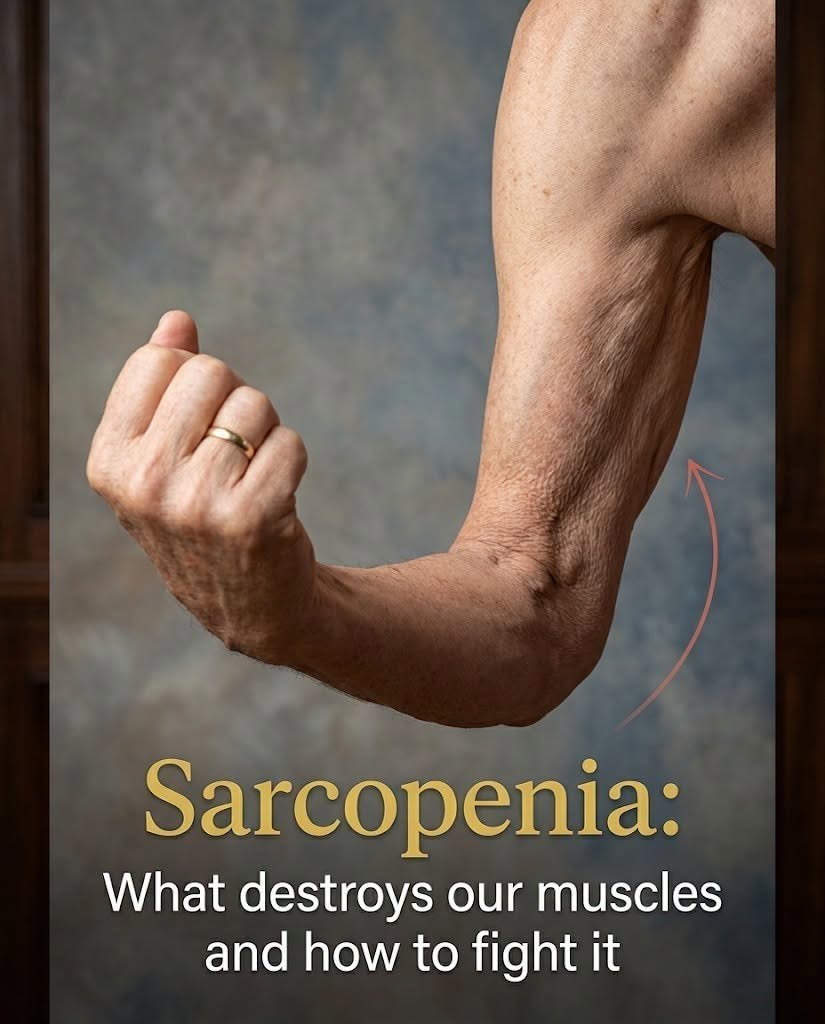
Sarcopenia: The Silent Enemy After 40 – Why Do You Lose Muscle and How Can You Recover It?
Have you noticed that everyday activities seem more difficult than they used to be? Perhaps carrying grocery bags feels heavier, climbing stairs requires more effort, or getting up from a chair takes longer than before.
These changes are sometimes dismissed as a normal part of getting older. However, they may also be signs of a condition called sarcopenia, a gradual loss of muscle strength, muscle mass, and physical performance.
Sarcopenia is particularly common among older adults, but the biological processes contributing to muscle loss can begin much earlier. Changes in muscle health may become noticeable during middle age, especially when combined with physical inactivity, poor nutrition, chronic illnesses, or hormonal changes.
The good news is that muscle loss is not always inevitable, and it is never too late to work toward stronger muscles.
Understanding why sarcopenia develops, recognizing its early signs, and adopting the right exercise and nutrition habits can make a meaningful difference in maintaining independence and quality of life.
What Is Sarcopenia?
Sarcopenia is a progressive skeletal muscle disorder characterized by reduced muscle strength, reduced muscle quantity or quality, and impaired physical performance.
It becomes increasingly common with age and can affect a person’s ability to perform ordinary daily activities.
Muscles do much more than help us lift objects or move our bodies. They also support balance, protect joints, contribute to metabolism, help regulate blood sugar, and allow us to remain physically independent.
When muscle strength declines significantly, even simple activities can become challenging.
For example, a person may begin experiencing difficulty:
Climbing stairs.
Walking long distances.
Carrying shopping bags.
Getting up from a chair.
Opening heavy doors.
Maintaining balance.
Recovering after an illness.
Sarcopenia is not simply about looking thinner or having smaller arms. A person can experience muscle weakness even without an obvious change in body weight.
In fact, someone may lose muscle while gaining body fat, a situation sometimes described as sarcopenic obesity.
This is one reason why body weight alone cannot provide a complete picture of muscle health.
Why Can Muscle Loss Begin After 40?
Although sarcopenia is more common in older adults, several age-related processes can gradually affect muscle health during middle age.
There is no exact birthday when muscle loss suddenly begins. The rate varies considerably between individuals.
Here are some of the main reasons muscle strength and mass may decline over time.
1. Natural Age-Related Changes
As people get older, their bodies undergo changes that influence how muscles grow, repair themselves, and respond to physical activity.
Muscle protein synthesis may become less responsive to nutritional and exercise signals.
This means older adults may need more deliberate attention to resistance training and adequate protein intake to maintain muscle tissue.
The number and function of certain muscle fibers may also decline with age.
These changes can contribute to reduced strength, slower movement, and lower physical endurance.
However, aging does not automatically mean becoming weak. Regular exercise can help preserve muscle function well into later life.
2. Physical Inactivity
One of the most important contributors to muscle loss is a lack of regular physical activity.
Muscles respond to use. When they are regularly challenged through movement and resistance exercises, the body receives signals to maintain and strengthen them.
When muscles remain inactive for extended periods, they can gradually become weaker and smaller.
This may happen in people who:
Spend most of the day sitting.
Rarely participate in physical exercise.
Avoid walking whenever possible.
Stop exercising after retirement.
Remain inactive during recovery from illness.
Spend long periods confined to bed.
Even relatively short periods of immobilization can cause noticeable muscle loss, particularly in older adults.