Saw this hack the other day and thought it was brilliant
Keeping houseplants healthy and beautiful requires more than sunlight and occasional watering. Different plants have different needs, and finding the right watering routine can sometimes be surprisingly difficult.
Water too little, and the leaves may become dry, yellow, or wilted. Water too much, and the roots may become waterlogged, increasing the risk of root rot.
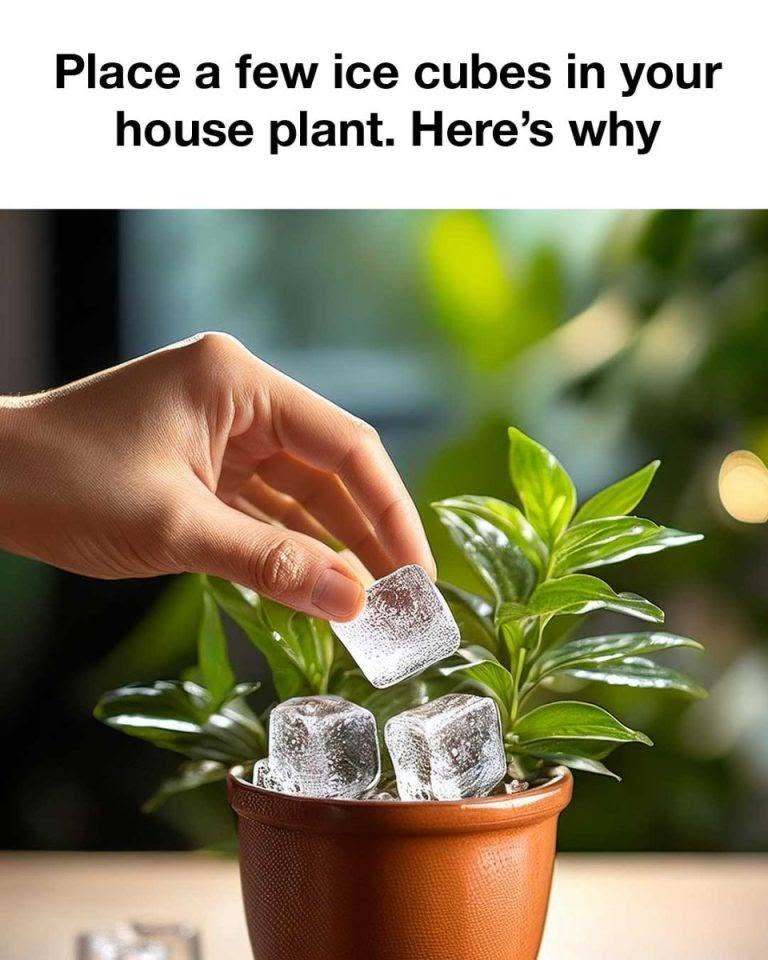
Recently, a simple gardening trick has attracted attention: placing a few ice cubes on the soil of a houseplant instead of watering it directly.
At first, the idea might seem unusual. After all, plants naturally grow in warm environments, and ice is extremely cold compared with the water they normally receive.
So why are people putting ice cubes in their flowerpots? Does this trick actually work, and is it safe for every indoor plant?
The answer depends on the type of plant, the amount of ice used, and how the water is distributed throughout the soil.
Let’s explore the science behind this popular gardening technique.
1. Why Do People Put Ice Cubes in Houseplants?
The main idea behind this trick is to provide water gradually.
When an ice cube melts, it releases water slowly rather than delivering a large amount all at once.
This can make it easier to control how much water enters a small flowerpot.
For people who occasionally forget to water their plants or tend to pour too much water into their pots, the method may seem convenient.
Instead of pouring water directly from a bottle or watering can, they place a few ice cubes on the soil and allow them to melt.
The melting ice gradually releases water that can move into the potting mixture.
However, this does not mean ice cubes are better than ordinary room-temperature water.
The real benefit, when there is one, comes from controlling the amount and rate of watering.