Stop Throwing Away Eggshells: How to Reuse Them Around Your Home and Garden
Eggshells are one of the most commonly discarded kitchen scraps. After preparing breakfast, baking a cake, or making a simple omelet, many people automatically throw the shells into the trash without thinking twice.
But eggshells are primarily made of calcium carbonate, which means they contain a large amount of calcium. Because of this, eggshells have traditionally been reused in gardens, compost, and a variety of household projects.
You may have seen viral posts telling people to boil eggshells and “say goodbye to” various health problems. Those claims should be approached carefully. Eggshell water isn’t a proven treatment for joint pain, arthritis, osteoporosis, or other medical conditions. However, properly prepared eggshells can have some practical uses, particularly in gardening.
So before you throw your next batch of eggshells away, let’s look at what you can actually do with them.
Why Are Eggshells Interesting?
An eggshell may look like nothing more than waste, but chemically it is quite different from most kitchen scraps.
Eggshells are composed largely of calcium carbonate, along with small amounts of other minerals and organic components.
Calcium carbonate is also found in materials such as limestone and certain agricultural lime products.
This is why crushed eggshells are sometimes added to garden soil.
However, there is an important distinction between containing calcium and being an immediately effective source of calcium for plants.
Eggshells break down relatively slowly, especially when they are left in large pieces. Finely crushed or powdered shells can break down more readily, but the process still isn’t instantaneous.
1. Use Eggshells in the Garden
One of the most practical ways to reuse eggshells is in gardening.
After using eggs, rinse the shells thoroughly to remove remaining egg residue.
Allow them to dry completely.
Once dry, crush them into small pieces or grind them into a powder.
You can then incorporate the crushed shells into soil or compost.
Because eggshells contain calcium carbonate, they can contribute calcium to the soil as they gradually break down.
However, don’t assume that every plant needs additional calcium.
If your soil already contains sufficient calcium, adding large amounts of eggshells may provide little benefit.
A soil test is a much better way to determine whether your garden actually needs a particular amendment.
2. Eggshells and Soil pH
Calcium carbonate is alkaline, which means eggshells can potentially influence soil acidity as they break down.
This is one reason crushed eggshells are sometimes compared with agricultural lime.
However, eggshells generally act much more slowly than finely processed agricultural lime.
If your garden has significantly acidic soil and you need to change its pH, commercially prepared soil amendments are usually more predictable.
Eggshells can still be useful as a recycled household material, but they shouldn’t be considered a replacement for every type of soil treatment.
3. Add Eggshells to Compost
Eggshells can also be included in a home compost pile.
Before adding them, rinse away leftover egg and allow the shells to dry.
Crushing them into smaller pieces can make them easier to incorporate into the compost.
Unlike fruit and vegetable scraps, eggshells don’t rapidly decompose.
Instead, their mineral material remains and gradually breaks down.
Adding crushed shells to compost is therefore a convenient way to return some minerals to the garden rather than sending the shells to a landfill.
4. Why Boil Eggshells?
You may see recipes online that recommend boiling eggshells before using them.
The main reason people do this is to clean the shells and reduce contamination from leftover egg material.
If you’re reusing shells from eggs that have been cracked open, washing them thoroughly and drying them is important.
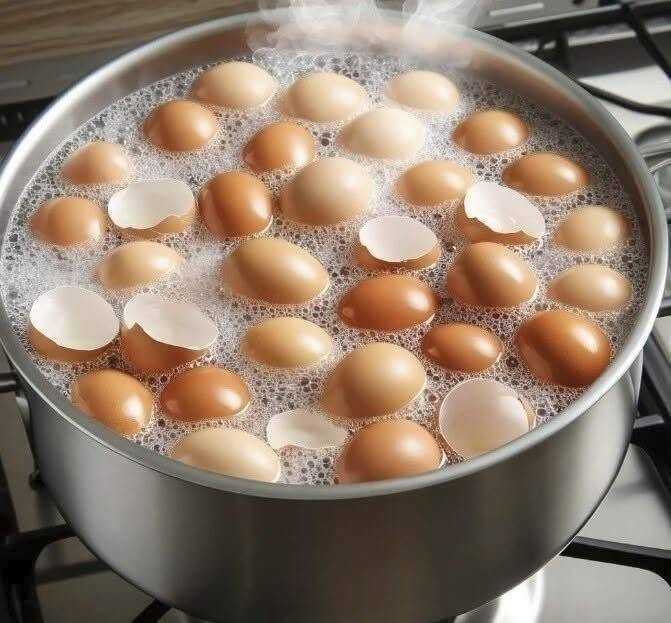
Some people boil the shells, allow them to dry completely, and then crush or grind them.
Boiling does not magically transform eggshells into a powerful medicine or fertilizer.
It is primarily a preparation and sanitation step.
5. Making Eggshell Powder
If you want to reuse eggshells in the garden, making a fine powder is one option.
Step 1: Collect the shells
Save clean eggshells after cooking.
Step 2: Rinse them
Wash away remaining egg residue.
Step 3: Dry them
Allow the shells to dry thoroughly.
You can place them in a warm oven briefly or let them air-dry completely.
Step 4: Crush them
Break the shells into smaller pieces.
Step 5: Grind them
Use a clean grinder or mortar and pestle to turn them into a finer powder.
Step 6: Store them
Keep the powder in a clean, dry container until you’re ready to use it.
The finer the material, the greater the surface area exposed to the soil, which can help it break down more readily.