Soak Berries in Salt Water: Why Do Tiny Bugs Sometimes Come Out?
Vinegar-water washes are also popular online.
Some people believe that vinegar can eliminate every microorganism from fruit.
It is important to keep expectations realistic.
Vinegar may affect certain microorganisms, but household vinegar should not be treated as a guarantee that produce is completely free of pathogens.
It can also affect flavor and texture if the fruit is soaked too long.
For ordinary home food preparation, thorough rinsing with clean running water is a practical approach.
Why You Should Wash Fruit Even If You Peel It
It may seem unnecessary to wash fruit if you plan to remove the skin.
But when cutting fruit, contaminants on the outside can potentially be transferred to the edible portion by your hands, knife, or cutting board.
Washing the fruit first helps reduce this possibility.
This is particularly relevant when handling fruits that are cut before eating.
What If the Strawberries Came From a Garden?
Home-grown strawberries are not automatically free from insects.
In fact, garden-grown produce can come into contact with many natural organisms.
This is not necessarily a problem.
Garden produce can be nutritious and delicious, but it should still be inspected and washed before eating.
Pay attention to damaged berries, insect activity, animal contamination, and visible mold.
What If You Already Ate the Strawberries?
If you ate fresh strawberries and later discovered a tiny insect or larva, there is usually no reason to panic.
Accidental ingestion of a small insect does not automatically cause illness.
Monitor yourself normally.
If you develop significant symptoms such as persistent vomiting, severe abdominal pain, difficulty breathing, swelling, or another serious reaction, seek medical attention.
People with known severe food allergies should be particularly attentive to symptoms after eating unfamiliar foods.
The Difference Between Insects and Harmful Microorganisms
One of the biggest misconceptions surrounding viral produce videos is that visible insects are necessarily the most dangerous thing on the fruit.
In reality, many foodborne microorganisms are microscopic.
You cannot see them swimming around in a bowl.
This is why food safety should not focus exclusively on whether fruit contains visible bugs.
Proper storage, washing, refrigeration when appropriate, clean hands, and avoiding spoiled produce are all important.
Should You Soak Every Berry Before Eating It?
You don’t need to turn every package of strawberries into a science experiment.
A simple routine is enough for most people.
When you bring berries home:
Inspect them.
Remove visibly spoiled or moldy fruit.
Keep them stored appropriately.
Wash the amount you plan to eat under clean running water.
Handle them with clean hands.
Eat them while they are fresh.
This is much more practical than repeatedly soaking fruit in increasingly concentrated mixtures.
Why Viral Images Can Be Misleading
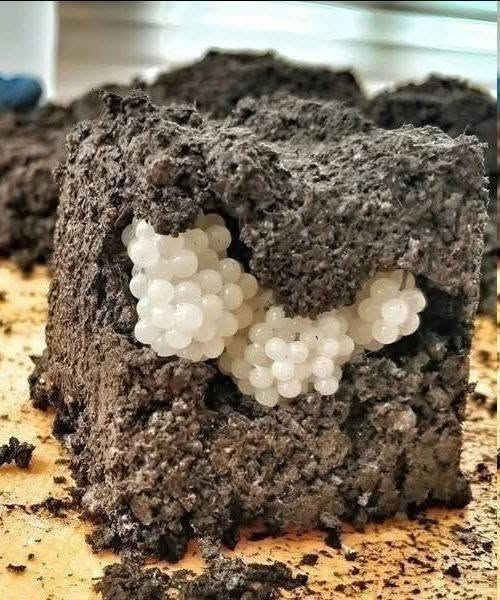
The photograph accompanying the claim shows an extreme example with a large number of white, worm-like objects.
Images like this can attract attention because they create a strong emotional reaction.
However, online images may not show ordinary everyday conditions.
The photograph might involve a particular infestation, a specific type of fruit, a staged demonstration, or an image whose original context is unknown.
Therefore, it should not be used to conclude that every package of strawberries contains hundreds of larvae.
A good food-safety message should inform people without creating unnecessary fear.
What Is the Best Way to Store Strawberries?
Proper storage can help preserve freshness.
Keep strawberries refrigerated when appropriate.
Avoid crushing them under heavy containers.
Remove visibly damaged fruit.
Don’t wash the entire package days before you plan to eat it if doing so causes the berries to remain wet, because excess moisture can encourage deterioration.
Instead, wash the portion you plan to consume.
Keeping berries dry until they’re needed can help maintain their quality.
A Simple Strawberry Inspection
Before eating strawberries, take a few seconds to look at them.
Check for:
Mold: fuzzy white, green, gray, or black growth.
Soft spots: areas that have collapsed or become unusually mushy.
Leaks: juice escaping from damaged fruit.
Unusual odors: sour, fermented, or rotten smells.
Visible insects: tiny organisms or insect activity.
If something looks clearly abnormal, don’t eat it.
It is better to discard a questionable berry than worry about whether it is safe after eating it.
Are Strawberries Still Healthy?
Absolutely.
The presence of insects in the agricultural environment does not make strawberries inherently unhealthy.
Strawberries provide vitamin C, fiber, water, and numerous plant compounds.
They can be part of a healthy diet.
The goal is not to eliminate every microscopic organism from food, which is impossible.
The goal is to handle food sensibly and reduce avoidable risks.
The Real Lesson Behind the Viral Salt-Water Trend
The most useful lesson isn’t “strawberries are full of worms.”
That statement is far too broad.
A more accurate lesson is:
Fresh produce grows outdoors and can occasionally carry insects, eggs, larvae, soil, or other contaminants. Inspecting and washing produce before eating it is a sensible habit.
If you discover an unusual amount of insects or larvae, don’t eat the affected fruit until you’ve decided whether it should be discarded.
You also don’t need to panic.
Final Thoughts
Seeing tiny white, worm-like organisms emerge from strawberries can certainly be disturbing.
But the viral claim that every strawberry is secretly filled with dangerous parasites is misleading.
Some fresh fruit can contain insects or insect larvae, particularly when grown outdoors. Certain pests are associated with berries, and soaking or disturbing fruit can sometimes make small organisms more visible.
However, an image cannot tell us exactly what the organisms are.
If you encounter something unusual, the safest approach is simple:
Stop and inspect the fruit.
Discard berries that are moldy, rotten, heavily damaged, or heavily infested.
Rinse fresh berries thoroughly under clean running water before eating them.
Do not use soap or household cleaning chemicals on food.
Avoid unnecessarily long soaking periods.
And remember that seeing an insect does not automatically mean that the fruit contains a dangerous human parasite.
Fresh produce can still be an important part of a healthy diet. The goal is not to fear fruit, but to handle it carefully.
So the next time you bring home a container of strawberries, don’t panic and don’t assume that every berry is full of worms. Simply inspect them, remove anything spoiled, rinse the fruit properly, and enjoy the strawberries while they’re fresh.