Stop Throwing Away Brown Bananas: Simple Storage Tricks to Keep Them Fresh Longer
Another popular storage trick involves wrapping the stems of bananas with plastic wrap or a small piece of foil.
The idea is to reduce the release or movement of ethylene around the point where the bananas connect.
There is some practical reasoning behind this technique, and wrapping the crown of a bunch may help slow ripening under certain conditions.
However, the effect is generally limited.
It should not be expected to stop ripening completely or guarantee that bananas remain bright yellow for more than two weeks.
If you want to try the method, follow these simple steps:
Choose bananas that are firm and not already heavily spotted.
Keep the bunch clean and dry.
Wrap the connected crown or stems loosely and securely.
Store the bananas away from direct sunlight and heat.
Check the fruit regularly for soft spots or signs of spoilage.
You can also separate individual bananas from the bunch if you find that doing so works better in your kitchen.
The main benefit is that you are experimenting with a low-cost method that may modestly slow changes in ripeness.
Still, temperature and the condition of the fruit when purchased are likely to have a more noticeable influence on how long the bananas remain usable.
6. Keep Bananas Away From Other Ripening Fruits
One often-overlooked factor is what you store beside your bananas.
Apples, pears, avocados, and several other fruits release ethylene during ripening.
When ethylene-sensitive produce is stored nearby, exposure to this gas can accelerate ripening.
If you want bananas to remain firm for longer, consider storing them separately from other ripe fruits.
For example, instead of placing bananas in a crowded fruit bowl containing apples, pears, avocados, and other bananas, give them their own space.
A simple fruit stand or open basket may be sufficient.
However, separation is not a perfect solution because bananas produce ethylene themselves. The goal is to reduce unnecessary exposure from other sources, not to eliminate a natural process entirely.
It is also worth remembering that different fruits respond differently to ethylene. Some vegetables and other produce may deteriorate more quickly when stored near ethylene-producing fruits.
A little organization in the kitchen can therefore help reduce food waste beyond bananas alone.
7. Should You Hang Bananas Instead of Putting Them in a Bowl?
Banana hangers are popular because they allow a bunch to hang freely rather than resting on a counter.
This can help reduce pressure on the lower bananas and minimize some bruising.
When bananas rest against a hard surface or press against one another, damaged areas may become darker and softer.
Hanging the bunch can improve air circulation and distribute its weight more evenly.
However, hanging bananas does not stop ripening.
A banana hanger is primarily a practical way to store the fruit and reduce physical damage.
If you do not have a banana hanger, you can still protect your bananas by placing them in a stable, well-ventilated location where they are unlikely to be crushed.
Avoid stacking heavy fruit on top of them.
Also, do not assume that a hanging bunch will necessarily last longer than a carefully stored bunch in every situation. The outcome depends on temperature, ripeness, and other conditions.
8. Choose the Right Bananas at the Store
One of the best ways to extend the period during which you can enjoy bananas is to choose fruit according to when you plan to eat it.
If you want bananas for the next day or two, yellow bananas with a few small brown spots may be ideal.
If you want them to last several days before becoming fully ripe, choose bananas that are still slightly green near the stem.
Inspect the bunch for damage.
Avoid fruit with extensive bruising, leaking flesh, broken peels, or other signs of deterioration.
The ripeness of the bananas when purchased makes a substantial difference.
A bunch that is already very soft and heavily spotted cannot reasonably be expected to remain bright yellow for another two weeks simply because it is placed in a special container.
If your household eats bananas frequently, buying smaller quantities more often may also reduce waste.
For example, you could purchase some bananas that are ready to eat and others that are still slightly green. This spreads their ripening over several days.
9. What Do Brown Spots on Bananas Actually Mean?
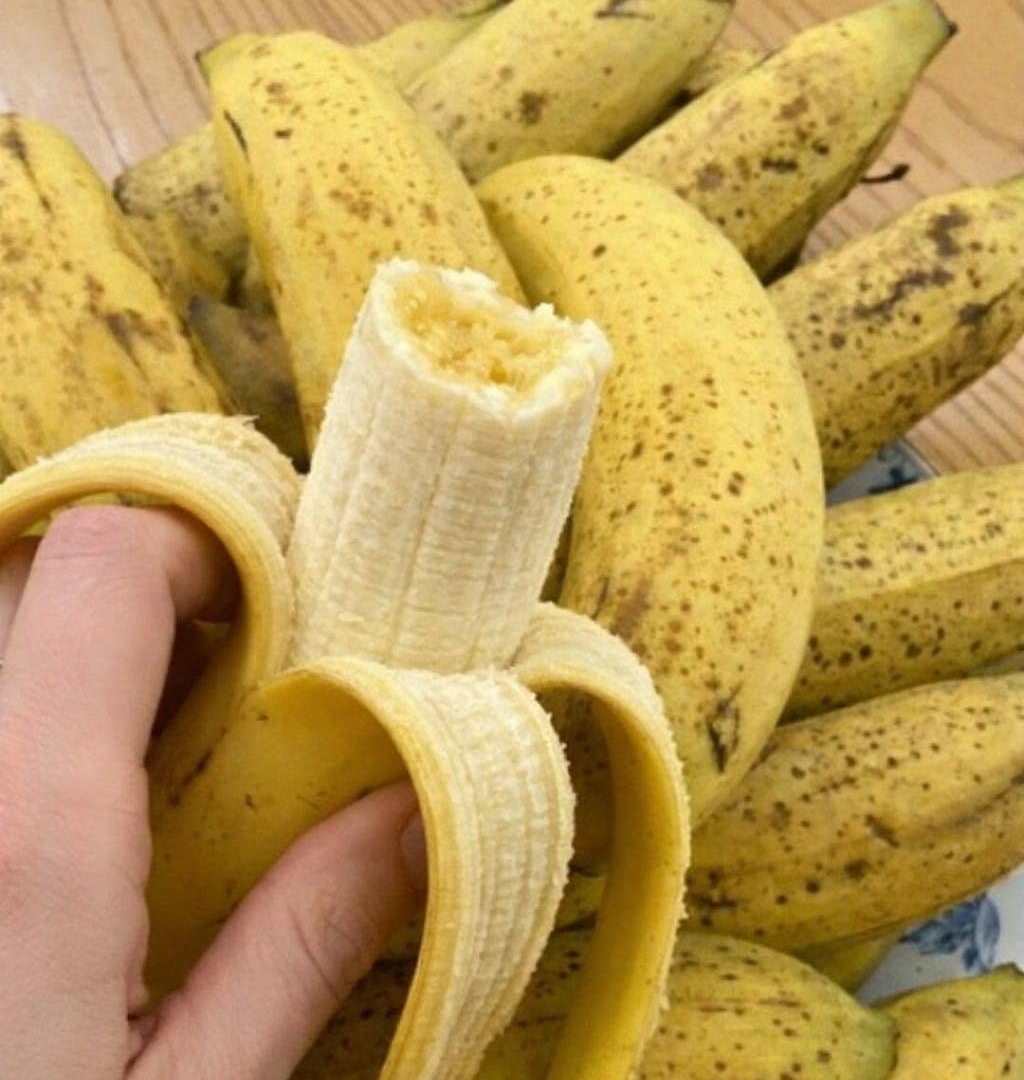
Brown spots are not necessarily a sign that a banana has gone bad.
Small brown speckles often appear as bananas ripen and become sweeter.
Many people actually prefer bananas at this stage because the flesh is soft and the flavor is more pronounced.
The appearance of the peel alone is not a perfect indicator of the condition of the fruit inside.
A banana with a dark peel may still have flesh that is suitable to eat.
However, you should distinguish ordinary ripening from spoilage.
Signs that a banana may have spoiled include:
Visible mold.
Leaking or unusually watery flesh.
An unpleasant, fermented, or rotten smell.
Extensive softening accompanied by deterioration.
An unusual appearance that suggests contamination or decay.
If a banana has mold on the flesh or peel, or shows other clear signs of spoilage, it is safer to discard it.
A few brown spots, by contrast, are usually a normal part of ripening.
10. Do Brown Bananas Have Any Nutritional Benefits?
Brown-spotted bananas can still provide useful nutrients.
Bananas contain carbohydrates, dietary fiber, potassium, vitamin B6, and other nutrients.
As bananas ripen, their starch content changes and some of the starch is converted into sugars.
This makes ripe bananas sweeter and generally softer.
The nutritional composition changes during ripening, but a banana does not suddenly become nutritionally worthless when brown spots appear.
In fact, very ripe bananas can be especially useful in recipes because their soft texture and sweetness make them easy to mash.
They can be incorporated into homemade foods without necessarily adding as much extra sugar as a recipe might otherwise require.
However, ripe bananas are not a special treatment for any disease, and their sweetness should still be considered by people who need to manage carbohydrate intake.
The important point is that a banana with a few brown spots can still be a perfectly reasonable food choice.
There is no need to discard it solely because the peel is no longer bright yellow.
11. The Best Way to Save Overripe Bananas: Freeze Them
If you regularly find yourself with more ripe bananas than you can eat, freezing is one of the most practical solutions.
Frozen bananas are convenient because they can be stored for later use without requiring you to eat the fruit immediately.
Here is a simple method.
Step 1: Peel the bananas
Remove the peel before freezing. Frozen banana peels can become difficult to remove, so peeling the fruit first makes later preparation easier.
Step 2: Cut the bananas into pieces
Slice the bananas into rounds or chunks, depending on how you intend to use them.
Smaller pieces are convenient for smoothies and blended recipes.
Step 3: Freeze the pieces
Spread the pieces on a tray lined with baking paper and freeze until firm.
This helps prevent them from sticking together in one large clump.
Step 4: Transfer them to a freezer-safe container
Place the frozen pieces in a suitable airtight container or freezer bag.
Remove excess air where practical and label the container with the date.
Step 5: Use them when needed
Frozen bananas work well in smoothies, baking, and blended desserts.
They can also be mashed for recipes that call for ripe bananas.
For best quality, use them within a reasonable storage period and follow appropriate freezer-storage guidance.
Freezing does not restore spoiled fruit, so freeze bananas while they are still in good condition.
12. How to Make Overripe Bananas Useful in the Kitchen
Instead of treating brown bananas as waste, think of them as an ingredient.
Their softer texture and stronger sweetness make them suitable for many recipes.
Banana bread
Mashed ripe bananas provide moisture and flavor in homemade banana bread.
The recipe may require less added sugar than one made with less-ripe bananas, depending on the other ingredients.
Banana pancakes
Mashed bananas can be incorporated into pancake batter to add sweetness and a soft texture.
Smoothies
Frozen banana pieces blend into a thick, creamy drink.
They can be combined with milk, yogurt, oats, or other fruits according to your preferences.
Oatmeal
Slices of ripe banana can be added to oatmeal for sweetness and texture.
Frozen banana desserts
Frozen banana pieces can be blended into a smooth dessert. Additional ingredients can be added to create different flavors.
These ideas help reduce food waste while making use of the fruit at different stages of ripeness.
However, always discard bananas that show signs of spoilage rather than trying to hide the problem by blending or baking them.