The “Plant That Cures Everything”? What Raisins Can Really Do for Your Body
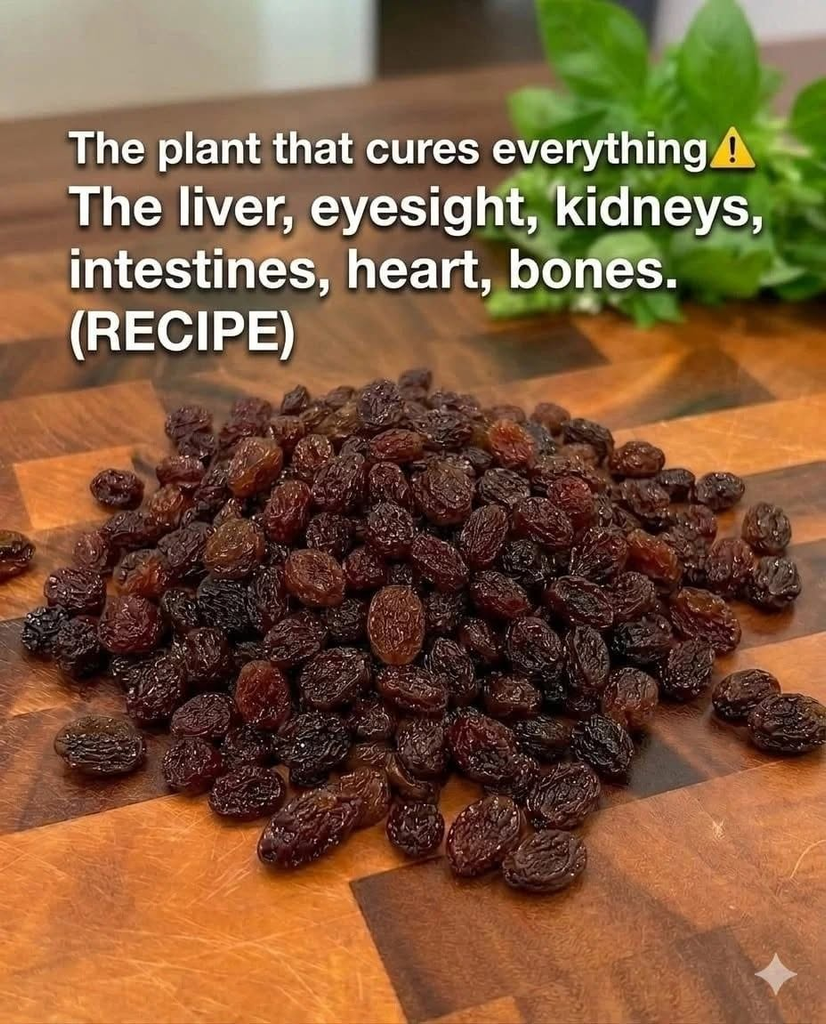
The image shows a pile of dark raisins with a dramatic claim:
“The plant that cures everything! The liver, eyesight, kidneys, intestines, heart, bones.”
Raisins are certainly nutritious, but this headline goes far beyond what food can realistically do. Raisins do not cure every disease, cleanse every organ, or replace medical treatment.
There is also an important correction right at the beginning: raisins are not a separate medicinal plant. They are dried grapes. Fresh grapes are dehydrated, concentrating many of their nutrients and natural sugars into a much smaller portion.
That does not make raisins unhealthy. In fact, raisins can be a useful food when eaten in reasonable portions. They contain fiber, potassium, copper, iron, and various plant compounds. But understanding what they can—and cannot—do is much more useful than believing a viral “cure-all” claim.
What Are Raisins?
Raisins are grapes that have been dried naturally or through controlled drying processes.
Removing most of the water makes the fruit smaller and more concentrated.
This means that a handful of raisins contains much more sugar and calories than the same visual volume of fresh grapes.
For example, you might easily eat a large amount of raisins without realizing how much fruit you have consumed because the water has been removed.
This is one reason portion size matters.
Raisins can be:
Eaten as a snack
Added to oatmeal
Mixed into yogurt
Used in salads
Added to rice dishes
Included in baked goods
Combined with nuts and seeds
Used in homemade energy mixes
They are convenient because they don’t spoil as quickly as fresh grapes and are easy to carry.
Raisins and the Digestive System
One of the more reasonable health claims surrounding raisins involves digestion.
Raisins contain dietary fiber, which contributes to normal bowel function.
Fiber helps add bulk to stool and can support regular bowel movements. Raisins also contain naturally occurring sugars such as sorbitol and fructose, which can contribute to their mild laxative effect in some people.
This is why some people find dried fruit helpful when they are constipated.
However, raisins aren’t a guaranteed treatment for constipation.
Constipation can have many causes, including:
Not consuming enough fiber
Not drinking enough fluid
Lack of physical activity
Certain medications
Changes in routine
Pregnancy
Some medical conditions
Problems affecting the digestive tract
If constipation is persistent or severe, simply eating more raisins may not address the underlying cause.
Can Raisins “Clean” Your Intestines?
This is where viral posts often exaggerate.
Your intestines do not need a special raisin detox.
The digestive tract already has its own mechanisms for moving waste through the body.
Fiber can support healthy bowel movements, but this is not the same thing as “removing toxins” or scraping harmful material from the intestines.
A diet containing adequate fiber from fruits, vegetables, legumes, whole grains, nuts, and seeds is much more important than relying on a single food.
Raisins can contribute to that diet, but they aren’t a magical intestinal cleanser.
Raisins and the Heart
Raisins contain potassium, fiber, and plant compounds that can contribute to a nutritious eating pattern.
Potassium is an important mineral involved in normal nerve function, muscle contraction, and fluid balance.
A diet rich in potassium-containing foods can be beneficial for many people, particularly when it replaces foods high in sodium.
However, eating raisins does not mean that an existing heart condition will disappear.
Heart health depends on many factors, including:
Blood pressure
Cholesterol
Smoking
Physical activity
Body weight
Diabetes management
Overall diet
Family history
Sleep
Alcohol consumption
Other medical conditions
Raisins can be one small part of a heart-conscious diet.
They should not be presented as a treatment for heart disease.
What About Blood Pressure?
The potassium in raisins is one reason they can fit into a balanced diet.
Potassium helps the body regulate fluid balance and plays an important role in cardiovascular function.
But people with high blood pressure should not assume that eating raisins will lower their blood pressure enough to replace medication.
Blood pressure should be measured rather than guessed from symptoms.
If someone has been prescribed blood-pressure medication, they should not stop taking it because they started eating dried fruit.
Diet and medication can work together, but one should not automatically replace the other.
Raisins and the Liver
The liver performs an enormous number of functions, including processing nutrients, producing important proteins, helping regulate metabolism, and breaking down many substances.
There is no special food that can simply “flush” the liver clean.
This is a common theme in detox advertisements and viral health posts, but the liver does not work like a dirty filter that needs to be washed out with a particular drink or food.
Eating raisins does not detoxify the liver in the way these headlines suggest.
What does support liver health?
A balanced diet, maintaining a healthy weight when appropriate, limiting excessive alcohol consumption, being physically active, and managing conditions such as diabetes and high cholesterol can all matter.
Raisins can be included in such a diet, but they are not a liver cure.
Can Raisins Improve Eyesight?
Raisins contain some antioxidants and plant compounds, but that does not mean they can restore damaged eyesight.
Vision depends on the health of the eyes, nerves, brain, blood vessels, and other structures.
Some eye conditions are related to aging, genetics, diabetes, high blood pressure, nutritional deficiencies, or other diseases.
Eating fruit as part of a balanced diet can contribute to overall nutrition, but raisins cannot replace an eye examination or treatment for an eye disease.
If vision suddenly becomes blurry, distorted, painful, or partially disappears, medical attention should be sought promptly.
A food should never be used as a reason to delay evaluation of a significant change in vision.
Raisins and Bone Health
Raisins contain several minerals, including potassium and copper, and they provide small amounts of other nutrients.
Copper contributes to normal connective tissue and bone-related processes.
But raisins should not be described as a treatment for osteoporosis or a way to rebuild severely weakened bones.
Bone health depends on many factors.
Important considerations include:
Adequate calcium
Vitamin D
Protein
Physical activity
Resistance exercise
Hormonal health
Age
Genetics
Smoking
Alcohol consumption
Certain medications
People at risk of osteoporosis may need medical assessment and, in some cases, specific treatment.
Raisins can be part of a healthy diet, but they are not a replacement for appropriate osteoporosis care.
Raisins and the Kidneys
The viral claim specifically mentions the kidneys, but this needs particular caution.
Healthy kidneys regulate fluid balance, electrolytes, and waste products in the blood.
Eating raisins does not “clean” or “flush” the kidneys.
In fact, dried fruits contain concentrated amounts of certain minerals because the water has been removed.
People with kidney disease may have specific dietary restrictions involving potassium, phosphorus, fluids, or other nutrients.
Therefore, someone with significant kidney disease should not assume that large quantities of raisins are automatically beneficial.
Dietary recommendations for kidney disease are highly individual.
What About Kidney Stones?
The relationship between food and kidney stones is complicated because different types of stones have different causes.
Raisins contain oxalates, and oxalate intake can be relevant for people who form certain types of kidney stones.
That does not mean everyone should avoid raisins.
It means that someone with a history of kidney stones should follow individualized dietary advice rather than believing a viral recipe will “flush” the kidneys.
Adequate fluid intake is generally an important part of kidney-stone prevention, although recommendations can differ according to the type of stone and a person’s medical situation.
Raisins Contain Natural Sugar
One thing that should not be overlooked is their sugar concentration.
Because grapes lose water during drying, the natural sugars become concentrated.
A small handful of raisins can therefore provide a substantial amount of carbohydrate.
This matters particularly for people with diabetes or those trying to control their total calorie intake.
It doesn’t mean raisins are forbidden.
Instead, portion size is important.
Combining a modest amount of raisins with protein or healthy fats—for example, plain yogurt and a small amount of nuts—can create a more balanced snack than eating a large bowl of raisins alone.