This Burns Weeds in 1 Day—But Will They Really Never Grow Again?
Weeds can appear almost anywhere. They push through cracks in sidewalks, grow between paving stones, spread along driveways, and seem to return just when you think you have finally removed them.
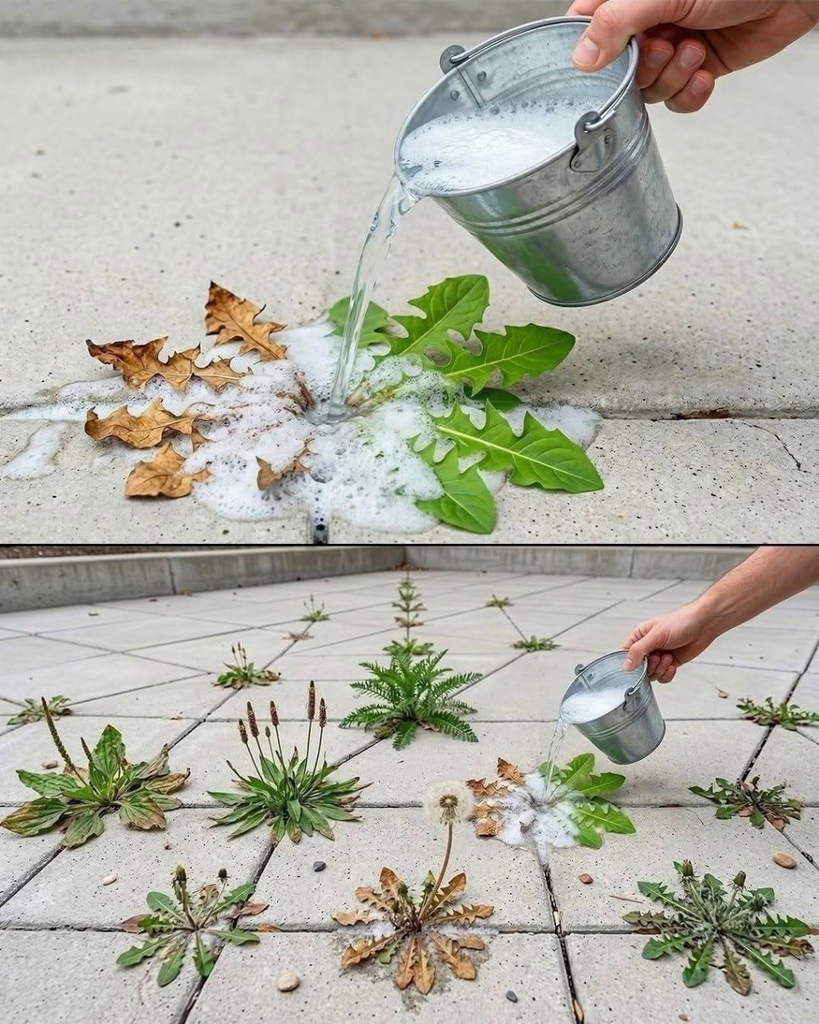
That is why homemade weed-killing solutions are so popular. The image above shows a foamy liquid being poured directly onto weeds growing between paving stones, accompanied by the claim that the treatment can “burn weeds in one day” and prevent them from ever growing again.
There is some truth behind the idea—but the viral claim needs an important correction.
A homemade solution can sometimes cause weeds to wilt, brown, and die surprisingly quickly. However, no simple homemade mixture can guarantee that weeds will never grow back again. Some weeds can recover from damage, while others can regrow from roots or seeds already present in the soil and cracks.
The good news is that there are practical ways to control weeds without spending hours pulling them individually.
Why Weeds Are So Difficult to Eliminate
A weed is simply a plant growing where you don’t want it.
The problem is that many common weeds are extremely adaptable.
They can survive:
Heat
Dry conditions
Poor soil
Foot traffic
Compact soil
Small amounts of water
Repeated cutting
Limited sunlight
Some weeds also produce enormous numbers of seeds.
A plant may appear to be completely dead above the surface while its roots remain alive underneath.
That’s one reason why simply making the leaves brown doesn’t necessarily mean the entire plant has been eliminated.
What Is the Foamy Liquid in the Image?
The photograph doesn’t provide enough information to determine exactly what is inside the bucket.
The white foam could come from a mixture containing a detergent or another foaming ingredient, but you should not assume that the exact recipe shown in the image is known.
Many viral gardening posts use photographs of generic homemade mixtures and then attach a dramatic recipe to them.
Common homemade weed-control mixtures found online may contain ingredients such as:
Vinegar
Dish soap
Salt
Water
Boiling water
These ingredients don’t all work in the same way.
Some damage the leaves.
Some dry out plant tissue.
Some can interfere with the plant’s ability to retain water.
Others mainly help a liquid spread across the leaves.
Understanding the difference is important.
Why Vinegar Can Kill Weeds
Vinegar contains acetic acid.
When a sufficiently strong vinegar solution contacts plant leaves, it can damage plant tissue.
The effect can be especially noticeable on young, small weeds.
Within a relatively short period, the leaves may begin to:
Wilt
Brown
Dry out
Curl
Collapse
This is why vinegar-based weed treatments can appear to work so quickly.
But there is a major limitation.
Vinegar generally works primarily by damaging the plant tissue it contacts.
It doesn’t necessarily travel throughout the entire plant and destroy every part of an established root system.
A large perennial weed may therefore recover.
Why Dish Soap Is Sometimes Added
Dish soap is frequently included in homemade weed-control recipes.
But dish soap isn’t necessarily the ingredient doing the majority of the weed killing.
Its primary role in many mixtures is to act as a surfactant.
Plant leaves can have waxy surfaces that cause water-based liquids to bead up and roll away.
A surfactant can help the liquid spread across the leaf surface rather than immediately running off.
That can increase contact between the treatment and the foliage.
However, using more soap doesn’t automatically make the treatment better.
Excessive detergent can damage surrounding plants and may also affect soil organisms and surfaces.