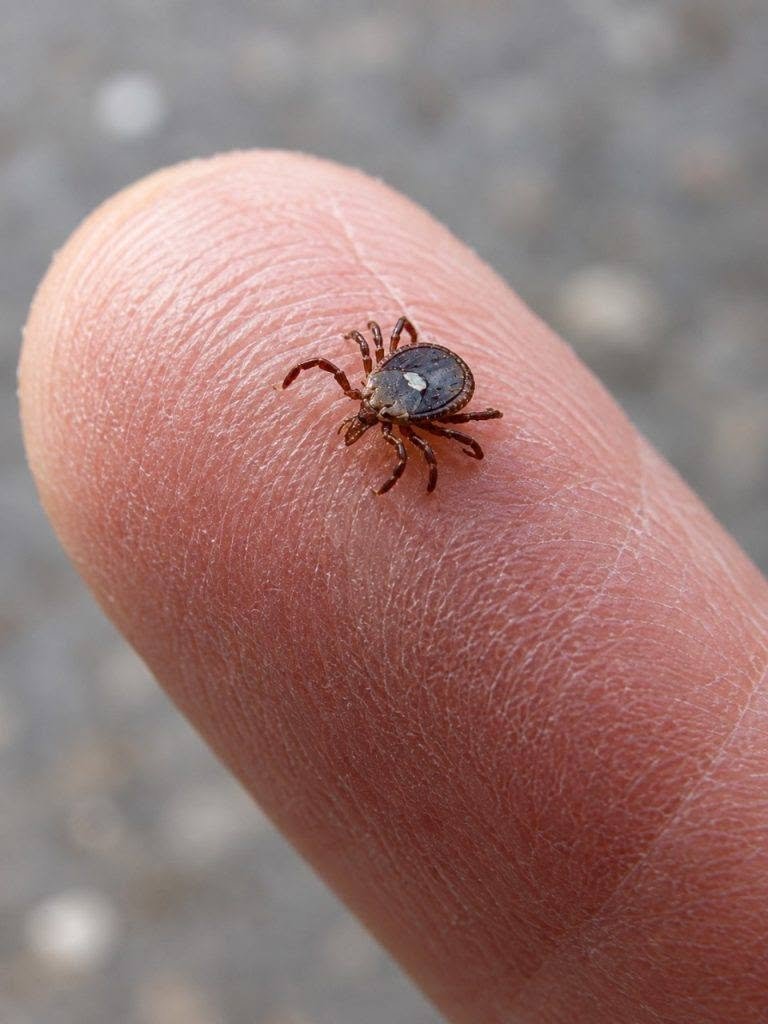
Ticks on the Skin: What to Know, How to Remove Them Safely, and How to Reduce Your Risk
Ticks are tiny parasites that feed on the blood of humans and animals. They are commonly found in grass, brush, forests, gardens, and areas where animals pass through. A tick can attach to the skin without immediately causing noticeable pain, which means a person may not realize they have been bitten until they discover the tick.
Although many tick bites do not cause serious illness, some ticks can transmit infections. For that reason, finding a tick on the skin is a good reason to remove it promptly and correctly.
The good news is that removing a tick does not usually require complicated equipment. The safest approach is simple: use fine-tipped tweezers, grasp the tick as close to the skin as possible, and pull it upward with steady pressure.
What Is a Tick?
A tick is a small arachnid, meaning it is related to spiders and mites rather than insects.
Ticks have eight legs once they reach their nymph or adult stages. Their size varies considerably. Some can be extremely small, especially young ticks, while adults can be easier to see.
Ticks do not jump or fly. Instead, they typically crawl onto vegetation or other surfaces and attach themselves when a person or animal brushes against them.
After attaching, a tick can remain on the skin and feed for an extended period.
This is why checking your skin after spending time outdoors can be important.
Why Tick Bites Matter
The bite itself may be relatively minor, but certain ticks can transmit microorganisms that cause disease.
Depending on the tick species and geographic region, tick-associated illnesses can include bacterial, viral, or parasitic infections.
Not every tick carries an infection, and not every tick bite results in illness.
However, the risk varies according to several factors, including:
The species of tick
Where the exposure occurred
How long the tick was attached
Whether the tick was carrying a particular pathogen
The person’s health and immune system
The symptoms that develop afterward
This is why it is important not to panic when finding a tick, but also not to ignore the bite completely.
How to Remove a Tick Safely
If you discover an attached tick, remove it as soon as reasonably possible.
You will generally need:
Fine-tipped tweezers
Soap and water
An antiseptic or alcohol-based skin cleanser if available
Step 1: Find the Tick Clearly
Move hair away from the area so that you can see exactly where the tick is attached.
Good lighting can make the process easier.
If someone else is helping you, have them hold a light while you work.
Step 2: Use Fine-Tipped Tweezers
Place the tips of the tweezers as close to the skin as possible.
The goal is to grasp the tick near its mouthparts rather than squeezing the swollen body.
This helps reduce the chance of crushing the tick.
Step 3: Pull Straight Up
Once you have a firm grip, pull upward slowly and steadily.
Do not jerk the tweezers suddenly.
Do not twist the tick from side to side.
The objective is to remove the tick in one controlled movement.
Step 4: Clean the Area
After the tick has been removed, clean the bite area and your hands with soap and water.
You can also use an appropriate antiseptic if available.
Step 5: Check the Skin
Look carefully at the area to make sure the tick has been removed.
Sometimes a small dark spot or tiny piece may remain, particularly if the tick was crushed during removal.
If part of the mouthpiece remains embedded and cannot easily be removed with clean tweezers, do not repeatedly dig into the skin. The remaining material may eventually work its way out as the skin heals.
What You Should NOT Put on an Attached Tick
There are many traditional suggestions for making a tick release its grip.
Some people recommend:
Petroleum jelly
Oil
Nail polish
Alcohol poured directly onto the tick
Burning the tick
Applying extreme heat
Other chemicals
These methods are not recommended.
Trying to make the tick detach by irritating it can increase handling and may make removal more difficult.
The simplest approach is mechanical removal with fine-tipped tweezers.
Grasp it close to the skin and pull upward steadily.