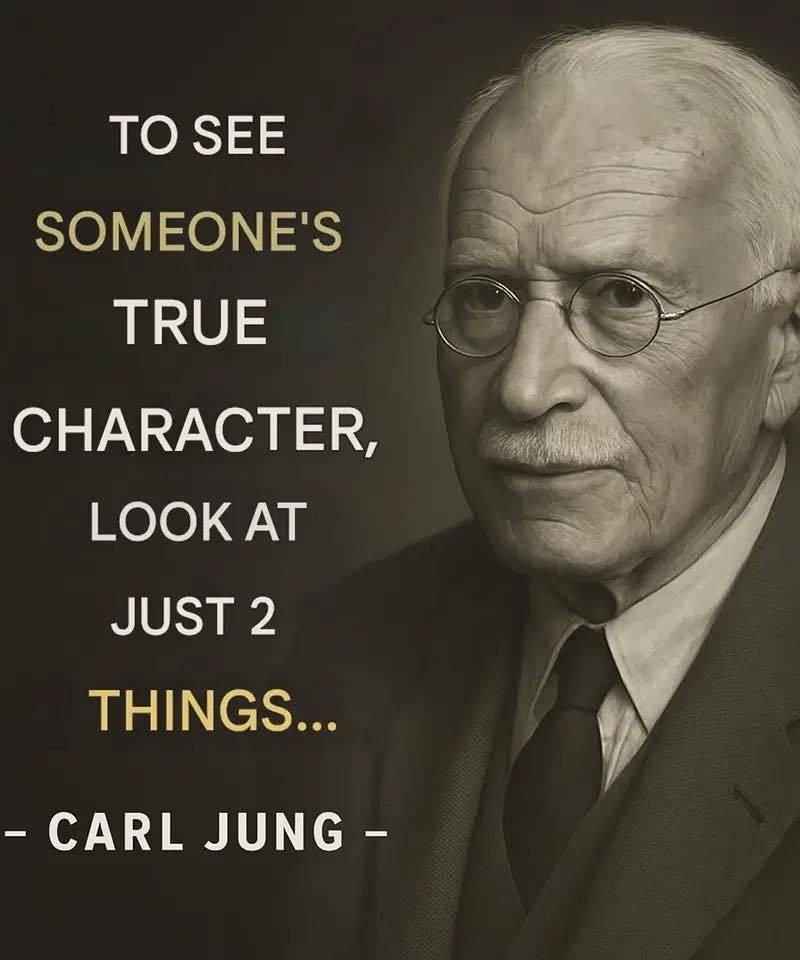
To See Someone’s True Character, Observe These Two Things
Carl Jung’s psychological theories encourage us to look beyond appearances and pay attention to the deeper patterns that shape human behavior. People may present themselves as kind, generous, honest, or confident, but their true character often becomes clearer through their everyday actions, especially when circumstances challenge their values.
Two things are particularly revealing: how someone treats people who can do nothing for them and how they behave when things do not go their way.
These two situations can reveal important aspects of a person’s character, emotional maturity, empathy, and values. Understanding them can help us build healthier relationships, recognize warning signs, and make wiser decisions about whom we allow into our lives.
1. How They Treat People Who Can Do Nothing for Them
One of the most revealing ways to understand someone is to observe how they treat people from whom they have nothing to gain.
Pay attention to how a person speaks to waiters, cleaners, cashiers, strangers, elderly people, and anyone they consider less powerful or less important than themselves.
Do they show patience and respect? Do they listen when someone speaks? Can they express disagreement without humiliating another person? Or do they become rude, dismissive, and demanding when they believe there will be no consequences for their behavior?
These small interactions can reveal a great deal.
Someone may be charming around a wealthy person, a successful colleague, or someone who could offer them an opportunity. However, when they treat others with kindness regardless of status, their behavior suggests that respect is part of their values rather than simply a strategy for gaining approval.
Why This Matters
People often adjust their behavior according to the situation. They may be especially polite when they want something, but their conduct can change when they believe nobody important is watching.
Consistent kindness toward people who cannot offer a personal advantage may reflect empathy, humility, and a genuine respect for others.
On the other hand, repeatedly humiliating people, exploiting their vulnerability, or treating service workers as inferior can indicate entitlement and a lack of consideration for other people’s feelings.
Of course, one unpleasant interaction does not tell you everything about a person. Stress, exhaustion, and misunderstandings can affect anyone’s behavior. What matters most is the pattern over time.
Watch how someone treats people when there is nothing to gain, no audience to impress, and no reward to receive.
2. How They Behave When Things Do Not Go Their Way
The second revealing situation is disappointment.
Almost anyone can appear patient when life is comfortable, people agree with them, and everything happens according to plan. Character becomes more visible when someone faces criticism, rejection, frustration, failure, or an unexpected obstacle.
Observe what happens when a person hears the word “no.”
Can they accept another person’s decision without becoming threatening or manipulative? Can they admit that they made a mistake? Do they take responsibility for their actions, or do they immediately search for someone to blame?
These moments can reveal important information about emotional maturity.
Their Reaction to Criticism
A person with emotional maturity may feel hurt or defensive when criticized, but they can eventually consider whether the criticism contains something useful.
They can distinguish between an attack on their identity and feedback about a particular behavior.
Someone who struggles to manage criticism may respond by insulting others, refusing to acknowledge obvious mistakes, changing the subject, or insisting that everyone else is responsible.
The difference is not that emotionally mature people never become upset. Everyone experiences difficult emotions.
The difference is how they handle those emotions and whether they are willing to reflect on their behavior.