What Is This Bug—and Should You Be Worried If It Bites You?
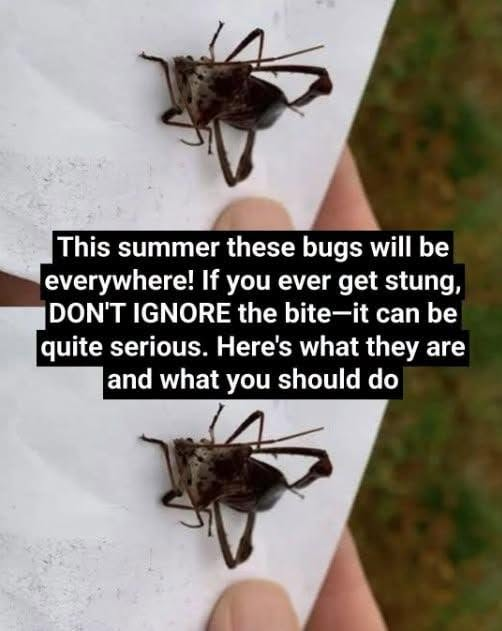
The insect in the photograph looks alarming because of its long legs, unusual body shape, and prominent hind legs. Viral posts often describe insects like this as something that will “sting” people during summer and warn that the bite can be extremely dangerous.
There is an important correction, however:
The insect in this photograph appears to be a leaf-footed bug or a closely related true bug. It does not have a typical bee- or wasp-like stinger. If it injures a person, it would generally be by biting with its piercing-sucking mouthparts, especially if it is grabbed, squeezed, or trapped against the skin.
The exact species cannot be confirmed from this photograph alone, but its body shape and enlarged hind legs are consistent with the leaf-footed bug family, Coreidae.
Why Does This Bug Look So Strange?
Leaf-footed bugs are named for the unusual shapes of their hind legs.
In many species, part of the hind leg—particularly the tibia—becomes expanded and can look somewhat like a leaf, paddle, or flattened plate.
That’s the feature that makes these insects look so unusual.
They also tend to have:
long antennae
long legs
elongated bodies
a relatively hard outer body
piercing-sucking mouthparts
enlarged or flattened sections on the hind legs in many species
When photographed close up, they can look much more intimidating than they actually are.
Does It Sting?
No—not in the way a bee or wasp stings.
This distinction is important.
Bees and wasps have specialized stinging structures. Leaf-footed bugs do not have that kind of defensive stinger.
Instead, they possess a narrow mouthpart called a proboscis, which they normally use to pierce plants and suck plant juices.
Most of the time, these insects have little reason to bite a person.
Problems are more likely when someone:
picks the insect up
presses it against the skin
traps it inside clothing
steps on it
squeezes it
handles it repeatedly
In those circumstances, the insect may defend itself.
Can a Leaf-Footed Bug Bite Hurt?
It can.
Although these insects aren’t generally considered aggressive toward humans, a defensive bite can be painful.
People may experience:
a sharp or pinching sensation
localized pain
redness
mild swelling
itching
temporary irritation
The intensity can vary depending on the individual and the circumstances.
For most people, a localized reaction is uncomfortable rather than dangerous.
That doesn’t mean every bite should be ignored, though. Any insect bite can become complicated by an allergic reaction or secondary infection.
Why Do People Get Bitten?
The majority of encounters happen because people don’t realize how an insect is likely to respond when handled.
A person sees an unusual bug and thinks:
“Let me pick it up and see what it is.”
That’s when defensive behavior can occur.
The safest approach with an unfamiliar insect is simple:
Look, don’t handle.
If the insect is indoors, use a container and a piece of cardboard to move it outside if you can do so safely.
Are These Bugs Dangerous?
For most people, a leaf-footed bug is not considered a major medical threat.
The viral wording that says the bite is automatically “quite serious” is too broad.
A painful bite isn’t necessarily a dangerous bite.
There is also an important difference between pain, irritation, allergy, and infection.
A normal localized reaction might cause a small area of redness and discomfort that gradually improves.
A serious allergic reaction, on the other hand, can affect breathing or cause swelling in areas away from the bite.
That is an emergency regardless of what species caused the bite.
What Should You Do If You Are Bitten?
If you believe this type of insect has bitten you, the first steps are straightforward.
1. Move Away From the Insect
Don’t continue touching or trying to catch it with your bare hands.
If it’s still on your clothing or skin, gently remove it without squeezing it.
2. Wash the Area
Clean the affected skin with soap and water.
This removes dirt and microorganisms from the surface and reduces the chance of secondary infection.
3. Use a Cold Compress
A cold pack wrapped in a cloth can help reduce:
pain
swelling
itching
Don’t place ice directly against the skin for prolonged periods.
Use short applications and give the skin breaks.
4. Avoid Scratching
Scratching can damage the skin and introduce bacteria.
If the area is itchy, an appropriate anti-itch treatment may help. Some people use an oral antihistamine or a topical product, but medications aren’t appropriate for everyone, so follow the product instructions and consider advice from a pharmacist or healthcare professional if you’re unsure.
5. Watch the Area
A mild local reaction should generally improve rather than continually worsen.
Pay attention to changes over the next several hours and days.
When Is a Bite an Emergency?
The most important warning signs aren’t necessarily the size of the bite itself.
Seek emergency medical attention if an insect bite is followed by symptoms such as:
difficulty breathing
wheezing
swelling of the throat or tongue
difficulty swallowing
fainting or severe dizziness
widespread hives
rapidly developing swelling of the face or lips
severe weakness
These can be signs of a serious allergic reaction.
Anaphylaxis can occur after various insect exposures and requires urgent treatment.
Don’t wait to see whether it goes away on its own.