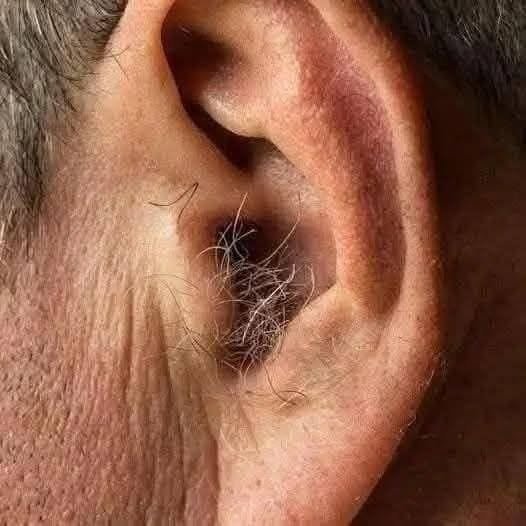
What Your Ears May Reveal About Your Health: 7 Important Signs You Should Know
Hearing changes are among the most important ear-related symptoms to recognize.
Some people gradually notice that they need to increase the television volume, ask others to repeat themselves, or struggle to understand conversations in noisy environments.
Gradual hearing loss can have several causes, including age-related changes, prolonged exposure to loud sounds, certain medications, and problems affecting the middle or inner ear.
Earwax buildup can also temporarily reduce hearing.
However, a sudden reduction in hearing is different.
Sudden hearing loss, particularly in one ear, requires urgent medical assessment. It may occur with ringing, pressure, or dizziness, and it can develop without significant pain.
Although several conditions can cause sudden hearing loss, one important possibility is sudden sensorineural hearing loss, which can require prompt treatment.
Do not assume that a suddenly blocked ear is simply full of wax. Seek urgent medical care rather than waiting to see whether the problem disappears.
3. Persistent Ringing in the Ears
Ringing, buzzing, hissing, or humming sounds that occur without an external source are commonly described as tinnitus.
Some people experience tinnitus occasionally, while others hear it frequently or continuously.
Possible causes include:
Exposure to loud music or machinery.
Age-related hearing changes.
Earwax blockage.
Certain medications.
Middle-ear conditions.
Problems affecting the auditory system.
Stress and poor sleep can make tinnitus more noticeable, although they do not necessarily explain its original cause.
Tinnitus is not automatically a sign of a dangerous disease. Nevertheless, persistent symptoms can interfere with concentration, sleep, and daily activities.
Arrange a medical assessment if the ringing continues, becomes bothersome, or occurs with hearing difficulties.
Tinnitus that beats in time with your heartbeat should also be evaluated.
If ringing begins alongside sudden hearing loss, seek urgent medical attention.
Protecting your ears from excessive noise is one of the most practical ways to reduce the risk of noise-related hearing damage.
4. Ear Pain, Itching, or Unusual Discharge
Pain and itching inside or around the ears are common complaints, but they can have different explanations.
Ear pain may result from an infection, inflammation, impacted wax, or irritation of the ear canal. Sometimes, the discomfort originates outside the ear, such as from a dental problem or the jaw joint.
Itching can occur because of dry skin, eczema, allergies, or irritation caused by frequent cleaning.
Discharge also deserves attention, particularly when it is new or persistent.
Clear fluid, pus, unpleasant-smelling discharge, or blood may occur with different ear conditions. The appearance alone is not enough to establish a diagnosis.
Avoid inserting cotton swabs, hairpins, or other objects into the ear canal. These can injure the skin, push wax deeper, or damage the eardrum.
Seek medical advice if you experience persistent pain, significant itching, or discharge.
Get urgent medical care if ear symptoms are accompanied by severe dizziness, facial weakness, sudden hearing loss, or swelling and redness behind the ear. People with diabetes or weakened immune systems should seek prompt assessment for significant ear pain or discharge.
5. Changes in the Earlobes
The earlobes can develop visible changes for many reasons, including aging, genetics, skin conditions, and ordinary wear and tear.
One feature sometimes discussed online is a diagonal crease across the earlobe, often called Frank’s sign.
Some research has examined whether this crease is associated with coronary artery disease. However, an earlobe crease is not a reliable standalone diagnostic test.
Its presence does not mean that someone necessarily has blocked arteries, and its absence does not rule out cardiovascular disease.
Age, genetics, and other factors may influence the appearance of the earlobe.
Instead of relying on this physical feature, it is more useful to pay attention to established cardiovascular risk factors, such as high blood pressure, high cholesterol, smoking, diabetes, and family history.
Regular medical checkups can help assess these risks.
Chest pressure, shortness of breath, sudden sweating, or discomfort spreading to the arm, back, neck, or jaw may indicate a medical emergency. Seek emergency assistance if these symptoms occur.
An earlobe crease should never be used to diagnose or exclude heart disease.
6. Dizziness and Problems With Balance
Your ears contribute to balance through the vestibular system, a group of structures located in the inner ear.
These structures help your brain understand the position and movement of your head.
When the vestibular system is disturbed, you may experience dizziness, a spinning sensation called vertigo, unsteadiness, or difficulty walking.
One common cause of brief episodes of vertigo is benign paroxysmal positional vertigo, often abbreviated as BPPV. It occurs when tiny calcium-containing particles move into an inappropriate part of the inner ear.
Symptoms may be triggered by rolling over in bed, looking upward, or changing head position.
Other causes of dizziness include vestibular disorders, medication effects, dehydration, blood pressure changes, migraine, and neurological conditions.
Not every episode of dizziness originates in the ears.
If dizziness occurs repeatedly, lasts longer than expected, or interferes with daily activities, seek medical evaluation.
Sudden severe dizziness accompanied by difficulty walking, double vision, weakness, facial drooping, trouble speaking, or a severe headache requires emergency assessment. These symptoms can indicate a neurological emergency rather than a simple inner-ear problem.
7. Swelling, Lumps, or Skin Changes Around the Ear