15 Brilliant Baking Soda Tricks Every Woman Should Know
Even after the trash has been removed, a garbage bin can retain unpleasant odors.
After washing and drying the bin, sprinkle a small amount of baking soda into the bottom.
You can also place baking soda inside a small breathable pouch.
The powder may help absorb odors between cleanings.
For stronger smells, however, cleaning the actual source remains the most important step.
7. Help Clean a Stained Mug
Coffee and tea can leave brown stains inside cups and mugs.
A small amount of baking soda mixed with water can form a mild cleaning paste.
Apply it gently to the stained area, rinse thoroughly, and wash the mug normally afterward.
Avoid using excessive force on delicate surfaces.
8. Freshen Hair Brushes and Combs
Hair brushes can accumulate hair products, oils, dust, and skin particles over time.
Instead of putting baking soda directly onto your scalp, you can use it as part of the cleaning process for certain washable brushes and combs.
Remove trapped hair first.
Then clean the brush according to its material and manufacturer’s instructions. A small amount of baking soda dissolved in water may help with odor and residue on suitable plastic tools.
Rinse thoroughly and allow the brush to dry completely.
9. Clean Certain Makeup Tools
Some washable cosmetic tools can accumulate oils and product residue.
For suitable washable tools, baking soda can be used as a mild cleaning ingredient, followed by thorough rinsing.
However, not every makeup brush or cosmetic sponge should be treated with baking soda.
Harsh cleaning can damage fibers or leave residue that later irritates the skin.
For facial tools that come into direct contact with your skin, a gentle cleanser designed for that purpose may be a better option.
10. Soothe Minor Skin Irritation With a Mild Bath
Baking soda is sometimes used in baths to help soothe certain types of minor skin irritation or itching.
If you want to try this, use a modest amount in lukewarm bath water rather than applying concentrated baking soda directly to the skin.
Avoid using it on broken, severely irritated, infected, or burned skin without medical advice.
Stop if your skin becomes more irritated.
A skin problem that persists, spreads, becomes painful, or develops blisters or discharge should be evaluated rather than repeatedly treated with homemade remedies.
11. Use Caution With Underarm Odor
Baking soda is sometimes applied to the underarms because it can help neutralize odors.
However, the skin under the arms can be sensitive.
Applying dry baking soda directly and repeatedly may cause irritation, redness, dryness, or burning in some people.
If you want to experiment with it, use extreme caution and stop immediately if irritation develops.
A properly formulated deodorant is usually a more predictable option for regular use.
Remember that deodorants and antiperspirants serve different purposes: deodorants primarily help control odor, while antiperspirants reduce sweating.
12. Freshen Your Laundry
Baking soda can be useful as an additional laundry ingredient.
It can help with odors and may support cleaning when added appropriately to a wash.
However, always follow the washing-machine and detergent manufacturer’s instructions.
Some fabrics and specialized garments require particular care.
For delicate clothing, expensive fabrics, or garments with specific washing instructions, don’t experiment with homemade cleaning mixtures without checking the care label.
13. Clean a Sink
Baking soda is a simple option for cleaning many household sinks.
Sprinkle a small amount onto a damp surface and gently scrub with a soft sponge.
Rinse thoroughly afterward.
For stainless steel, scrub in the direction of the metal grain when applicable.
Avoid aggressive scrubbing, especially on surfaces that can scratch easily.
A clean sink should also be rinsed well so that baking-soda residue does not remain around drains or fixtures.
14. Neutralize Odors in the Bathroom
Baking soda can help with unpleasant odors around the bathroom.
A small open container placed in a suitable location can absorb some smells.
It can also be useful during cleaning of certain hard surfaces.
However, persistent bathroom odors can sometimes indicate a plumbing problem, mold, poor ventilation, or another underlying issue.
If an odor returns quickly after cleaning, investigate the source instead of repeatedly adding baking soda.
15. Use It Carefully in Personal-Care Routines
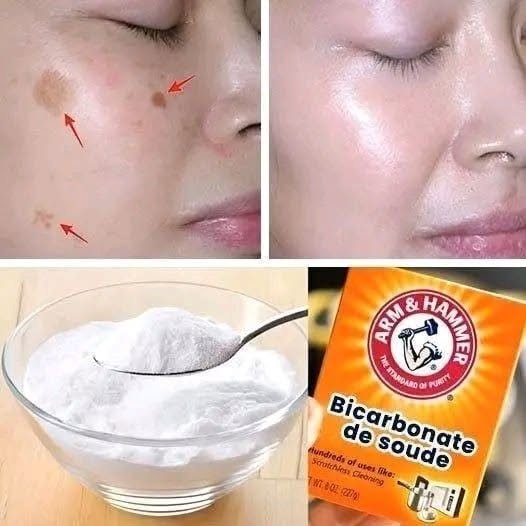
Baking soda is often promoted online as a beauty ingredient for everything from whitening teeth to removing dark spots.
This is where caution becomes especially important.
Baking soda is alkaline and mildly abrasive. Repeatedly applying it to sensitive tissues can cause irritation.
For example, using baking soda as a regular facial scrub can damage the skin barrier. Using it aggressively on teeth can contribute to abrasion. Applying it to intimate areas can disturb the area’s natural environment and cause irritation.
So the smartest personal-care “baking soda trick” is knowing when not to use it.