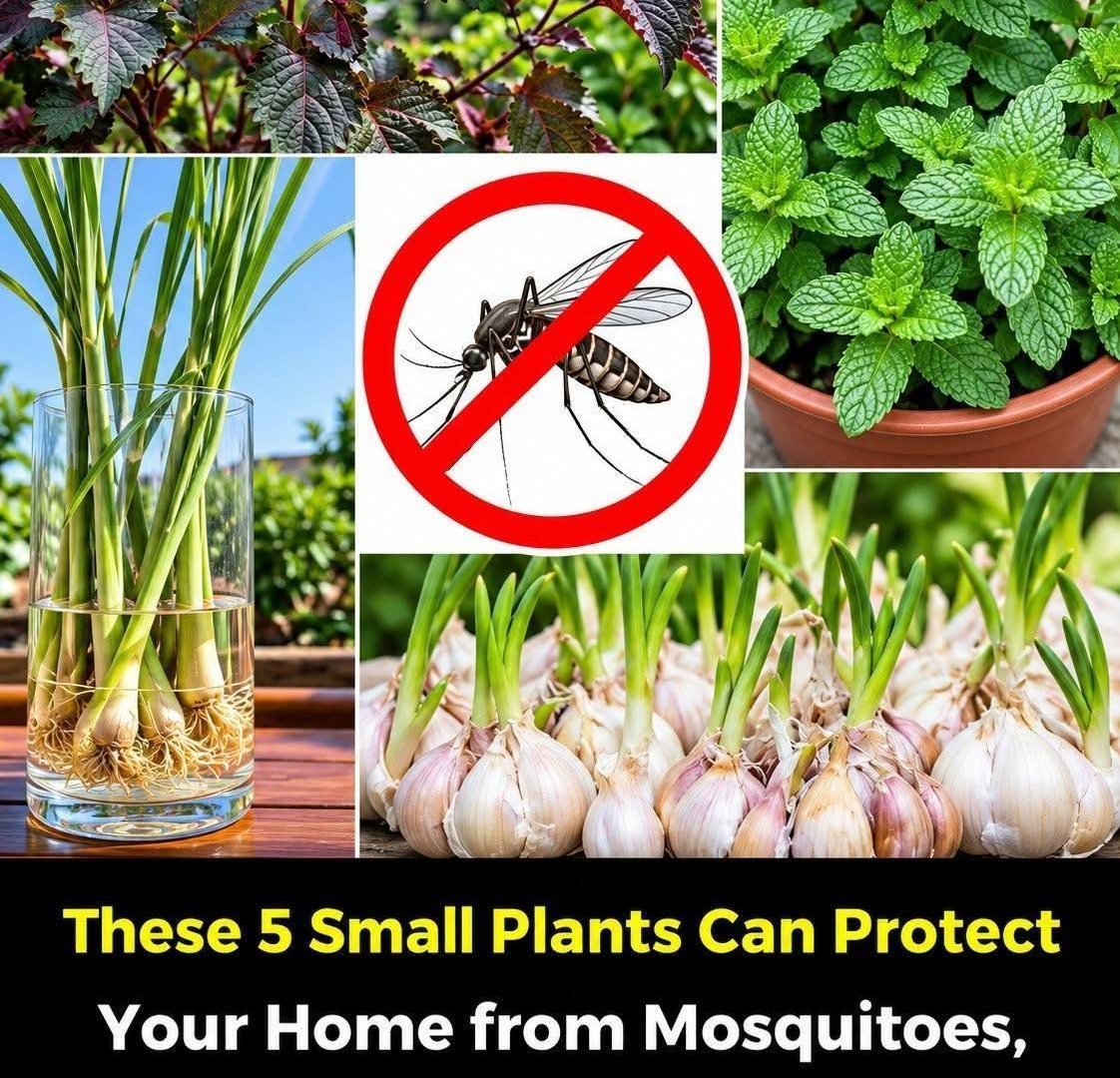
8 Plants That May Help Repel Mice, Spiders, and Other Insects Around Your Home
Spiders are another area where online claims can become exaggerated.
Strong-smelling plants may influence some insects, but spiders are not simply going to disappear because you place a mint plant in the room.
In many homes, spiders are there because insects are there.
If your house has lots of flies, mosquitoes, moths, ants, or other small insects, it may provide a food source for spiders.
Reducing the insect population can therefore indirectly reduce spider activity.
Keep windows and doors protected
Screens can prevent many insects from entering.
Repair damaged screens.
Keep doors closed when practical.
Seal gaps around windows.
Reduce unnecessary outdoor lighting near entrances because lights can attract insects, which can then attract predators such as spiders.
The Best Place to Put These Plants
You don’t necessarily need dozens of plants throughout the house.
Instead, think about the locations where pests are most likely to enter.
Useful areas can include:
Near windows
Especially windows that are frequently opened.
Near exterior doors
Plants can add fragrance and decoration to entrances.
On balconies
Aromatic plants can be useful additions to outdoor spaces.
Around patios
Lavender, rosemary, basil, and other herbs can make outdoor areas more pleasant.
In the kitchen
Basil, mint, rosemary, and lemongrass can provide culinary benefits as well.
Don’t Create a New Pest Problem With Indoor Plants
There’s an irony to using plants for pest control.
Poorly maintained houseplants can actually attract pests.
Overwatered soil can encourage fungus gnats.
Dead leaves can accumulate.
Excess moisture can contribute to mold and other problems.
Plants placed too close together may have poor airflow.
If you bring plants indoors, inspect them regularly.
Look underneath leaves.
Check the soil.
Remove dead foliage.
Avoid keeping the soil constantly saturated.
Clean plant containers when necessary.
Healthy plants are much better household companions than neglected plants.
Essential Oils Are Not the Same as Plants
This is one of the most important points.
You may see recipes recommending peppermint oil, eucalyptus oil, lavender oil, or other essential oils as powerful pest repellents.
Concentrated essential oils are chemically different from simply having the living plant in your home.
A plant releases volatile compounds gradually and at relatively low concentrations.
An essential oil is highly concentrated.
Therefore, you should not assume that putting a mint plant beside a window is equivalent to spraying concentrated peppermint oil around the room.
The safety considerations are also different.
Essential oils can irritate skin, eyes, and airways, and some are toxic when swallowed. Certain oils can also be dangerous to pets.
Never allow children or animals to ingest essential oils.
What Plants Cannot Do
It’s useful to understand the limits.
Plants cannot reliably:
Seal holes in your house
Remove a mouse nest
Kill an established insect infestation
Eliminate termites
Guarantee that spiders won’t enter
Replace professional pest control when an infestation is severe
Make a home completely insect-free
Their role is much smaller.
They can provide fragrance, beauty, culinary benefits, habitat for beneficial organisms, and potentially some localized repellent effects.
That’s valuable—but it isn’t magic.
A Better Natural Pest-Control Strategy
If you want to reduce pests without immediately relying on chemical treatments, combine several strategies.
Step 1: Remove food sources
Store food in sealed containers.
Clean countertops and floors regularly.
Don’t leave uncovered food out overnight.
Step 2: Control moisture
Repair leaks.
Don’t leave standing water around the house.
Avoid overwatering houseplants.
Keep damp areas ventilated.
Step 3: Seal entry points
Inspect doors, windows, walls, pipes, and foundations.
Small openings can be surprisingly important.
Step 4: Reduce clutter
Boxes, piles of clothing, paper, wood, and unused materials can provide hiding places for insects and rodents.
Step 5: Use screens
Good window and door screens can significantly reduce insect entry.
Step 6: Keep plants healthy
Healthy aromatic plants are more useful and attractive than dying plants.
Step 7: Use plants as an additional measure
Peppermint, lavender, rosemary, basil, lemongrass, eucalyptus, marigolds, and catnip can all be considered as part of the overall strategy.
But don’t depend on them alone.
Which Plant Should You Choose?
The best plant depends on what you’re trying to accomplish.
For a fragrant herb: peppermint or rosemary.
For flowers and fragrance: lavender or marigolds.
For cooking: basil, rosemary, mint, or lemongrass.
For a strong aromatic plant: eucalyptus, with appropriate safety precautions.
For a plant associated with mosquito-repellent compounds: catnip can be interesting, although its effectiveness depends on the circumstances.
There isn’t one plant that will reliably repel every pest.
Final Thoughts
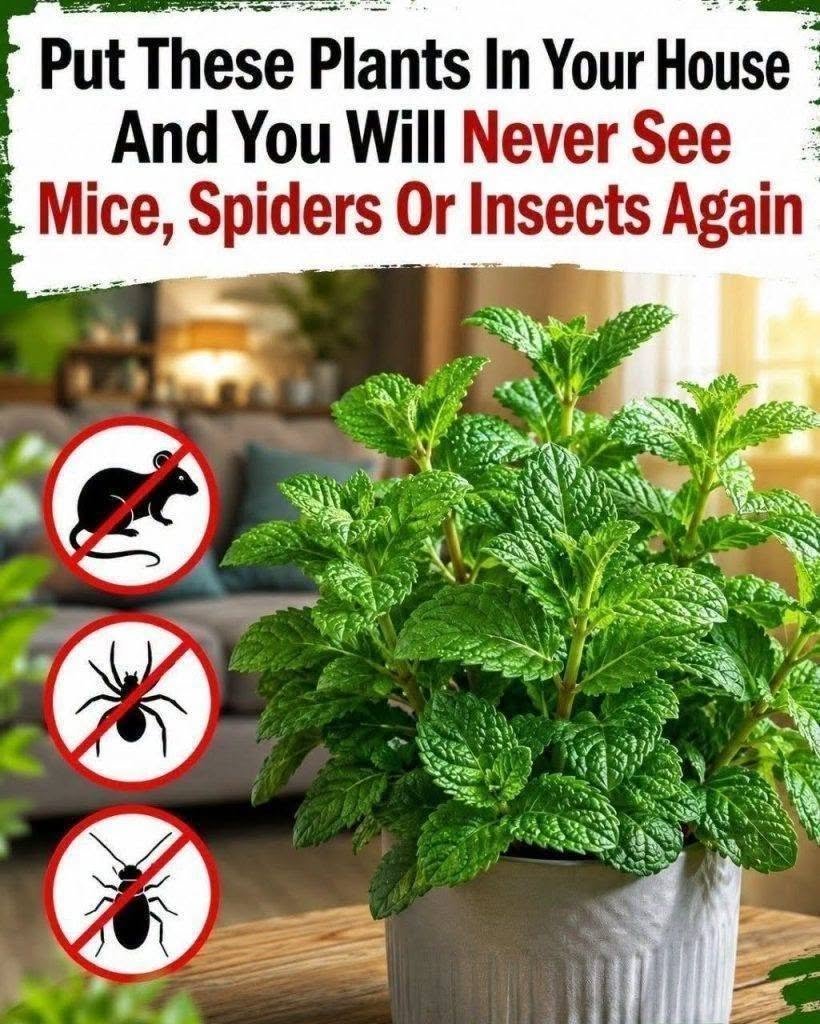
The image’s promise that placing certain plants in your home means you’ll “never see mice, spiders or insects again” is much stronger than the evidence supports.
However, there is a useful idea behind the viral claim.
Many plants contain naturally occurring aromatic compounds that can affect insects, and some plant-derived substances are used in pest-repellent products. Growing aromatic herbs and flowers can therefore be a pleasant part of a broader approach to managing pests.
The key is to keep expectations realistic.
Mint won’t seal a mouse hole. Lavender won’t guarantee a spider-free house. Basil won’t replace mosquito screens. And a few marigolds won’t eliminate an established infestation.
But healthy plants combined with good sanitation, proper food storage, sealed entry points, dry indoor conditions, clean windows and screens, and sensible pest management can help create a less attractive environment for unwanted visitors.
The biggest advantage of these plants may be that they provide several benefits at once: they can make your home or garden more attractive, provide herbs for cooking, add fragrance, and potentially discourage certain pests in localized areas.
That’s a much more realistic—and useful—way to think about natural pest control.