8 Plants That May Help Repel Mice, Spiders, and Other Insects Around Your Home
The idea of using plants to keep unwanted insects and mice away from the house is appealing for a simple reason: plants are natural, attractive, and can make a home smell wonderful.
You may have seen claims that placing a few mint plants around your home will make mice disappear, while lavender, rosemary, basil, or eucalyptus will supposedly keep spiders and insects away completely.
The reality is more practical.
Some plants contain aromatic compounds that certain insects dislike, and concentrated plant oils can have repellent properties. However, putting a potted plant in a room will not create an invisible barrier that guarantees mice, spiders, ants, flies, or mosquitoes will never enter.
Plants can be part of a pest-management strategy, but they work best when combined with good housekeeping, sealing entry points, reducing food sources, and eliminating standing water.
Here are eight plants commonly used for their strong scents and potential pest-repellent properties.
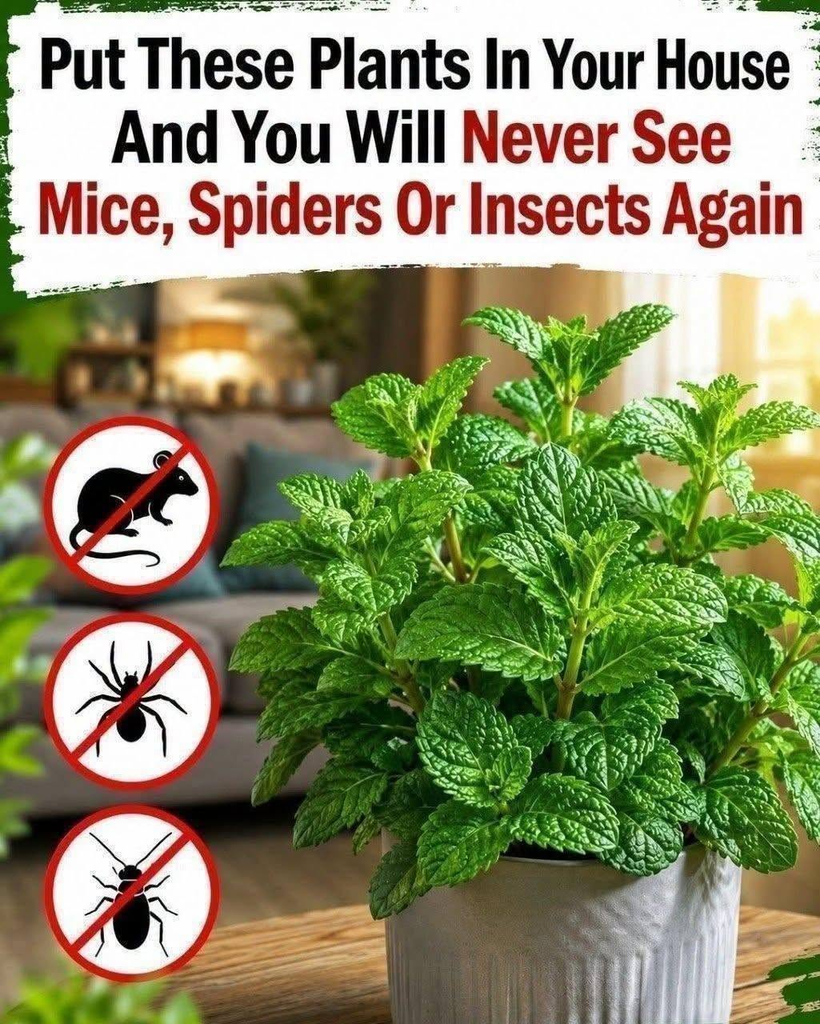
1. Peppermint
Peppermint is probably one of the most frequently mentioned plants when people talk about natural pest control.
Its strong aroma comes largely from compounds such as menthol and related volatile oils.
The smell can be unpleasant to some insects, which is why peppermint oil is commonly included in various household pest-repellent products.
Growing peppermint indoors also has another advantage: it is relatively easy to cultivate when given adequate light and moisture.
How to use peppermint
Place a healthy peppermint plant near:
Kitchen windows
Doors
Balconies
Areas where insects frequently appear
Bright indoor locations with good airflow
However, don’t expect the plant itself to eliminate an established infestation.
If you have mice, the most important step is finding where they are getting inside.
A mouse can squeeze through surprisingly small openings. Sealing gaps around pipes, doors, foundations, vents, and other openings is much more effective than relying on the smell of a plant.
Important consideration
Peppermint spreads aggressively when planted outdoors.
Growing it in a container can help keep it under control.
2. Lavender
Lavender is another popular choice for homes because of its pleasant fragrance.
Humans generally associate lavender with relaxation and clean-smelling rooms, while its strong aromatic compounds can be unpleasant to certain insects.
Lavender can be particularly useful around windows, balconies, patios, and other areas where you want an attractive plant with a strong fragrance.
Growing lavender indoors
Lavender prefers:
Plenty of sunlight
Well-drained soil
Good airflow
Avoiding consistently wet soil
One of the biggest mistakes people make with lavender is watering it too frequently.
The soil should generally be allowed to dry somewhat between waterings.
Does lavender eliminate spiders?
No.
A lavender plant should not be considered a spider-control treatment.
Spiders usually appear because there are other things for them to eat, particularly insects.
If you reduce insect activity and seal entry points, you may eventually see fewer spiders.
Lavender can complement those efforts, but it isn’t a guarantee.
3. Rosemary
Rosemary is an excellent plant for people who want something useful in both the kitchen and garden.
Its strong aromatic leaves contain volatile compounds that produce the characteristic rosemary scent.
The plant can be grown outdoors in many climates and can also be kept indoors when it receives enough sunlight.
Why rosemary is useful
Rosemary can provide:
A culinary herb
An attractive aromatic plant
A source of fragrant foliage
Potentially unpleasant odors for certain insects
You can place potted rosemary near sunny windows, patios, or outdoor seating areas.
In warm climates, it can become a substantial shrub.
Don’t overwater it
Like lavender, rosemary generally prefers well-drained conditions.
A pot without proper drainage can lead to root problems.
A sunny windowsill and a pot with drainage holes are often much better than placing the plant in a dark, constantly damp corner.
4. Basil
Basil is another aromatic herb that can be useful around the kitchen.
Its fragrance comes from several volatile compounds, and the plant is particularly convenient because you can use the leaves for cooking.
Basil prefers warmth and plenty of light.
A sunny window can work well, although indoor basil sometimes struggles when light levels are too low.
Basil and insects
Basil is sometimes promoted as a mosquito-repelling plant.
The important distinction is between the living plant and concentrated plant extracts or oils.
A plant sitting on a windowsill doesn’t necessarily release enough of its volatile compounds into the air to provide the same repellent effect demonstrated by concentrated preparations.
That is why claims that simply placing basil around your house will eliminate mosquitoes should be treated cautiously.
Still, basil is an excellent plant to grow for culinary purposes, and its aroma may provide some additional benefit.
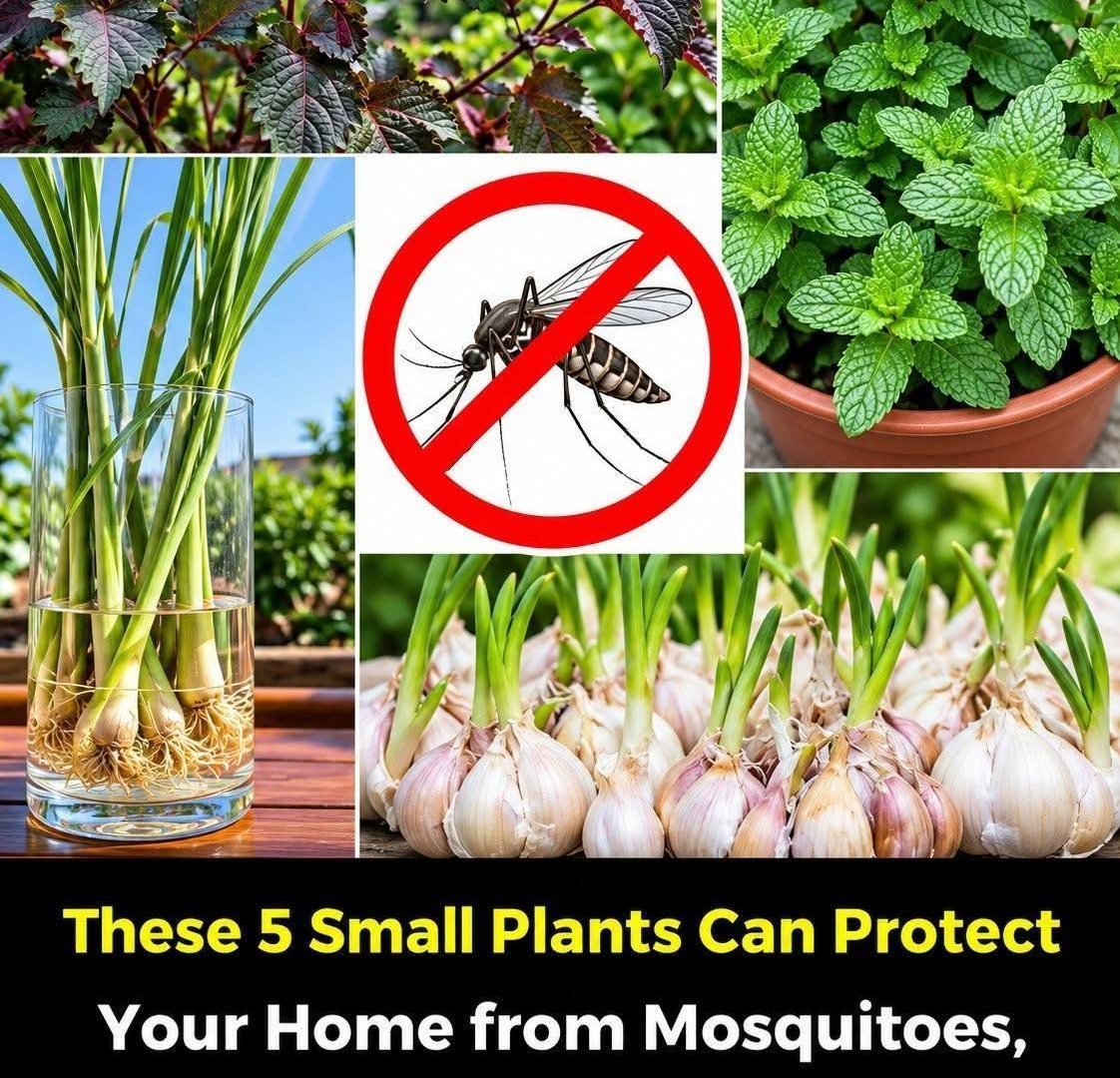
5. Lemongrass
Lemongrass is another plant frequently associated with insect-repellent properties.
It contains aromatic compounds, and its relatives are used in products designed to discourage mosquitoes and other insects.
Citronella is especially well known in this context.
However, there’s an important distinction between citronella grass and ordinary lemongrass.
They are related but aren’t interchangeable in every situation.
Products formulated with citronella oil can provide a much stronger and more predictable repellent effect than simply having a pot of lemongrass sitting on a patio.
Growing lemongrass
Lemongrass generally likes:
Warm temperatures
Sunlight
Moist but well-drained soil
Adequate space
It can make an attractive container plant during warm weather.
It also has culinary uses, making it a practical addition to a kitchen garden.