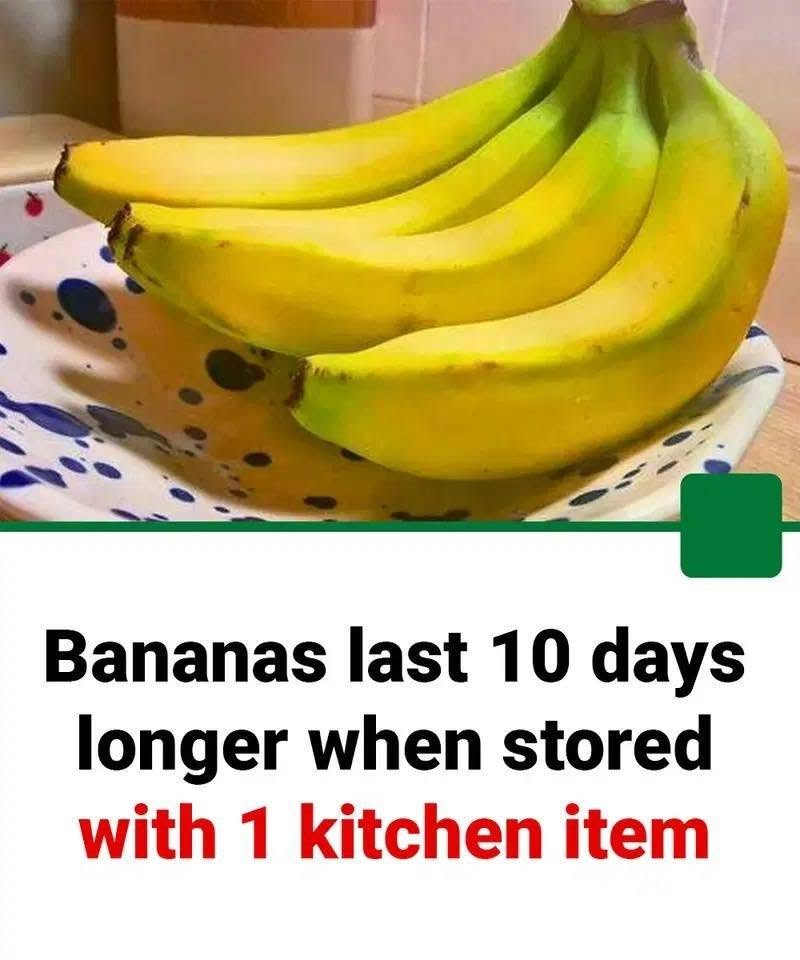
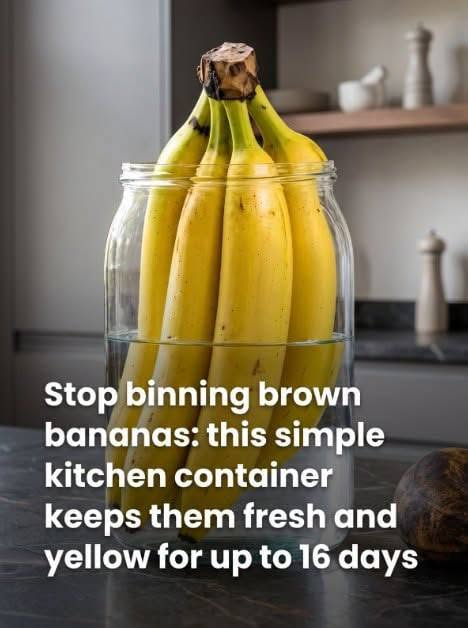
Bananas Last 10 Days Longer When Stored With One Kitchen Item Instead of in a Fruit Bowl
Bananas are among the most popular fruits in the world. They are affordable, convenient, naturally sweet, and packed with important nutrients. Whether you enjoy them for breakfast, add them to smoothies, slice them over oatmeal, or use them in homemade desserts, bananas are a kitchen staple in many households.
However, there is one frustrating problem that almost everyone experiences: bananas seem to ripen incredibly quickly.
You buy a beautiful bunch of bright yellow bananas, place them in your fruit bowl, and a few days later, they are covered in brown spots. Sometimes, they become overly soft before everyone in the household has had a chance to enjoy them.
Fortunately, a few simple storage techniques can help slow down the ripening process and reduce unnecessary food waste.
One popular kitchen trick involves using ordinary plastic wrap or aluminum foil around the stems of bananas. This method is inexpensive, easy to try, and requires almost no preparation.
But does it really make bananas last 10 days longer? And what is the best way to store bananas so they remain fresh for as long as possible?
Let’s explore the science behind banana ripening and the practical storage methods that can make a difference.
Why Do Bananas Ripen So Quickly?
To understand how to keep bananas fresh, it helps to know what happens as they ripen.
Bananas are climacteric fruits, meaning they continue to ripen after being harvested. During this process, they produce a natural plant hormone called ethylene.
Ethylene plays an important role in fruit ripening. It triggers several changes that gradually transform a firm, green banana into a soft, sweet, yellow fruit.
As bananas ripen:
Their green peel gradually turns yellow.
Their starch content decreases.
Natural sugars increase.
Their texture becomes softer.
Their aroma becomes stronger.
Brown spots may begin appearing on the peel.
These changes are completely natural.
The problem is that warm temperatures, physical damage, and exposure to ethylene from other ripening fruits can accelerate the process.
This is why bananas sometimes become overripe much sooner than expected, especially when stored in a warm kitchen.
The One Kitchen Item: Plastic Wrap Around Banana Stems
One of the most popular banana-storage tricks involves wrapping the stems with plastic wrap.
The idea is simple: separate the bananas from the bunch and cover the exposed stem ends with a small piece of plastic wrap.
Some people use aluminum foil instead.
Why Does This Method Work?
Bananas naturally produce ethylene, and the stem area is associated with ethylene production and release.
Covering the stem may help reduce the movement of ethylene around the bunch and potentially slow some aspects of ripening.
However, it is important to understand that wrapping the stems does not completely stop ethylene production.
The fruit continues to ripen naturally.
Research and practical experience do not establish that this method reliably makes every bunch of bananas last exactly 10 additional days. Results depend on the banana variety, ripeness when purchased, temperature, and storage conditions.
Nevertheless, wrapping the stems is a simple technique worth trying if you frequently find your bananas ripening too quickly.
How to Wrap Banana Stems Correctly
Follow these easy steps:
Step 1: Separate the bananas.
If possible, gently separate individual bananas from the bunch. This allows you to cover each stem more effectively.
Step 2: Prepare the plastic wrap.
Cut a small piece of ordinary food-safe plastic wrap.
Step 3: Cover the stem.
Wrap the plastic around the top of the banana where the stem was cut or broken.
Make sure the wrap fits securely without crushing the fruit.
Step 4: Store the bananas properly.
Place the bananas somewhere cool, dry, and away from direct sunlight.
Step 5: Check them regularly.
Inspect the bananas every day or two and remove any fruit that becomes damaged or excessively soft.
This method takes only a few minutes and may help you manage ripening more effectively.