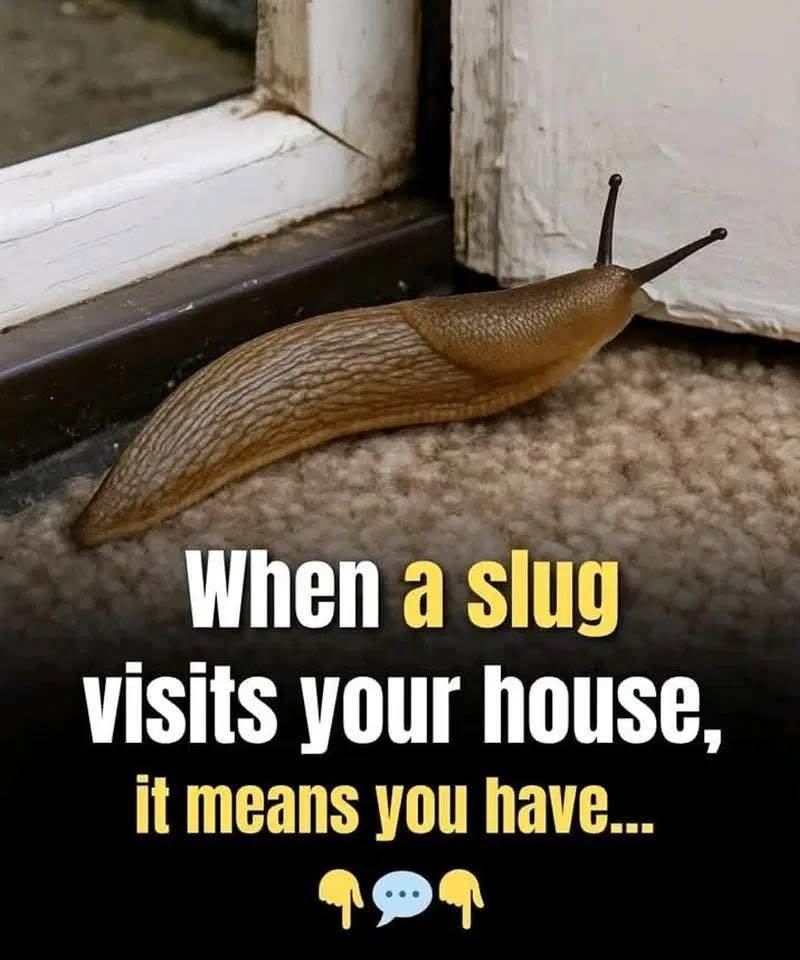
Did You Know That When a Slug Visits Your House, It Means You Have…?
Finding a slug inside your home can be surprising, especially when it appears near a door, window, bathroom, basement, or another damp area. Viral posts often suggest that a slug entering your house has a hidden meaning, such as a particular problem in the home or a mysterious sign of something happening around you.
The reality is much simpler.
A slug entering a house usually means that it has found a moist, sheltered environment and a possible way inside. It does not automatically mean that your home is dirty, that you have an infestation, or that something unusual is happening.
Slugs are soft-bodied mollusks that normally live outdoors, where they depend heavily on moisture. Occasionally, they wander indoors through tiny openings, especially when outdoor conditions are damp.
Why Would a Slug Enter a House?
Slugs need moisture to survive because their soft bodies can lose water relatively easily.
Outside, they often hide beneath:
Leaves
Logs
Stones
Plant pots
Mulch
Garden debris
Damp soil
Wood piles
At night or during wet weather, they become more active and move around looking for food and shelter.
A house can accidentally provide similar conditions.
Small gaps beneath doors, cracks around windows, openings near pipes, or poorly sealed areas can give a slug access to the interior.
Once inside, it may continue moving until it finds another damp hiding place.
Moisture Is Often the Biggest Clue
If you repeatedly find slugs inside your home, moisture is worth investigating.
Look around areas such as:
Bathrooms
Kitchens
Basements
Laundry rooms
Areas near exterior doors
Spaces beneath sinks
Around leaking pipes
Near poorly sealed windows
Damp storage areas
A single slug does not necessarily indicate a moisture problem.
But repeated sightings can be a useful reason to look for sources of excess moisture.
A small leak or damp area may be creating an environment that is more attractive to slugs and other moisture-loving organisms.
Does a Slug Mean Your House Is Dirty?
No.
This is another common misconception.
Slugs are attracted primarily to environmental conditions rather than cleanliness.
A perfectly clean house can occasionally have a slug enter through a door or gap.
If someone leaves a door open while gardening, for example, a slug may simply crawl inside.
It doesn’t mean the homeowner has poor hygiene.
The same applies to homes in rural areas, gardens, and properties surrounded by vegetation.
The closer a house is to suitable slug habitat, the greater the opportunity for an occasional visitor to enter.