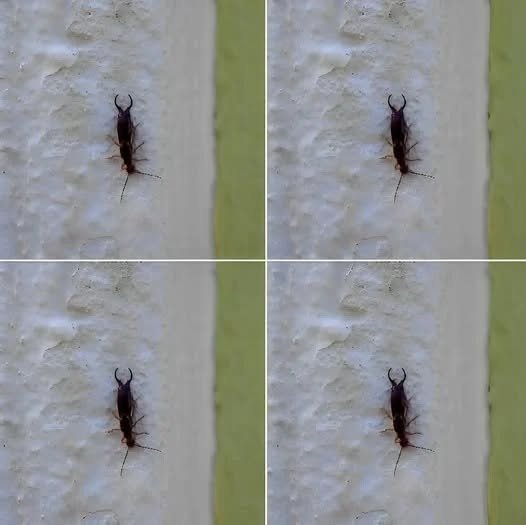
Did You Know That When a Slug Visits Your House, It Means You Have…?
If you find a slug inside your house, you don’t necessarily need to kill it.
If practical, you can carefully remove it using gloves, a piece of paper, or another method that avoids direct skin contact.
Move it outside away from doors and areas where it can immediately crawl back inside.
Then investigate how it entered.
The best long-term solution is usually preventing access, rather than repeatedly dealing with individual slugs.
How to Stop Slugs From Entering
If slugs are becoming a recurring problem, start with physical barriers.
Check the seal underneath exterior doors.
A properly fitted door sweep can close a gap that might otherwise allow insects and other small animals to enter.
Inspect window frames and other openings as well.
Cracks around pipes and utility entrances can also provide pathways.
Outside, reducing excessive vegetation and damp debris immediately next to the house can make the area less attractive to slugs.
Remove piles of wet leaves, boards, and other materials that provide dark, moist hiding places.
Keep Moisture Under Control
Moisture management can make a significant difference.
Repair leaking faucets or pipes.
Improve ventilation in bathrooms.
Use an exhaust fan when showering.
Allow damp areas to dry properly.
If a basement or crawl space is persistently damp, investigate the source rather than simply masking the problem with air fresheners or surface cleaning.
Reducing unnecessary moisture can make the environment less attractive to slugs and many other pests.
What If You Find a Slug in the Bathroom?
A bathroom is actually one of the more understandable places to encounter a slug.
Bathrooms are often humid and contain water sources.
If a slug appears near a shower, bathtub, drain, or exterior wall, check for possible entry points.
Don’t automatically assume that the slug came up through the drain.
It may have entered through a gap around a door, pipe, window, or wall.
If you repeatedly find slugs in the same bathroom, investigate the surrounding area carefully.
Does a Slug Mean You Have Mold?
Not necessarily.
Both slugs and mold can be associated with damp environments, but seeing a slug does not prove that mold is present.
If you notice persistent condensation, musty odors, water stains, peeling paint, or visible mold, those are separate reasons to investigate moisture.
A slug is not a reliable mold detector.
Does a Slug Mean Good Luck?
Some viral posts give animals symbolic meanings.
You may see claims that a slug entering your house means good luck, money, transformation, fertility, or another future event.
Those are cultural or symbolic interpretations, not scientific conclusions.
A slug entering your home has a much more practical explanation: it was able to enter and found conditions suitable enough to keep moving.
You can enjoy the symbolism if it is part of your personal beliefs, but it shouldn’t be presented as a scientific fact.
What the Photograph Actually Shows
The photograph appears to show a large slug moving along the floor near a doorway or window.
Its elongated, soft body and two prominent upper tentacles are characteristic of a land slug.
The exact species cannot reliably be determined from this photograph alone.
Many slug species can look similar, and accurate identification may require details such as body markings, size, geographic location, and sometimes examination by an expert.
The important point is that nothing about the photograph proves that the slug represents a hidden health warning or mysterious household problem.
When Should You Investigate Further?
An occasional slug is usually not a major concern.
However, repeated sightings deserve attention.
Consider investigating further if:
You find slugs every few days.
They repeatedly appear in the same room.
You find slime trails throughout the house.
There is visible moisture or water damage.
You discover gaps around doors or windows.
You find many slugs around the outside of the building.
The problem becomes worse after rain.
In these situations, addressing moisture and entry points is usually more useful than focusing on individual slugs.
A Simple Response When You Find One
If you discover a slug indoors, don’t panic.
First, keep children and pets away from it.
Put on disposable gloves or use a barrier to pick it up.
Place it outside in a suitable sheltered location.
Clean the area where it traveled, particularly if it crossed a food-preparation surface.
Wash your hands afterward.
Then look around the area for a possible entry point.
That simple process is usually enough for an isolated indoor visitor.
The Bottom Line
When a slug visits your house, it usually doesn’t mean that your home is dirty or that something mysterious is happening.
More commonly, it means the slug found moisture, shelter, food, or an easy way inside.
A single slug can simply be an accidental visitor, especially after rain or in a home surrounded by gardens and vegetation.
If slugs repeatedly appear indoors, however, the pattern can be useful information. Check for moisture problems, leaks, gaps beneath doors, cracks around windows, and other potential entry points.
And remember that the dramatic social-media phrase “When a slug visits your house, it means you have…” is designed to create curiosity.