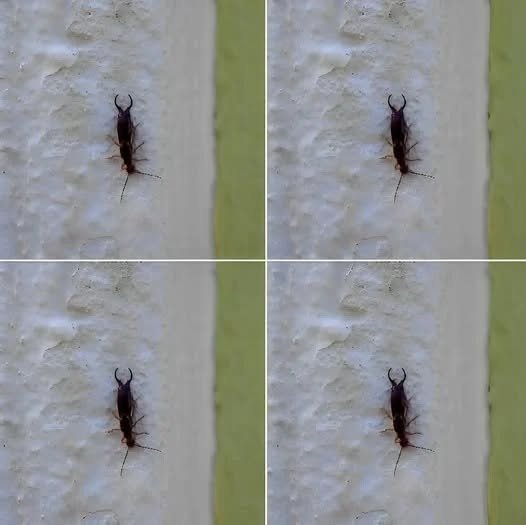
Warning! If You Find This Insect in Your Home, Here’s What You Should Know
The insect shown in the image may look alarming at first glance, especially because of the prominent curved pincers at the end of its body. Based on its appearance, it strongly resembles an earwig, a common household and garden insect known for the pair of forceps-like structures at the rear of its abdomen.
Despite the frightening appearance of these pincers, earwigs are generally much less dangerous than many social-media posts suggest. Finding one in your home does not automatically mean your house is infested, dirty, or unsafe.
However, seeing several of them can provide a useful clue about conditions around your home—particularly moisture, damp areas, vegetation, and places where insects can hide.
Here is what you should know.
What Is an Earwig?
Earwigs are small insects belonging to the order Dermaptera.
One of their most recognizable features is the pair of structures at the end of the abdomen called cerci. In many species, these look like small pincers or forceps.
The shape of these structures can vary between species and between males and females.
The pincers are mainly used for defense, handling food, competition, and other behaviors. They are not designed to attack humans.
This is one reason the insect in the image can look much more threatening than it actually is.
Are Earwigs Dangerous to Humans?
Generally, no.
Earwigs are not considered dangerous household pests in the way that certain venomous animals or disease-transmitting insects can be.
They do not normally seek out humans to attack them.
If handled or trapped against the skin, an earwig can potentially use its pincers defensively. This may cause a small pinch, but it is generally not considered medically significant.
The idea that earwigs routinely crawl into people’s ears and burrow into their brains is an old myth.
Their name has contributed to this belief, but earwigs do not have a special tendency to enter human ears.
Of course, insects can occasionally enter unusual places accidentally, but there is no reason to assume that finding an earwig in your home means it is trying to get into someone’s ear.
Why Do Earwigs Enter Houses?
Earwigs usually prefer damp, protected environments.
They may be found outdoors beneath:
Leaves
Stones
Logs
Mulch
Plant pots
Garden debris
Wood
Moist soil
When conditions outside become unfavorable, they may sometimes enter buildings through small gaps.
They can get inside through:
Gaps around doors
Cracks around windows
Open windows
Gaps around pipes
Foundation cracks
Damaged screens
Other small openings
Finding an occasional earwig indoors is therefore not necessarily a sign of a serious infestation.
Moisture Is an Important Clue
If you repeatedly find earwigs inside your home, it is worth checking for areas where moisture is accumulating.
Look around:
Bathrooms
Kitchens
Basements
Garages
Areas near leaking pipes
Areas around air-conditioning equipment
Under sinks
Around exterior doors
Damp storage areas
Places where water collects outside
Fixing unnecessary moisture can make the environment less attractive to many insects.
This does not mean that every earwig indicates a leak.
Outdoor weather, gardens, vegetation, and seasonal changes can also affect how many insects enter a home.