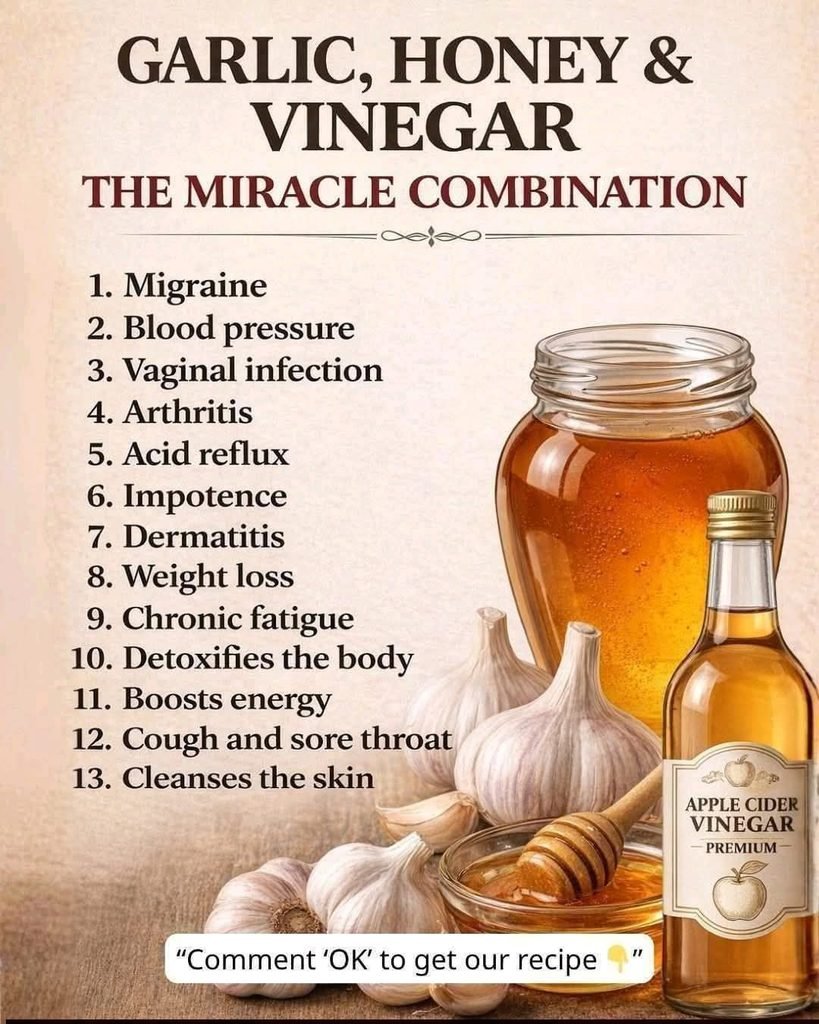
Garlic, Honey & Apple Cider Vinegar: What This Popular Combination Can Really Do
Garlic, honey, and apple cider vinegar have been used separately in traditional food and home remedies for generations. Today, the three ingredients are often combined into a simple mixture that is promoted online for everything from digestion and blood pressure to weight loss, coughs, energy, and “detoxing.”
Some of the claims surrounding this mixture are based on real research into individual ingredients, while others are exaggerated.
Garlic has been studied for cholesterol and blood pressure. Honey has evidence for helping relieve cough symptoms, and apple cider vinegar has been investigated for blood glucose, cholesterol, body weight, and blood pressure.
However, there is an important distinction: research showing that an individual ingredient may have a particular effect does not prove that a homemade combination of garlic, honey, and vinegar can treat a disease.
The mixture can be enjoyed as a food, but it should not be considered a miracle cure.
Why Are Garlic, Honey, and Vinegar Combined?
Each ingredient contributes something different.
Garlic has a strong flavor and contains sulfur-containing compounds that researchers have studied for their biological effects.
Honey provides sweetness and contains naturally occurring plant compounds.
Apple cider vinegar contains acetic acid, which gives it its characteristic sharp, sour taste.
Together, they create a sweet, tangy, strongly flavored mixture that can be used in small amounts as part of meals or as a traditional home preparation.
The combination has become particularly popular because each ingredient already has a reputation in natural wellness.
But popularity isn’t the same thing as proof.
Garlic and Its Potential Benefits
Garlic is one of the most extensively researched ingredients in this recipe.
Research suggests that certain garlic preparations may have modest effects on cholesterol levels. Garlic supplements have also been studied in people with high blood pressure, with some research suggesting modest reductions.
This is interesting, but there is an important limitation.
Many studies use specific garlic supplements or standardized preparations rather than the exact homemade mixture shown in social-media posts.
That means you shouldn’t assume that eating a particular spoonful of raw garlic mixed with honey and vinegar will reproduce the results of a clinical trial.
Garlic is best viewed as a nutritious ingredient that can be part of a healthy diet, rather than a replacement for medication.
Garlic and Blood Pressure
Blood pressure is one of the most common reasons people mention garlic.
Some studies have found that garlic preparations may modestly lower blood pressure, particularly in people who already have elevated blood pressure.
That doesn’t mean garlic can replace blood-pressure medication.
If you have hypertension, continue following the treatment plan recommended by your healthcare professional. A healthy diet, appropriate physical activity, maintaining a healthy weight, limiting excess sodium, and taking prescribed medication when necessary all play important roles.
Garlic can be part of that overall lifestyle.
It shouldn’t be treated as the main treatment.
Garlic and Cholesterol
Garlic has also been investigated for cholesterol.
Some evidence suggests that garlic supplements can produce small reductions in total cholesterol and LDL cholesterol in people with elevated cholesterol.
Again, the effect is generally modest.
If your cholesterol is high, eating garlic may be one small part of a healthy diet, but it shouldn’t replace medical treatment when treatment has been recommended.
What Does Honey Contribute?
Honey is primarily a source of carbohydrates and naturally occurring sugars, but it also contains various plant-derived compounds.
One of the most useful areas of research involving honey is cough relief.
Studies have found that honey can help reduce cough symptoms associated with some upper respiratory infections.
This doesn’t mean honey cures an infection.
Instead, it may provide temporary relief and make coughing less uncomfortable.
A spoonful of honey can therefore be a reasonable traditional option for adults and older children experiencing a simple cough, provided there are no individual reasons to avoid it.
There is one important exception:
Honey should never be given to babies younger than 12 months because of the risk of infant botulism.