Is This Chicken Safe? What the White Foam Means When You Cook Chicken
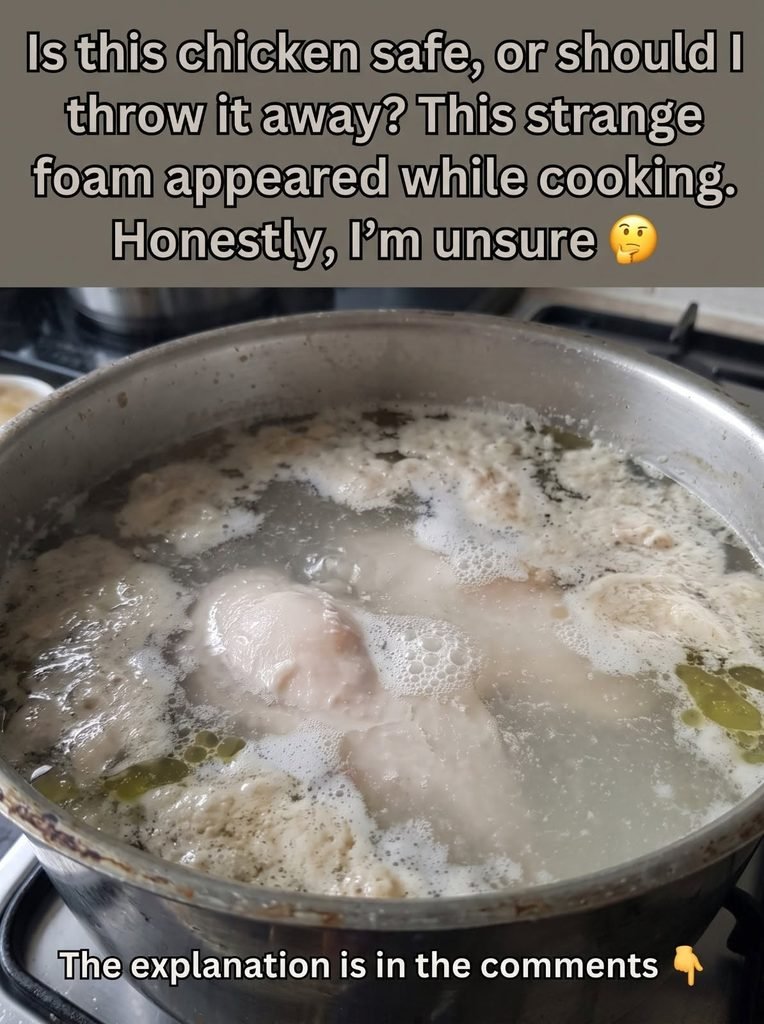
If you have ever boiled or simmered chicken and suddenly noticed a layer of white foam, bubbles, or grayish material floating on the surface, you may have wondered whether something was wrong with the meat.
The sight can definitely be surprising. The water may become cloudy, and a thick layer of white or gray foam can collect around the chicken. Some people immediately assume that the chicken is spoiled, contaminated, or unsafe to eat.
In most cases, however, white foam appearing while chicken is being boiled is a normal result of cooking. It does not automatically mean that the chicken is bad.
The foam is usually made up of proteins and other substances released from the chicken as it heats. When these proteins interact with hot water and rising bubbles, they can gather at the surface and form a foamy layer.
That said, the appearance of foam is not the only thing you should consider when deciding whether chicken is safe. How the raw chicken looked and smelled before cooking, how it was stored, how it was handled, and whether it reaches a safe internal temperature are all much more important.
Why Does Chicken Produce White Foam?
Chicken muscle naturally contains proteins, water, and other compounds.
When raw chicken is placed into hot water, heat begins changing the structure of these proteins. Some of them move out of the meat and into the cooking liquid.
As the water heats up, these proteins can collect near the surface.
The movement of boiling water creates bubbles, and the proteins can stabilize those bubbles, producing foam.
This is similar to what happens when certain proteins are heated in other foods.
The foam may look white, gray, beige, or slightly brown depending on the chicken, the cooking liquid, and other ingredients in the pot.
So, seeing foam does not automatically indicate that the chicken is spoiled.
Is the Foam Blood?
Many people believe that the reddish or cloudy liquid associated with raw meat is blood.
In most packaged chicken, the liquid is primarily water mixed with proteins and pigments such as myoglobin rather than a significant amount of blood.
When chicken is heated, some of these substances can move into the surrounding water.
As the proteins coagulate, they can become visible as small particles or foam.
This is one reason the cooking liquid can become cloudy when chicken is boiled.
It is a normal consequence of cooking meat.
Why Does the Water Become Cloudy?
The cloudy appearance is also usually related to proteins and other substances released from the chicken.
When chicken is cooked directly in water, some soluble components leave the meat and enter the liquid.
As they heat, they can coagulate into tiny particles.
These particles may float around the pot or collect at the surface.
If you are making chicken soup or stock, this can affect the appearance of the final broth.
It does not necessarily mean that the chicken is unsafe.
If you want a clearer broth, you can simply remove the foam from the surface with a spoon or fine skimmer.
Should You Remove the Foam?
You can remove it if you prefer.
Skimming the foam is mainly a matter of appearance and cooking preference.
Removing the foam can produce a cleaner-looking broth and may reduce some of the floating protein particles.
You can gently skim the surface with a spoon or kitchen skimmer as the chicken cooks.
However, removing the foam does not make unsafe chicken safe.
Food safety depends primarily on proper handling, storage, and cooking.
Similarly, leaving the foam in the pot does not automatically make the chicken unsafe.