Why Ground Beef Is Red on the Outside but Gray Inside: Is It Safe to Eat?
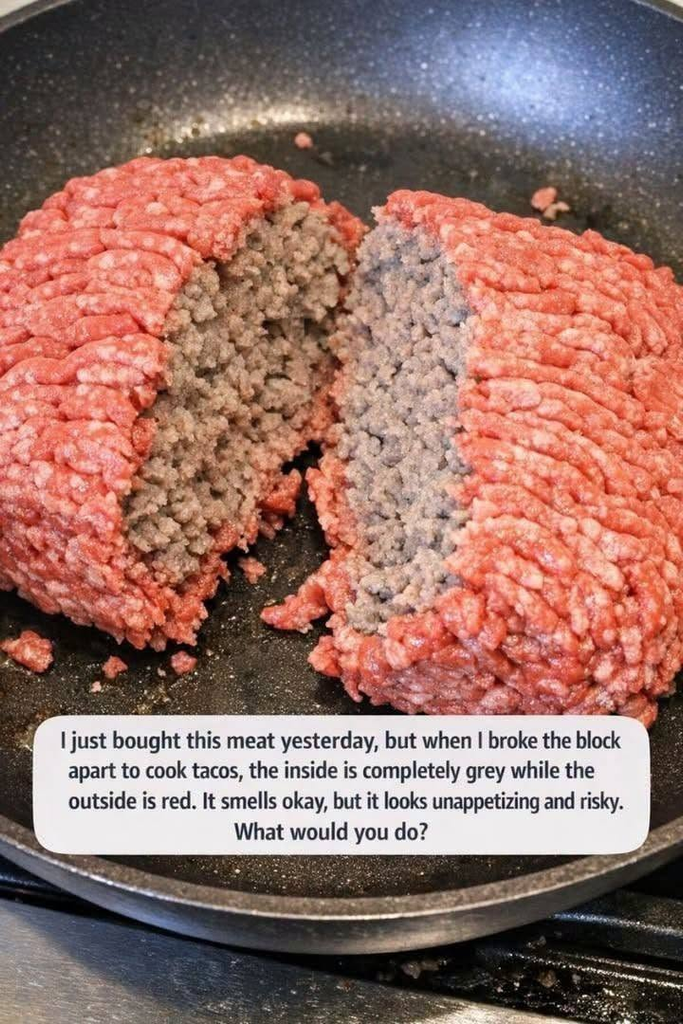
Opening a package of ground beef and finding that the outside is bright red while the inside is gray or grayish-brown can look alarming. Many people immediately wonder whether the meat has gone bad.
The good news is that a gray center inside a tightly packed block of ground beef does not necessarily mean the meat is spoiled.
The difference in color is often caused by something much simpler: oxygen.
The outside of the meat is exposed to air, while the interior is protected from much of the oxygen. This affects the natural pigments in the meat and can make the surface look red while the center looks grayish-brown.
However, color alone cannot tell you whether ground beef is safe. Storage conditions, odor, texture, packaging, and cooking temperature all matter.
Why Is the Outside Red?
The red color of fresh beef comes largely from a protein called myoglobin.
When the surface of beef comes into contact with oxygen, myoglobin interacts with oxygen and forms oxymyoglobin. This produces the bright cherry-red color commonly associated with fresh beef.
That’s why the outside of a package can look very red.
The surface has access to oxygen.
The interior doesn’t.
Why Is the Inside Gray?
When ground beef is packed tightly together, oxygen cannot reach the center as easily.
As a result, the interior can appear grayish-brown or darker than the outside.
This is a normal chemical effect and does not automatically mean the meat is spoiled. The USDA specifically notes that the interior of packaged ground beef may be grayish-brown because of a lack of oxygen. (Ask USDA)
Once you separate the meat and expose the gray interior to air, the color may become redder.
That color change is caused by oxygen interacting with the meat pigments.
When Should Gray Meat Be a Concern?
The important distinction is between:
Gray only in the center of a tightly packed package
and
The entire package becoming gray or brown along with other signs of deterioration.
If the whole package has turned gray or brown, particularly when accompanied by an unpleasant smell or sticky texture, the meat may be beginning to spoil. (Ask USDA)
Other warning signs include:
Strong unpleasant odor
Slimy texture
Sticky or unusually tacky surface
Widespread abnormal discoloration
Damaged packaging
Leaking packaging
Meat that was not kept properly refrigerated
If several of these signs are present, it is better not to take a chance.
Don’t Depend on Smell Alone
The person in the image says the meat smells fine.
That’s useful information, but it doesn’t prove that the meat is safe.
Some harmful bacteria cannot be seen or smelled. Ground beef can potentially contain bacteria such as Salmonella and certain strains of E. coli without producing an obvious warning odor.
This is one reason food safety cannot be determined simply by looking at or smelling raw meat.