Pulled My Beef Roast Out of the Slow Cooker and Saw White Stringy Things — Are They Worms or Parasites?
Another possibility is sinew, which is a tough type of connective tissue associated with tendons.
Tendons connect muscles to bones.
Depending on the cut of beef, portions of tendon-like tissue can remain in the roast.
Sinew can be:
Very white
Stringy
Tough
Elastic
Difficult to chew
Firm even after prolonged cooking
It can be especially noticeable when the surrounding muscle has become extremely tender.
You might pull a piece of beef apart and find that the muscle separates easily while a pale strand remains intact.
That’s not necessarily a parasite.
It may simply be connective tissue doing exactly what connective tissue is designed to do.
Could It Be Fat?
Sometimes pale material in cooked beef is also fat.
Fat usually looks different from long, thread-like connective tissue, but the two can occur together.
As beef cooks, fat melts and moves through the meat.
Some fatty tissue can remain as pale or yellowish pieces, while connective tissue can appear as white strands.
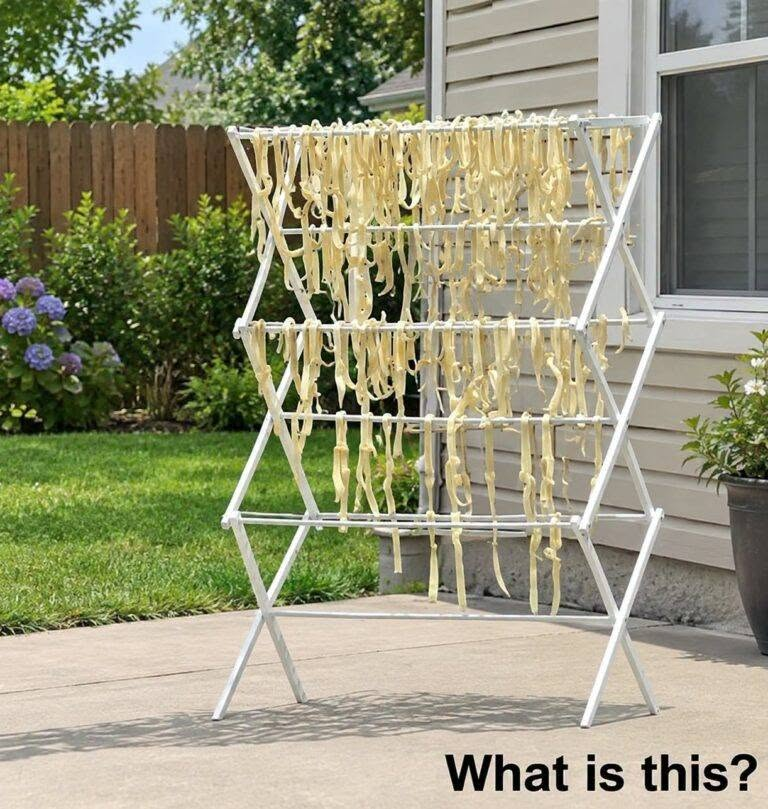
The photograph appears more consistent with fibrous tissue than ordinary melted fat.
Does This Look Like a Tapeworm?
The photograph should not be interpreted as proof that the roast contains a tapeworm.
Some parasites can infect animals, but the structures associated with parasitic infections do not simply look like long white spaghetti-like strings sticking randomly out of a cooked roast.
For example, beef can be affected by Taenia saginata, the beef tapeworm. In cattle, its larval stage is associated with cyst-like lesions in muscle.
Those are not the same thing as ordinary-looking strands of connective tissue.
This distinction is important because social-media posts frequently label any unusual white structure in meat a “parasite” without actually identifying it.
What About Trichinella?
Trichinella is another parasite that people often associate with meat.
However, trichinellosis is primarily associated with eating raw or undercooked meat from infected animals, particularly pork and wild game.
The larvae are microscopic and occur within muscle tissue.
They do not normally appear as visible, long white worms sticking out of a cooked beef roast.
So the strings shown in the photograph should not automatically be called Trichinella.
Does Cooking Kill Parasites?
Proper cooking is an important food-safety measure.
For beef roasts, food-safety guidance recommends using a food thermometer rather than judging safety from appearance alone. A minimum internal temperature of 145°F (63°C) followed by at least a three-minute rest is the standard minimum for beef roasts in USDA guidance.
Slow cooking also requires attention to safe food-handling practices.
The important lesson is:
Don’t determine whether meat is safe simply by looking at it.
Color, texture, and the appearance of unusual strands aren’t reliable ways to determine whether harmful microorganisms have been destroyed.