Stop Throwing Away Eggshells: How to Reuse Them Around Your Home and Garden
Tomatoes are frequently mentioned in online gardening discussions about eggshells.
Tomato plants require calcium, and calcium is involved in plant development.
However, adding eggshells to the soil is not a guaranteed way to prevent blossom-end rot.
Blossom-end rot is commonly associated with inadequate calcium delivery to developing fruit, but the problem is often related to inconsistent water availability and the plant’s ability to transport calcium.
If the soil already contains enough calcium, simply adding more eggshells won’t necessarily solve the problem.
Consistent watering and appropriate growing conditions are also important.
7. What About Pepper Plants?
Peppers are another crop frequently associated with eggshell fertilizer.
Like tomatoes, peppers require calcium as part of normal plant growth.
Crushed eggshells can contribute calcium to soil over time, but they shouldn’t be treated as a guaranteed solution for every plant problem.
If your peppers are struggling, look at the entire growing environment:
Soil quality
Watering
Sunlight
Temperature
Nutrient availability
Pests
Disease
Root health
Plant problems rarely have just one possible cause.
8. Eggshells and Houseplants
Some people also add powdered eggshells to houseplant soil.
This can be done in moderation, but there is an important caveat.
Many houseplants prefer specific soil conditions, and some prefer acidic soil.
Because eggshells contain calcium carbonate, adding substantial quantities could potentially alter soil conditions over time.
For houseplants, don’t assume that every plant benefits from eggshell powder.
Research the specific plant’s preferred soil conditions first.
9. Can Eggshell Water Be Used for Plants?
Eggshell water is another popular gardening idea.
The basic concept is simple: eggshells are cleaned, boiled or soaked in water, and the resulting liquid is used to water plants.
However, the amount of calcium that actually becomes available in ordinary eggshell water can be limited.
Eggshell calcium carbonate is not highly soluble in plain water.
That means a pot of boiled eggshells does not necessarily produce a concentrated liquid fertilizer.
If you want to reuse eggshells, incorporating finely crushed shells into compost or soil may be more straightforward than expecting a quick calcium-rich drink for your plants.
10. Don’t Expect Overnight Results
This is one of the biggest misunderstandings about eggshell gardening.
Eggshells are not a fast-acting fertilizer.
If you put a few large pieces of shell into the soil today, you shouldn’t expect your plant to suddenly become healthier tomorrow.
Their mineral components need time to break down.
The process depends on factors such as:
Particle size
Soil conditions
Moisture
Microbial activity
Soil acidity
Temperature
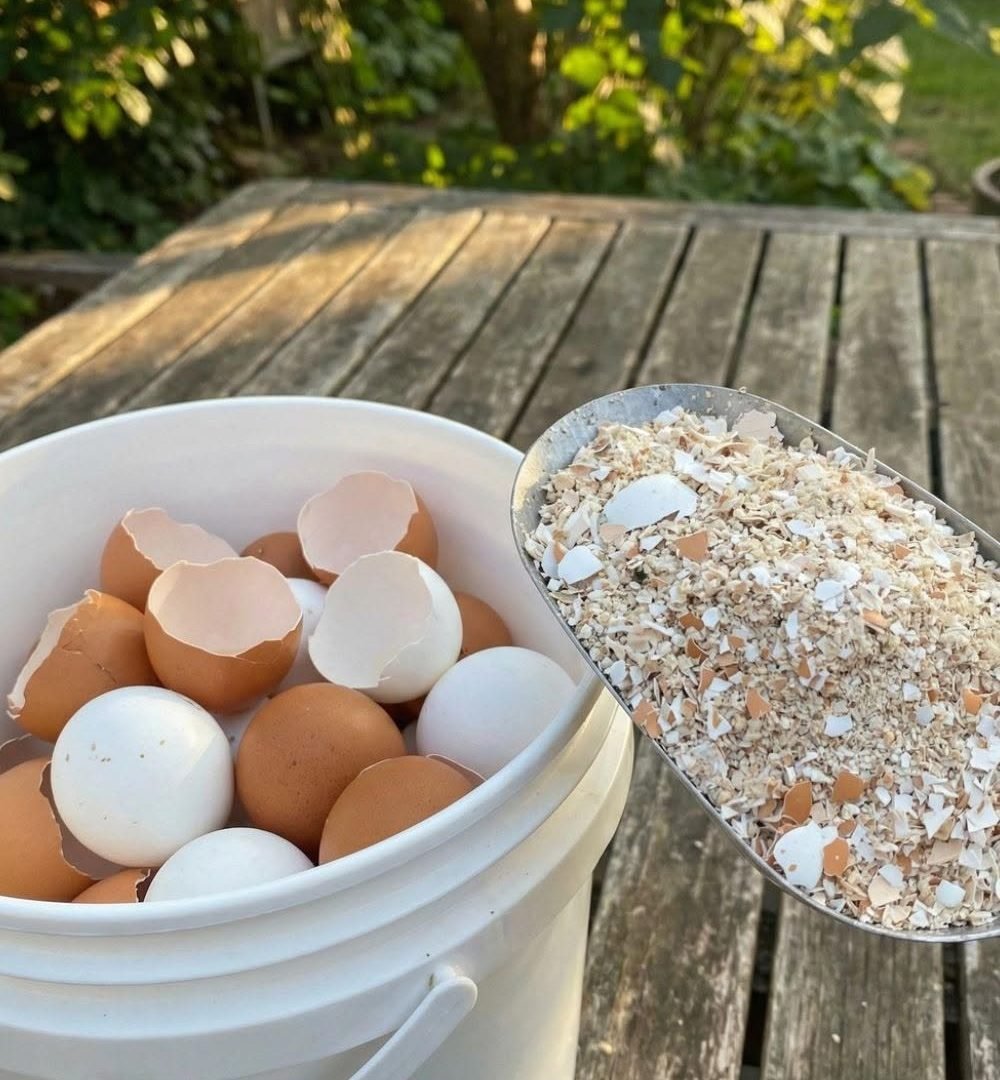
Finely ground shells generally provide more surface area than large pieces.
Still, they are best viewed as a slow soil amendment rather than an instant plant treatment.
11. Eggshells in the Compost Bin
If you already compost kitchen scraps, eggshells are easy to include.
You can add:
Crushed eggshells
Fruit peels
Vegetable scraps
Coffee grounds
Tea leaves
Yard waste
The eggshells will contribute mineral material while the organic ingredients break down.
Crushing the shells before adding them is useful because large pieces can remain recognizable for a long time.
12. What About Using Eggshells to Repel Garden Pests?
You may also see claims that sharp eggshell fragments create an effective barrier against slugs and snails.
This is a popular gardening tip, but evidence for eggshells as a reliable slug-control method is limited.
If you’re dealing with a serious pest problem, don’t depend exclusively on eggshells.
Instead, identify the pest and use an appropriate gardening method.
Eggshells can still be recycled into the garden, but they shouldn’t be promoted as a guaranteed pest-control solution.
13. Can You Eat Eggshells for Calcium?
This is where extra caution is important.
Because eggshells contain calcium carbonate, some people grind them into powder and consume them as a calcium supplement.
However, that doesn’t mean homemade eggshell powder is automatically safe.
Eggshells can carry harmful bacteria if they are contaminated or improperly handled. Preparation, grinding, storage, and dosage all matter.
More importantly, taking large amounts of calcium without knowing whether you need it isn’t a good idea.
Too much calcium can cause health problems in some circumstances and can interfere with the absorption of certain medications.
If you need additional calcium, discuss appropriate sources and amounts with a healthcare professional rather than treating homemade eggshell powder as a substitute for a tested supplement.
14. Eggshells Are Not a Treatment for Joint Pain
One of the most common social-media claims is that eggshell powder or eggshell water can eliminate arthritis or joint pain.
There isn’t enough evidence to support presenting ordinary boiled eggshell water as a treatment for arthritis or chronic joint pain.
Joint pain can have many different causes, including osteoarthritis, injuries, inflammatory conditions, overuse, and other medical problems.
The correct treatment depends on the cause.
A kitchen remedy shouldn’t replace medical evaluation when pain is persistent, severe, or worsening.