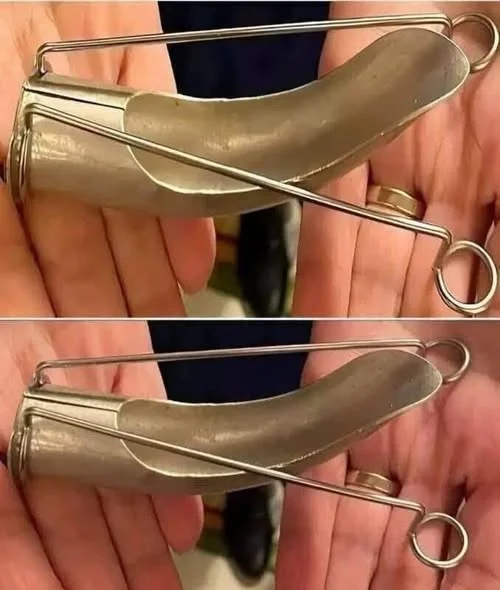
The Forgotten Utility: The Vintage Button Hook and Shoe Fastener
The Connection to Arthritis and Hand Strength
Small buttons can be surprisingly difficult for someone with reduced hand dexterity.
The movement required to pinch, rotate, push, and pull a tiny button involves several small joints and muscles.
For someone with stiff or painful fingers, the task can become tiring.
A button hook reduces the amount of precise finger manipulation required.
The person still controls the tool, but the tool provides a larger grip and a mechanical advantage.
This is one reason button hooks remain recognizable as adaptive dressing equipment even though the vintage versions have largely disappeared from everyday use.
Button Hooks and Shoe Dressing
Shoes were one of the most practical applications.
Imagine a tall boot covered with small buttons.
Without a tool, the wearer would have to bend down and manipulate each button individually.
With a button hook, the wearer could work through the row more efficiently.
The tool was especially useful for footwear that was difficult to reach.
It also reduced the frustration of trying to use fingernails to catch tiny buttons.
Why Modern People Rarely See Them
The decline of the button hook is closely connected to changes in clothing design.
Fashion changed.
Manufacturing changed.
New fasteners became widely available.
Zippers became increasingly practical and popular.
Elastic materials became more common.
Snap fasteners became convenient.
Shoes increasingly used laces, buckles, zippers, and eventually slip-on designs.
As clothing became easier to put on, specialized fastening tools became less necessary.
A household could function perfectly well without owning a button hook.
Eventually, younger generations stopped recognizing the object.
That is why vintage examples can create so much curiosity today.
The Rise of the Zipper
The zipper is one of the major reasons tools such as button hooks became less important.
A zipper allows a person to close an entire section of clothing with one movement.
Instead of fastening ten or fifteen small buttons individually, a person can simply pull a zipper.
This dramatically changes the experience of getting dressed.
Modern boots, jackets, trousers, dresses, handbags, and other products commonly rely on zippers.
The convenience is so familiar that it is easy to forget how much more labor certain older garments required.
Buttons Never Completely Disappeared
Despite the decline of button hooks, buttons themselves remain extremely common.
They are used on:
Shirts
Coats
Cardigans
Jackets
Dresses
Jeans
Uniforms
Children’s clothing
Traditional garments
But modern buttons are often larger or positioned in ways that make them easier to manipulate.
Many garments also combine buttons with zippers or snaps.
As a result, the need for a specialized hook is much lower than it once was.
Is the Object Valuable?
Not necessarily.
Vintage does not automatically mean valuable.
The monetary value of a button hook depends on factors such as:
Age
Manufacturer
Rarity
Material
Condition
Design
Decorative details
Original packaging
Historical significance
Collector demand
A common example may have only modest value.
A rare example made from an unusual material or associated with a particular manufacturer may attract collectors.
Condition is also important.
A damaged handle, missing mechanism, corrosion, or broken hook can reduce collectibility.
On the other hand, some collectors appreciate objects specifically because they show signs of genuine historical use.
What About the Red Material?
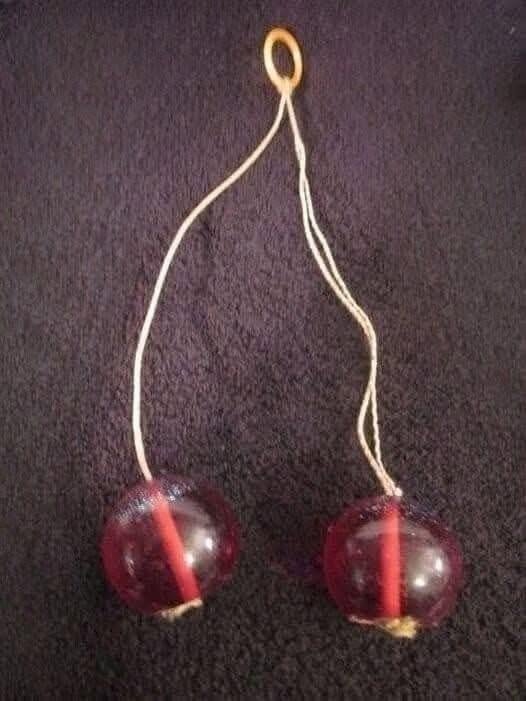
The red handle is particularly interesting because older red-colored objects were made from many different materials.
Without examining the actual object, it is not possible to determine its material with certainty simply from a photograph.
It could be an early plastic, a resin, hard rubber, or another material depending on the age and manufacturer.
Collectors sometimes use visual characteristics, weight, markings, manufacturing seams, and other clues to identify vintage materials.
The exact identification can be important when estimating the object’s age and value.