What Does a Small Hole or Mark Near Your Ear Mean? Understanding Preauricular Pits
A medical examination is advisable if you notice any of the following:
Persistent discharge: Fluid or pus repeatedly emerging from the opening may indicate infection or inflammation.
Increasing pain: A pit that becomes painful or tender should be evaluated.
Swelling or redness: These may be signs of an infection, especially if they are worsening.
Repeated infections: Several episodes may indicate that treatment beyond antibiotics is needed.
Other health concerns: Hearing difficulties or additional congenital abnormalities may warrant further assessment.
Seek urgent care if there is rapidly increasing swelling, severe pain, fever with worsening redness, or signs that an infection is spreading.
If you are unsure whether the mark is a preauricular pit or another type of skin lesion, a clinician can usually assess its appearance and location.
8. What If the Mark Is Not a Preauricular Pit?
Not every small mark near the ear is a congenital opening.
Other possibilities include:
A small scar.
A skin-colored papule or mole.
A blocked pore or cyst.
A tiny opening associated with another skin condition.
A small congenital skin tag or other anatomical variation.
The location and appearance of the mark can help distinguish these possibilities, but a photograph alone cannot establish the diagnosis with certainty.
A mark that is new, growing, bleeding, changing color, or repeatedly becoming inflamed should be examined by a healthcare professional.
Avoid trying to remove it at home.
Final Thoughts
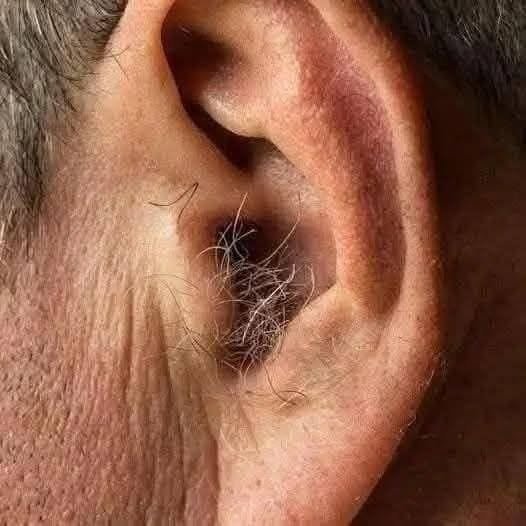
The small opening shown near the ear may be a preauricular pit, a congenital feature that is usually harmless and often does not require treatment.
It can run in families, generally does not affect hearing when isolated, and may remain unnoticed throughout life.
The main complication to watch for is infection, particularly if the area becomes painful, swollen, red, or begins to discharge fluid.
If the opening is comfortable and unchanged, there is usually no need to panic. If it develops symptoms or you are uncertain about its identity, a healthcare professional can examine it and recommend appropriate care.
The most important point is that a tiny hole near the ear is not automatically a sign of disease. Its significance depends on its appearance, associated symptoms, and the person’s overall health.