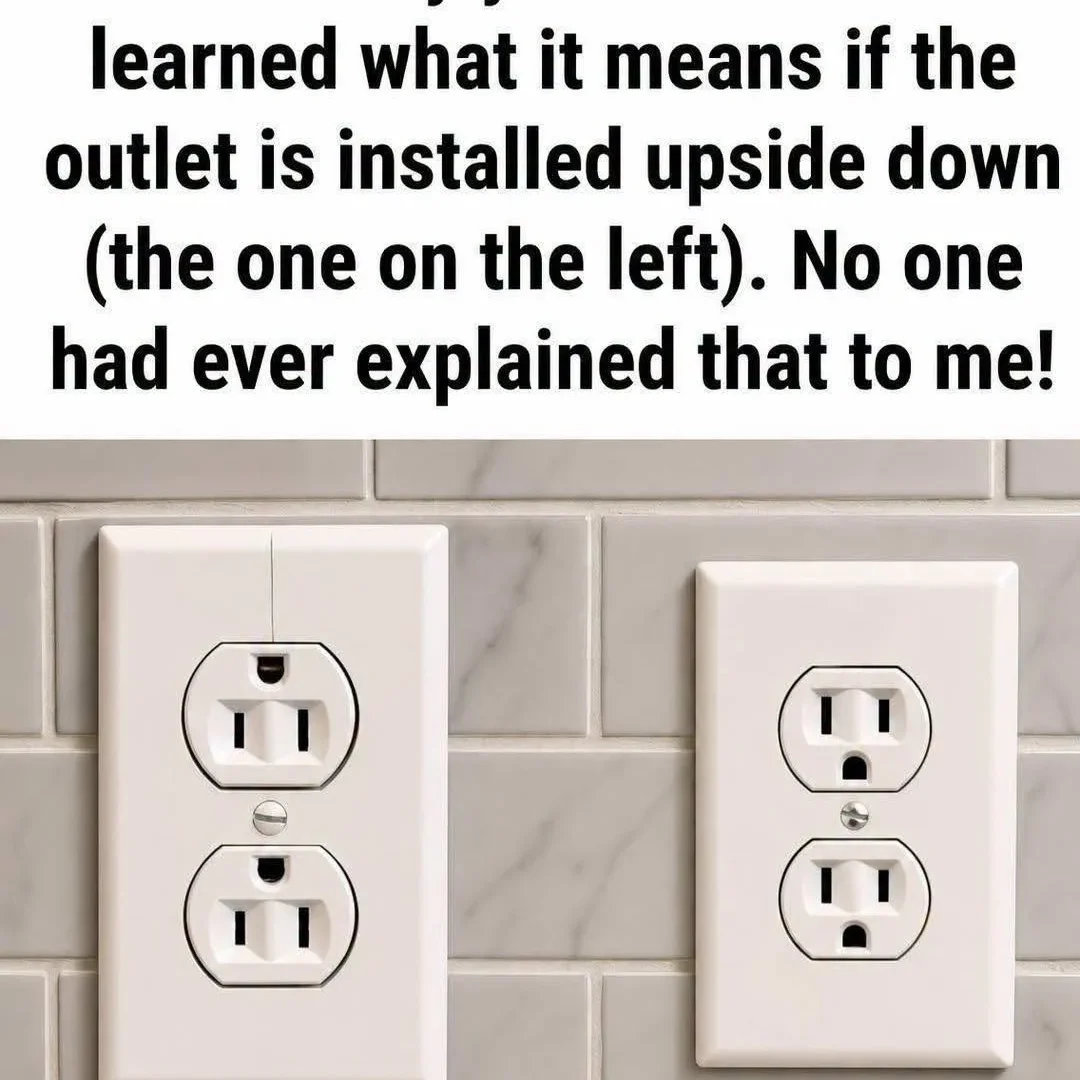
Why Are Some Electrical Outlets Installed Upside Down? The Real Reason Explained
A GFCI, or ground-fault circuit interrupter, is designed to disconnect power when it detects an imbalance indicating that current may be taking an unintended path.
These devices are particularly important in locations where electricity and water may come into contact.
Depending on local electrical requirements, GFCI protection may be required in areas such as bathrooms, kitchens, outdoor locations, garages, and other potentially wet environments.
A GFCI is a much more meaningful safety feature than whether the grounding slot faces upward or downward.
Don’t Replace an Outlet Based on Orientation Alone
If you see an outlet that looks “upside down,” there is usually no reason to panic.
Do not assume it needs to be turned around.
Changing a receptacle involves electrical wiring, and improper work can create shock, fire, or equipment hazards.
If an outlet needs replacement because it is loose, damaged, cracked, discolored, sparking, or overheating, have the work performed safely by someone qualified to do electrical work.
Signs That an Outlet Actually Needs Attention
The orientation of the receptacle isn’t usually the warning sign.
Instead, watch for:
Burning smells
Brown or black discoloration
Buzzing or crackling
Sparks during normal plugging and unplugging
A receptacle that feels unusually hot
Loose plugs that fall out easily
Cracked plastic
Visible damage
Repeated tripping of a circuit breaker
Electrical shocks or tingling sensations
These signs can indicate an electrical problem.
A damaged outlet should not simply be ignored because it still appears to work.
Why Do Plugs Have a Ground Pin?
The third pin on a grounded plug is designed to connect equipment grounding to the electrical system.
It can help provide a low-resistance path for fault current when a fault causes an appliance’s metal parts to become energized.
This is one reason you should not remove the grounding pin from a plug just to make it fit an older two-slot receptacle.
Likewise, you shouldn’t use inappropriate adapters or defeat grounding protection simply because an outlet doesn’t match the plug.
Don’t Block or Remove the Ground Connection
The grounding connection is an important part of electrical safety.
Never intentionally break off the ground pin from a three-prong plug simply because the outlet doesn’t accept it.
Doing so can remove an important safety feature.
If an older home has two-prong receptacles where grounded outlets are needed, the electrical system should be evaluated appropriately rather than modifying plugs.
What About Installing an Outlet Horizontally?
Receptacles can sometimes be installed in different orientations depending on the design and application.
The important thing is that the installation complies with the applicable electrical requirements and the device manufacturer’s instructions.
There isn’t a universal rule that every receptacle must look exactly like the one in your home.
Electrical installations can vary significantly.
The Viral Image Is Based on a Real Idea—But Leaves Out the Details