10 Warning Signs of a Blood Clot in Your Leg You Should Know
A blood clot in the leg can begin with symptoms that are easy to mistake for muscle soreness, ordinary swelling, or tiredness after a long day. Sometimes, the warning signs are obvious. In other cases, a clot develops with few noticeable symptoms, making it difficult to recognize without medical testing.
One of the most important conditions to understand is deep vein thrombosis (DVT), which occurs when a blood clot forms in a deep vein, most commonly in the leg. DVT requires prompt medical evaluation because part of the clot can break away and travel to the lungs, causing a potentially life-threatening condition called a pulmonary embolism.
Recognizing possible symptoms and understanding when to seek medical care can make an important difference. However, no list of symptoms can confirm a blood clot at home, and some people with DVT experience no obvious warning signs.
This guide explains 10 signs that deserve attention, the risk factors that increase the likelihood of a clot, how doctors diagnose the condition, and what you can do to reduce your risk.
What Is a Blood Clot in the Leg?
Blood clotting is a normal process that helps stop bleeding when you are injured. The problem arises when a clot forms inside a blood vessel where it obstructs normal blood flow.
Deep vein thrombosis occurs when a clot develops in a deep vein, often in the calf, thigh, or pelvis.
Deep veins carry blood back toward the heart. When a clot obstructs one of these veins, blood may have difficulty returning normally, potentially causing swelling, pain, tenderness, and changes in skin temperature or color.
A DVT can occur in one leg and may develop after surgery, prolonged immobility, injury, or certain medical conditions. However, it can also occur in people without an obvious trigger.
The most serious complication occurs when part of the clot travels through the bloodstream and becomes lodged in the lungs. This is known as a pulmonary embolism, or PE.
A pulmonary embolism can interfere with blood flow through the lungs and place significant strain on the heart. It requires immediate medical attention.
If you develop sudden shortness of breath, chest pain, coughing up blood, or fainting, seek emergency medical help immediately. Do not wait for leg symptoms to appear.
1. Swelling in One Leg
Swelling is one of the most recognized signs of a possible deep vein thrombosis.
You may notice that one calf, ankle, or entire leg appears larger than the other. Your trousers might feel tighter on one side, or your sock may leave a deeper mark around one ankle.
This happens because a clot can obstruct blood flow through a deep vein, increasing pressure and allowing fluid to accumulate in the surrounding tissues.
The swelling may develop gradually or appear more suddenly.
However, swelling does not automatically mean you have a blood clot. Injuries, infections, vein problems, and other medical conditions can produce similar symptoms.
What should you watch for?
Pay attention to swelling that is:
New and unexplained.
More noticeable in one leg than the other.
Accompanied by calf pain or tenderness.
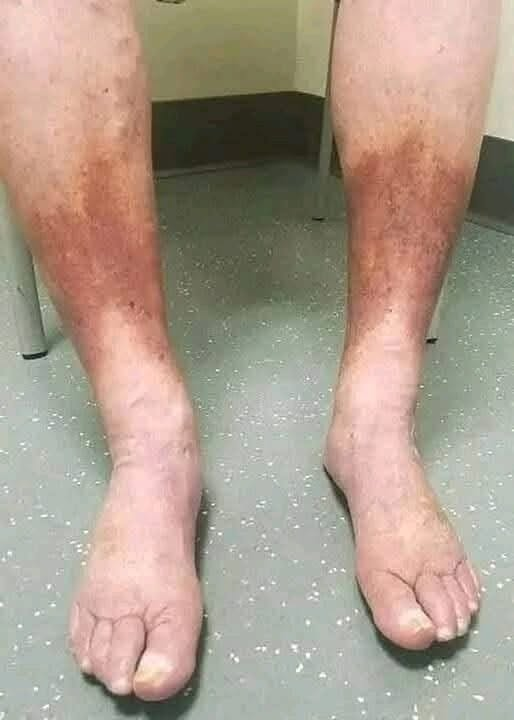
Associated with warmth or skin discoloration.
Developing after surgery, prolonged travel, or a period of limited movement.
New, unexplained swelling in one leg should be assessed urgently by a healthcare professional, particularly if you also have pain or warmth.
Do not assume that the swelling will disappear on its own, especially if you have risk factors for blood clots.