Red, Swollen Lower Legs: What This Image May Be Showing
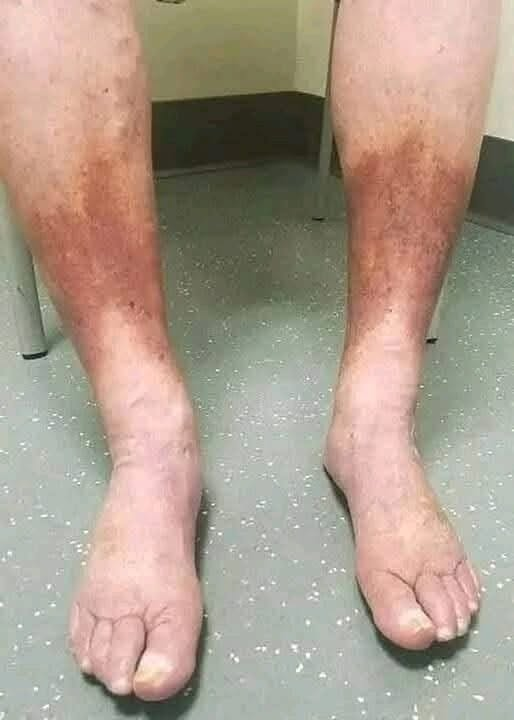
The legs in this image show noticeable swelling around the ankles and feet together with reddish-brown discoloration of the lower legs. Although social-media captions may describe such a picture as proof of one specific disease, an image alone cannot establish a diagnosis.
This appearance can occur with several different conditions. One possibility is chronic venous insufficiency, in which blood has difficulty returning from the legs toward the heart. Other possibilities include chronic edema, skin inflammation, lymphedema, infection such as cellulitis, medication-related swelling, or—especially when swelling is sudden and mainly affects one leg—a blood clot. (nhs.uk)
Why Do the Lower Legs Become Red and Dark?
When swelling persists for a long time, the skin of the lower legs can become stretched, dry, thickened, or discolored. In people with problems involving the veins, blood can pool in the lower legs, increasing pressure in the small blood vessels.
Over time, fluid can move into surrounding tissues, producing edema. The skin may gradually develop reddish, brownish, or darker areas.
This does not necessarily mean that the person has an infection.
Chronic venous problems can produce changes that look dramatic while developing gradually over months or years.
However, other conditions can look similar, which is why a medical examination is important when swelling and discoloration persist.
Swollen Feet and Ankles Are Not Always Caused by Poor Circulation
Leg swelling has many possible causes.
Common causes include:
Sitting or standing for long periods
Varicose veins
Excess dietary salt
Certain medications
Being overweight
Previous leg injuries
Pregnancy
Chronic venous disease
Lymphedema
Swelling can also occur with conditions affecting the heart, kidneys, liver, thyroid, or blood vessels. An infection or blood clot can also cause swelling. (nhs.uk)
Therefore, saying that swollen legs automatically mean “bad circulation” is too simplistic.
One Important Possibility: Chronic Venous Insufficiency
The veins in the legs have valves that help blood travel upward toward the heart.
When these valves don’t work properly, blood can remain in the lower legs instead of returning efficiently.
This can contribute to:
Ankle swelling
A heavy or tired feeling in the legs
Varicose veins
Skin discoloration
Dry or itchy skin
Thickening of the skin
Aching that becomes worse after prolonged standing
Improvement when the legs are elevated
Over a long period, chronic venous disease can contribute to significant skin changes around the ankles and lower legs.
The brown or reddish coloration sometimes seen in these situations can result from changes associated with prolonged venous pressure and leakage of blood components into surrounding tissue.
Another Possibility Is Cellulitis
Cellulitis is a bacterial infection affecting deeper layers of the skin.
It commonly affects the lower legs and can produce:
Redness
Swelling
Warmth
Tenderness or pain
Increasing skin inflammation
Fever or chills
Feeling generally unwell
Unlike some chronic conditions, cellulitis can progress relatively quickly and requires medical treatment. Antibiotics are commonly used when cellulitis is diagnosed. (Mayo Clinic)
This is why a suddenly red, hot, painful and swollen leg should not simply be assumed to be a chronic circulation problem.