The “World’s Deadliest Food”? Why Cassava Can Be Dangerous When Prepared Incorrectly
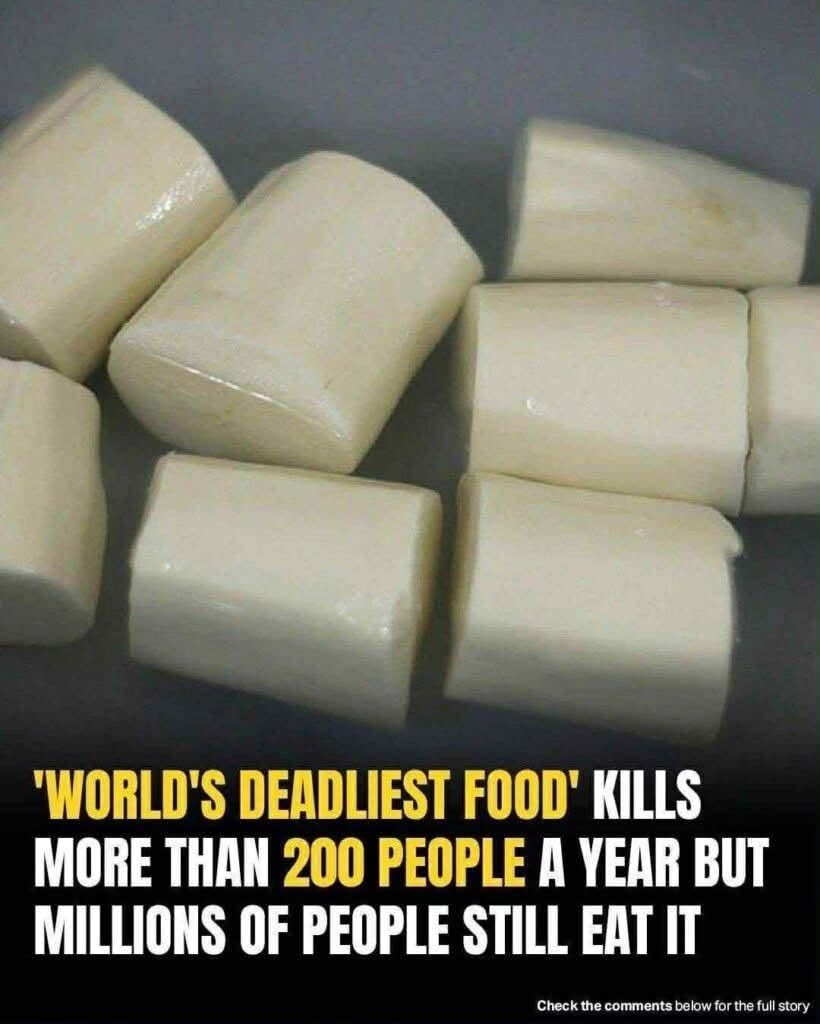
The food shown in the image looks surprisingly ordinary: small pieces of a pale root that could easily be mistaken for potatoes or another starchy vegetable.
The food is cassava, also known as yuca or manioc.
Cassava is eaten by hundreds of millions of people around the world and is an important staple in tropical and subtropical regions. FAO has described cassava as providing a basic diet for around 500 million people in some of its global assessments.
So why do viral posts call it the “world’s deadliest food”?
The answer is a naturally occurring chemical defense system in the plant.
Cassava contains compounds called cyanogenic glycosides, particularly linamarin, which can release hydrogen cyanide when the plant tissue is damaged and improperly processed. WHO identifies cassava as one of the important food plants containing these compounds. (Organisation mondiale de la santé)
That doesn’t mean cassava is inherently unsafe.
Millions of people eat cassava safely because proper preparation and processing greatly reduce the cyanide risk.
What Exactly Is Cassava?
Cassava is a woody shrub originally from South America that is now cultivated throughout tropical and subtropical regions.
Its large underground roots are rich in starch and provide an important source of carbohydrate energy.
Cassava can be transformed into many different foods, including:
Boiled cassava
Fried cassava
Cassava flour
Gari
Fufu
Attiéké
Tapioca
Cassava chips
Other fermented or processed foods
FAO describes cassava as an important staple and source of food security in many parts of the tropical world.
It is particularly important because the crop can tolerate relatively poor soils and periods of drought better than many other crops.
So Where Does the Danger Come From?
Cassava contains cyanogenic glycosides.
These are natural plant compounds that can release cyanide under certain conditions.
The most important one in cassava is linamarin.
When cassava tissue is damaged—for example, when it is grated, crushed, or chewed—enzymatic reactions can release compounds that eventually produce hydrogen cyanide.
If enough cyanide is released and consumed, it can interfere with the body’s ability to use oxygen properly.
Severe poisoning can therefore be life-threatening.
WHO lists possible symptoms of acute cyanide poisoning as including:
Rapid breathing
Dizziness
Headache
Abdominal pain
Vomiting
Diarrhea
Confusion
Low blood pressure
Seizures
Loss of consciousness
Severe poisoning can result in death.
Does This Mean You Should Stop Eating Cassava?
No.
This is where the viral headline can be misleading.
Cassava is a normal staple food in many countries.
The problem isn’t simply that cassava contains cyanogenic compounds.
The important issue is how the cassava is processed and prepared.
WHO explains that cassava toxicity can be greatly reduced through appropriate processing methods, including peeling, washing, cooking, and fermentation, depending on the type of cassava and traditional preparation method.
This is why properly prepared cassava can be safely incorporated into diets.
Not All Cassava Is Equally High in Cyanide
There are different cassava varieties, and their cyanogenic potential can vary substantially.
Some are commonly described as sweet cassava, while others are referred to as bitter cassava.
The names can be misleading because “sweet” doesn’t mean sugary and “bitter” doesn’t simply refer to taste.
Bitter varieties can contain substantially higher levels of cyanogenic compounds and therefore require particularly careful processing.
WHO has documented outbreaks associated with inadequately processed cassava, including cases involving bitter cassava with high hydrogen-cyanide levels.
Why Do People Continue Eating It?
Because cassava is an incredibly important food crop.
For communities that depend on it, cassava provides:
Calories
The root is primarily composed of starch and carbohydrates.
Food security
Cassava can grow under conditions where some other crops perform poorly.
Flexibility
It can be processed into many different foods.
Economic value
Cassava supports farmers, processors, traders, and food businesses.
FAO has described cassava as a major food-security crop and a livelihood source for millions of farmers and others involved in its value chain.
Calling it simply “deadly food” ignores this enormous nutritional and economic importance.
The Real Problem Is Improper Processing
The biggest risk occurs when cassava that contains significant amounts of cyanogenic compounds is not adequately processed before consumption.
WHO notes that peeling, washing, cooking, and fermentation can substantially reduce cassava toxicity, depending on the preparation method.
Traditional food cultures have developed detailed methods for preparing cassava safely.
These methods aren’t random.
They are part of generations of practical knowledge about how to transform the raw root into a safe food.
Why Cooking Matters
Heat can help reduce cyanogenic compounds, particularly when the preparation allows the compounds or their breakdown products to escape.
However, simply saying “cooking always makes cassava safe” would be too simplistic.
The effectiveness of processing depends on:
The cassava variety
The initial cyanogenic content
How the root is prepared
Whether it is peeled
Whether it is soaked
Whether it is fermented
How it is cooked
How long it is processed
How the food is subsequently prepared
That’s why traditional processing methods can involve several steps rather than simply putting raw cassava into boiling water for a few minutes.
Why Fermentation Can Be Important
In several cassava-producing regions, fermentation is part of the traditional preparation of cassava products.
Fermentation can help break down compounds associated with cyanide production and is used in the preparation of foods such as gari and other traditional cassava products.
The exact processing method differs by country and product.
This is one reason commercially prepared cassava foods can have very different safety characteristics from improperly prepared raw cassava.