Can One Simple Ingredient Help With Bone Pain, Diabetes, Anxiety, Depression, and Constipation? What You Should Know
Many traditional health remedies are passed down from one generation to the next. Some involve familiar kitchen ingredients, while others rely on minerals that people believe can support the body’s natural functions. Salt is one of the oldest and most widely used substances in the world, and different varieties have been used for cooking, bathing, and traditional wellness practices for centuries.
However, claims that taking two tablespoons of a particular ingredient every morning can eliminate bone pain, nerve problems, cartilage damage, diabetes, anxiety, depression, and insomnia deserve careful examination.
Although certain minerals are essential for good health, no single type of salt has been proven to cure all these conditions. Some ingredients may have a limited, specific use, but that is very different from treating several unrelated medical problems.
Understanding what the ingredient actually is, how the body uses minerals, and which treatments have scientific support can help you make safer decisions about your health.
What Is the Ingredient Shown in the Picture?
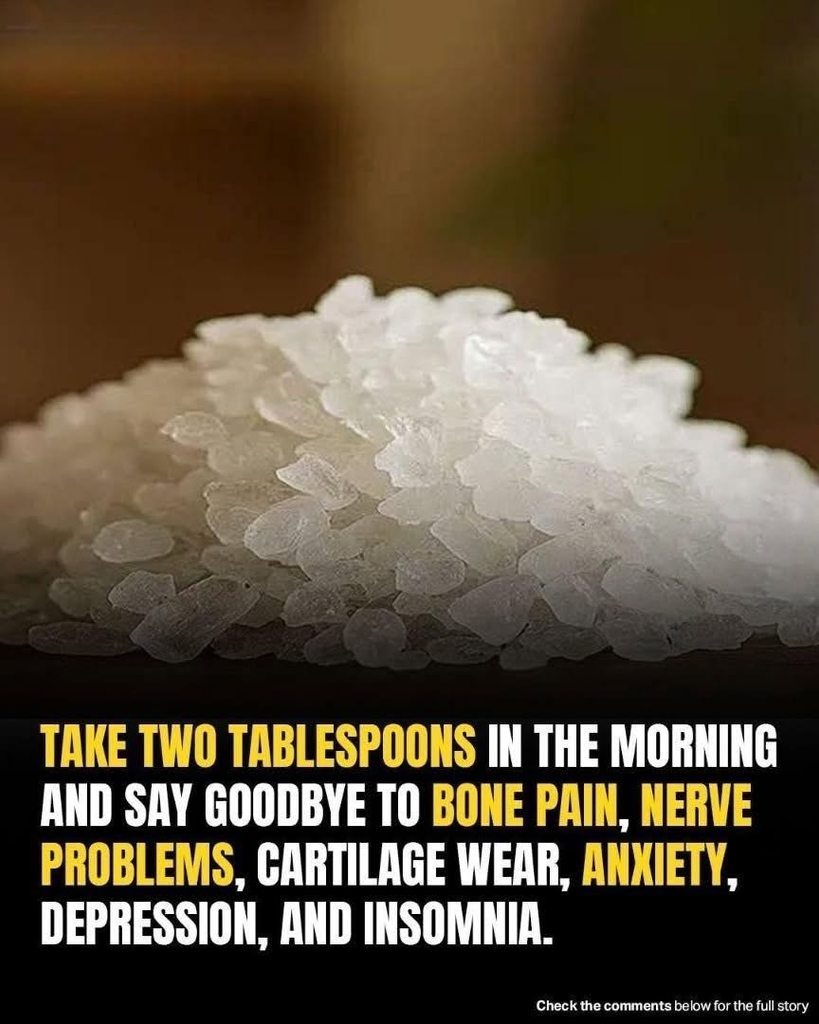
The image shows coarse, white, translucent crystals that resemble a type of salt. However, a photograph alone cannot establish whether the substance is ordinary table salt, sea salt, another mineral salt, or Epsom salt.
This distinction matters because different salts have different chemical compositions and uses.
Table Salt
Ordinary table salt is primarily sodium chloride. It provides sodium, an essential electrolyte that helps regulate fluid balance, nerve signaling, and muscle function.
The body needs some sodium to function properly, but most people already obtain enough through their diets.
Consuming excessive sodium can contribute to high blood pressure in susceptible people and increase cardiovascular risk. It is not a proven treatment for diabetes, depression, anxiety, cartilage damage, or chronic bone pain.
Sea Salt and Coarse Salt
Sea salt is produced by evaporating seawater, while coarse salt describes the size of the crystals rather than a unique nutritional composition.
Depending on the product, sea salt may contain small amounts of other minerals. Nevertheless, it is still primarily sodium chloride and should not be considered a special medicine.
The presence of trace minerals does not establish that a salt can treat chronic diseases.
Epsom Salt
Epsom salt is chemically different from ordinary table salt. It consists of magnesium sulfate, a compound used in certain products for specific purposes.
Some Epsom salt products are intended for bathing or soaking, while appropriately labeled medicinal products may be used as laxatives for occasional constipation.
These uses are not interchangeable. A product labeled for external use should not be swallowed, and even medicinal Epsom salt requires careful adherence to its directions.
Magnesium is essential for normal muscle and nerve function, but this does not mean that consuming large quantities of magnesium sulfate will repair nerves, restore cartilage, or treat mental health conditions.
Before considering any remedy, identify the ingredient and its intended use. Never assume that every white crystalline substance is safe to eat.