The Vitamin You May Need When Your Legs and Bones Ache
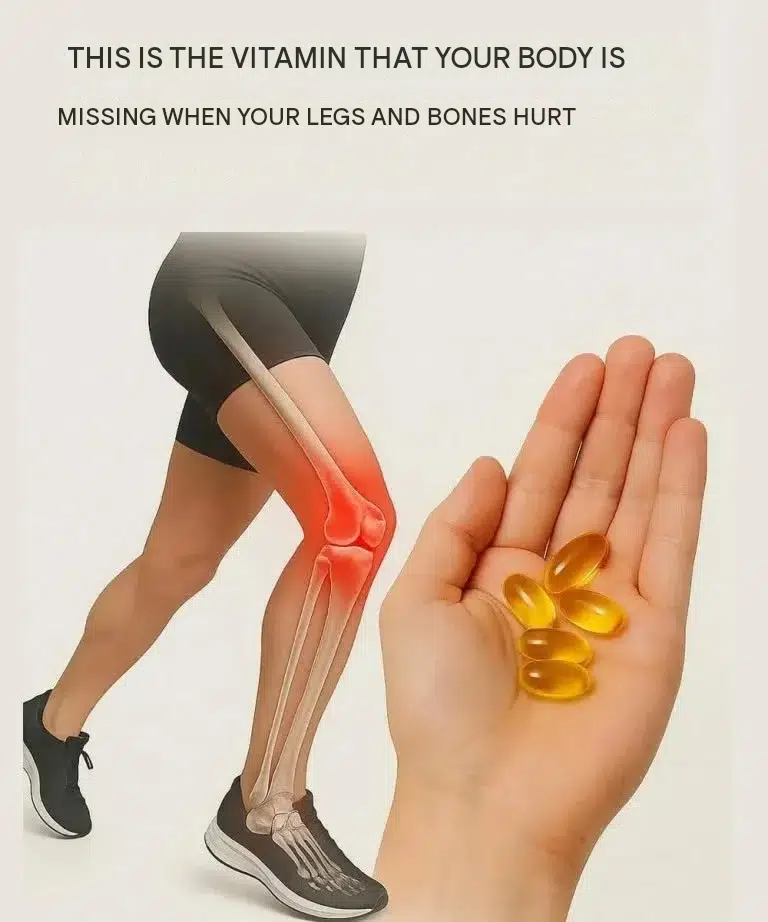
Pain or aching in the legs and bones can be uncomfortable, especially when it happens repeatedly or seems to appear without an obvious reason. A popular health claim often points to vitamin D as the vitamin people need when their bones and legs hurt.
There is some truth behind this idea, because vitamin D is essential for maintaining healthy bones and helping the body absorb calcium. A significant vitamin D deficiency can contribute to bone pain and muscle weakness. However, aching legs do not automatically mean that you are deficient in vitamin D.
Leg and bone pain can have many different causes, including muscle strain, arthritis, nerve problems, circulation issues, injuries, certain medications, mineral deficiencies, and other medical conditions.
Understanding the role of vitamin D can help you recognize when it may be relevant and when it is important to look for another explanation.
Why Vitamin D Is Important
Vitamin D is a fat-soluble vitamin that plays several important roles in the body.
One of its best-known functions is helping the body absorb calcium from the digestive system. Calcium is essential for maintaining strong bones and teeth, but calcium cannot work effectively without a properly functioning vitamin D system.
Vitamin D also contributes to normal muscle function and supports the immune system.
When vitamin D levels are severely or persistently low, the consequences can include problems with bone health and muscle function.
This is why vitamin D is particularly important throughout life.
Children need adequate vitamin D for normal bone development, while adults need it to maintain bone strength and reduce the risk of problems related to weakened bones.
Can Vitamin D Deficiency Cause Bone Pain?
Yes, significant vitamin D deficiency can be associated with bone pain.
Adults with severe deficiency may develop a condition called osteomalacia, in which the bones become softer because the process of mineralization is impaired.
Possible symptoms can include:
Aching bone pain
Muscle weakness
Difficulty climbing stairs
Difficulty getting up from a chair
Difficulty walking
Increased risk of fractures
The discomfort may be felt in different parts of the body, including the hips, lower back, legs, or ribs.
However, having aching legs does not prove that vitamin D deficiency is the cause.
This distinction is extremely important because taking a vitamin supplement without knowing the underlying cause may delay the diagnosis of another problem.
What Does Vitamin D Deficiency Feel Like?
Some people with low vitamin D have no obvious symptoms at all.
Others may develop relatively nonspecific symptoms such as:
Muscle weakness
General tiredness
Bone discomfort
Muscle aches
Difficulty performing physical activities
Increased vulnerability to bone problems
Because these symptoms overlap with many other conditions, symptoms alone cannot reliably diagnose vitamin D deficiency.
A blood test can help determine whether vitamin D levels are low.
If someone has persistent unexplained bone or muscle pain, discussing the symptoms with a healthcare professional is more useful than assuming that vitamin D is automatically responsible.