Doctors Warn: Should You Stop Eating These 4 Foods Because They Contain Parasites?
Claims that certain everyday foods are “full of parasites” spread quickly online, especially when accompanied by dramatic photographs and warnings to stop eating particular foods immediately.
But the reality is more nuanced.
There are foods that can carry parasites, particularly when they are eaten raw or undercooked. However, saying that a food simply “contains lots of parasites” is misleading. Proper sourcing, handling, cooking and, for certain foods, appropriate freezing can greatly reduce the risk.
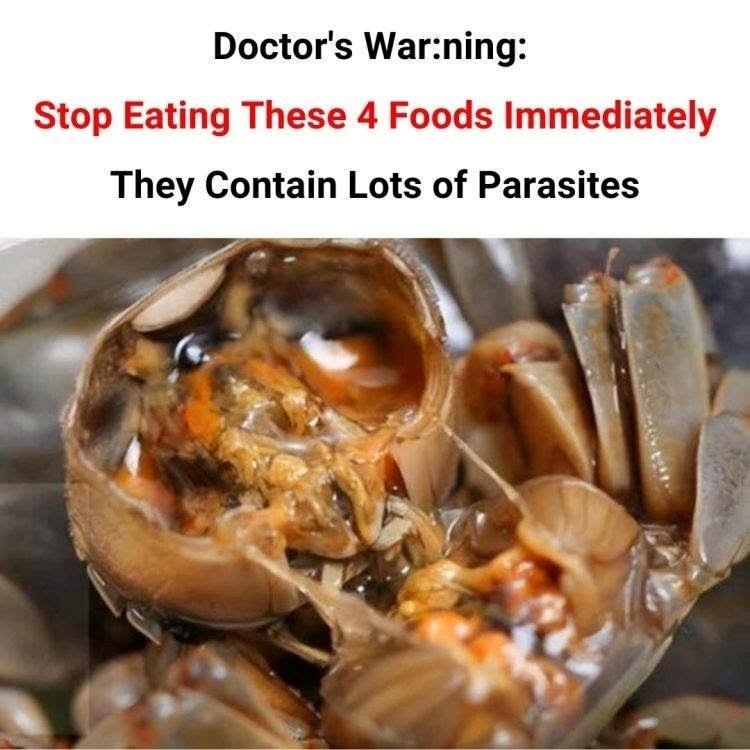
The seafood shown in the image is especially relevant because raw or undercooked seafood can carry certain parasites. But that does not mean that all seafood is dangerous or that people should stop eating it.
The important question is how the food is prepared.
1. Raw or Undercooked Fish
One of the best-known foodborne parasites associated with seafood is Anisakis, a type of microscopic roundworm whose larvae can be present in some marine fish and squid.
People can become infected when they eat infected fish or squid raw or insufficiently cooked.
This is one reason raw seafood deserves special attention.
Foods that may involve raw or lightly cooked fish include:
Sushi
Sashimi
Certain types of ceviche
Raw fish dishes
Lightly cooked fish
Some cold-smoked fish products
The risk isn’t identical for every species or every product, but cooking fish thoroughly is one of the simplest ways to reduce the risk.
Symptoms of a seafood-related parasitic infection can include abdominal pain, nausea, vomiting, diarrhea and other digestive symptoms. Some people can also experience allergic reactions.
However, having eaten sushi or another raw seafood dish does not automatically mean you have a parasite.
Most people who eat seafood do not develop a parasitic infection.
Why freezing can matter
Certain commercial seafood products intended for raw consumption may undergo controlled freezing designed to kill parasites.
But an ordinary household freezer should not automatically be assumed to provide the same parasite-control conditions.
The temperature and duration matter.
That’s why simply putting a piece of fresh fish into a typical home freezer for a short time isn’t a reliable substitute for proper commercial parasite-control procedures.
For the safest option, cook seafood thoroughly.
2. Raw or Undercooked Shellfish
The photograph in the viral post appears to show shellfish, although the exact species and preparation cannot be determined with certainty from the image alone.
Shellfish can include:
Oysters
Clams
Mussels
Scallops
Other mollusks
These foods can be nutritious sources of protein and minerals, but raw or undercooked shellfish can carry several types of foodborne hazards.
And here’s something important:
The danger isn’t limited to parasites.
Raw shellfish can also be associated with bacteria and viruses depending on where they were harvested and how they were handled.
Shellfish such as oysters and clams filter large amounts of water as they feed. If the surrounding water is contaminated, microorganisms can accumulate in the animals.
That’s one reason raw oysters have a reputation for causing foodborne illness.
This doesn’t mean you need to eliminate shellfish from your diet.