I Soaked My Raspberry in Salt Water and Saw White Wiggling Things — Should I Throw It Away?
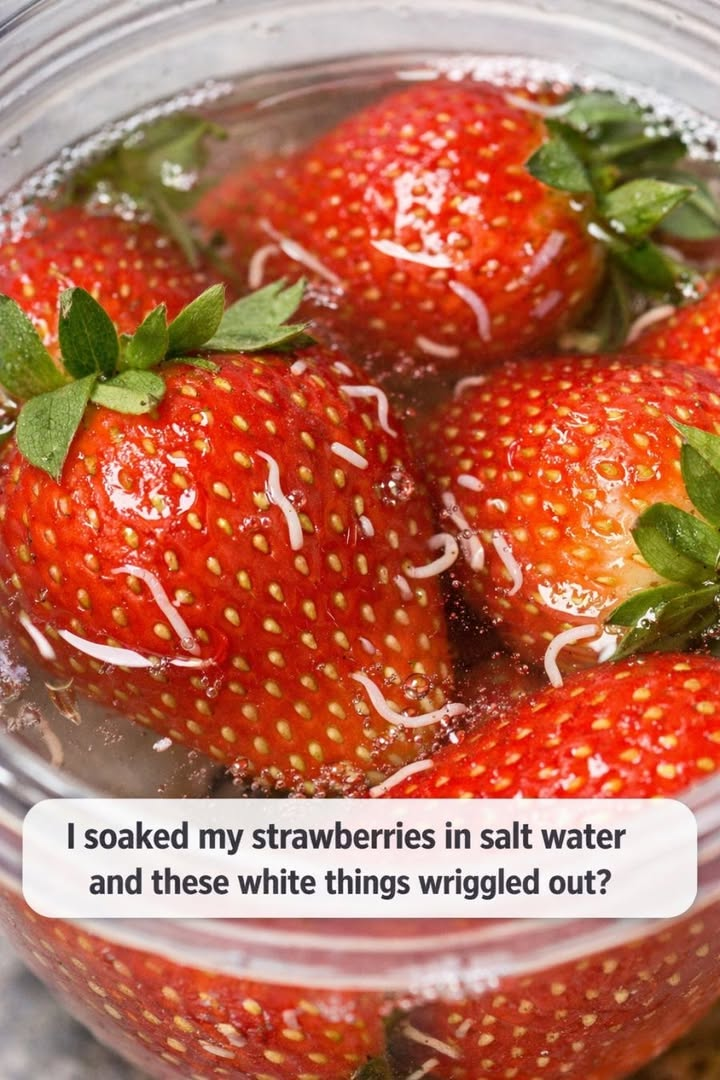
Seeing tiny white creatures or unusual objects emerge from a raspberry after soaking it in salt water can be genuinely alarming. Raspberries have a complicated surface made up of many small individual drupelets, and their hollow structure can provide places where tiny insects, eggs, larvae, or other debris may become difficult to notice.
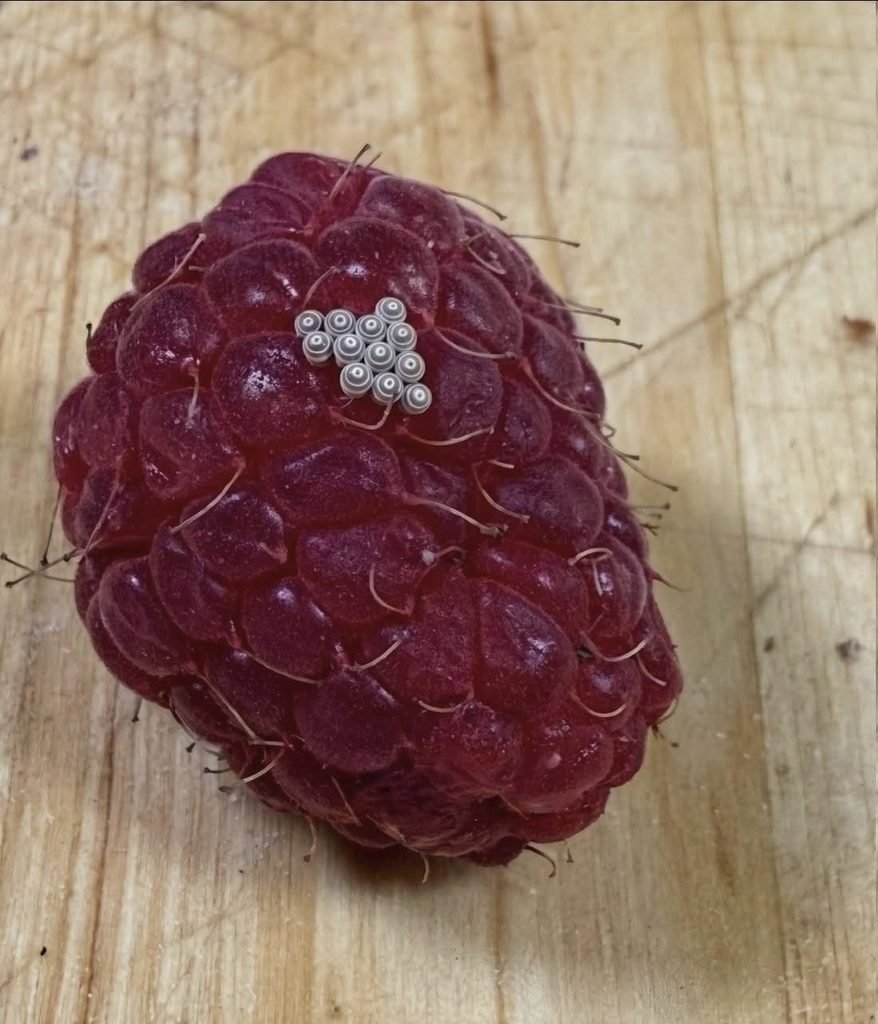
The image accompanying this claim shows a raspberry with a cluster of small, pale, round structures on its surface. Although the picture is often presented online as proof that raspberries are “full of worms,” a photograph alone cannot reliably identify exactly what those structures are.
They could represent insect eggs, larvae, or another type of small organism, but they should not automatically be described as human parasites.
The good news is that finding a tiny insect or insect larva on fresh produce does not automatically mean the fruit is dangerous or poisonous.
What matters most is how the fruit looks, whether it is fresh, how it was washed, and whether there are signs of spoilage or contamination.
Why Can Raspberries Contain Tiny Insects?
Raspberries grow outdoors, where they are exposed to insects throughout the growing season.
Bees, flies, beetles, moths, aphids, mites, and other small organisms interact with berry plants.
Some insects lay eggs on or near developing fruit. Certain fruit-infesting flies can also lay eggs in ripe or ripening berries, and their larvae can later be found inside the fruit.
This isn’t unique to raspberries.
Similar issues can occasionally occur with:
Strawberries
Blackberries
Blueberries
Cherries
Grapes
Figs
Peaches
Plums
Other soft fruits
Fresh produce is grown in an environment full of living organisms.
That is one reason washing fruits and vegetables before eating them is such an important habit.
Are the White Things Actually Parasites?
This is where the viral post can become misleading.
The word “parasite” is often used online to make an image sound more frightening than it really is.
A parasite is an organism that lives in or on a host and obtains nutrients at the host’s expense.
The small organisms sometimes found on fruit are much more likely to be associated with insects than with human parasites.
Insect eggs and larvae are not the same thing as intestinal parasites that infect humans.
For example, a tiny fly larva found on fruit is an insect larva.
It does not mean that the raspberry contains worms living inside a person’s body.