I Soaked My Raspberry in Salt Water and Saw White Wiggling Things — Should I Throw It Away?
Raspberries are delicate.
A harsh washing method can damage them and make them spoil faster.
A practical approach is to wash the berries gently under clean, cool running water shortly before eating.
Don’t crush or aggressively scrub them.
Because raspberries have a fragile structure, washing them immediately before consumption is often preferable to washing them long before storage.
Excess moisture can encourage deterioration.
Should You Use Salt Water?
You can encounter recipes recommending salt-water soaking for berries, but it isn’t necessary to turn every batch of raspberries into a salt-water experiment.
Salt water isn’t a substitute for proper washing.
It also doesn’t guarantee that every insect, egg, microorganism, or contaminant has been removed.
If you choose to soak berries, they should still be rinsed thoroughly afterward.
There’s also no need to use an extremely concentrated salt solution.
What About Vinegar Water?
Another popular social-media method involves soaking fruit in diluted vinegar water.
Vinegar can help remove some surface contamination, but it isn’t a magical sterilizing solution.
It also doesn’t guarantee that all microorganisms or insect material will be eliminated.
For most household situations, careful washing under clean running water is the essential step.
The most important thing is not to rely on viral “detox” or “parasite removal” recipes as if they were scientifically guaranteed.
Why Raspberries Are Especially Difficult to Clean
Raspberries aren’t smooth like apples.
Their surface consists of many small drupelets arranged closely together.
This creates numerous tiny spaces.
Dust, plant material, insects, eggs, and other particles can become trapped between them.
That’s one reason berries should be handled gently but carefully.
Blackberries have a similar structure.
The more complicated the surface, the more difficult it can be to visually inspect every part.
Does Washing Remove Pesticides?
Washing fresh produce under running water can remove some surface residues, dirt, and microorganisms.
However, washing cannot necessarily remove every pesticide residue, particularly substances that have penetrated plant tissues or are not readily removed with water.
The purpose of washing is primarily to reduce surface contamination.
It is not a guarantee that produce becomes completely free of every chemical or microorganism.
Can Eating an Insect Larva Make You Sick?
Accidentally consuming a tiny insect or insect larva is generally unpleasant to think about, but it does not automatically mean that a person will become seriously ill.
Humans regularly encounter tiny environmental organisms without realizing it.
The bigger concern with fresh produce is often microbial contamination or spoilage, rather than the mere presence of an insect.
That is why proper food handling remains important.
People with severe allergies should also be cautious because insect-related allergens can be relevant in certain circumstances.
What If the Raspberry Has Mold?
Mold is a different issue.
If raspberries have visible fuzzy mold, an unpleasant smell, excessive softness, leaking liquid, or widespread deterioration, they should be discarded.
Soft fruits are particularly vulnerable to mold because contamination can extend beyond the visibly affected area.
Don’t simply cut the moldy portion off a soft raspberry and assume the rest is safe.
If several berries in a container are moldy, inspect the entire package carefully and consider discarding it.
Why You Shouldn’t Eat Damaged Berries
Damaged fruit provides easier access for microorganisms.
A berry with:
Cracks
Punctures
Leaking juice
Extensive bruising
Mold
Fermentation-like odors
is more likely to deteriorate quickly.
If a raspberry looks questionable, there’s very little benefit in taking the risk.
Raspberries are inexpensive compared with the inconvenience of dealing with foodborne illness.
Can You Eat Raspberries Straight From the Garden?
Homegrown raspberries can be delicious, but they should still be inspected and washed before eating.
Garden-grown fruit can come into contact with:
Soil
Insects
Birds
Small animals
Dust
Compost
Garden chemicals
Contaminated water
Organic gardening does not mean that produce is automatically free from microorganisms or insects.
Good hygiene remains important regardless of how the fruit was grown.
What About Frozen Raspberries?
Frozen raspberries can also contain environmental organisms or microorganisms that were present before freezing.
Freezing preserves food but does not necessarily eliminate every microorganism.
If using frozen raspberries, follow the package instructions and handle them appropriately.
Frozen fruit is particularly useful in smoothies, oatmeal, sauces, and desserts.
Should You Be Scared of Eating Berries?
No.
There’s no reason to become afraid of raspberries because a viral photograph shows tiny organisms on one fruit.
Raspberries remain a nutritious food.
They provide:
Dietary fiber
Vitamin C
Manganese
Folate
Antioxidant compounds
Anthocyanins
Other polyphenols
They can be part of a healthy diet.
The appropriate response to a questionable berry is good food hygiene, not fear.
A Simple Raspberry Safety Routine
If you want to enjoy fresh raspberries safely, follow a few simple habits.
1. Inspect the berries
Look for mold, unusual discoloration, insects, damaged fruit, and signs of spoilage.
2. Remove questionable berries
If one berry is visibly spoiled or heavily infested, discard it.
3. Wash before eating
Gently rinse the remaining berries under clean running water.
4. Handle them carefully
Raspberries bruise easily.
5. Keep them refrigerated
Cold storage slows spoilage.
6. Eat them relatively soon
Fresh raspberries don’t have an extremely long shelf life.
7. Don’t eat visibly moldy fruit
When soft fruit becomes moldy, discarding it is safer than trying to salvage individual pieces.
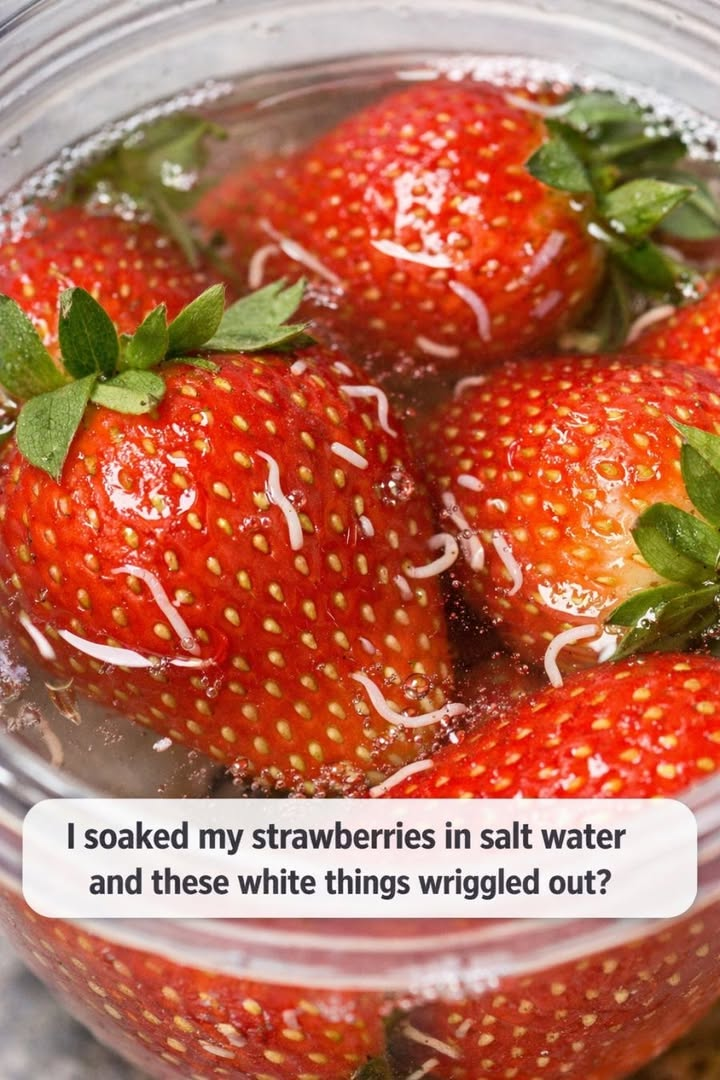
The Image Does Not Prove That the Raspberry Contains Dangerous Parasites
This is perhaps the most important point.
The photograph shows a raspberry with a cluster of unusual structures.
It is tempting to immediately label them “parasites” or “worms.”
But an image alone isn’t enough to identify the organism.
The structures could be insect eggs or another small organism, but definitive identification would require closer examination and, ideally, microscopy.
The dramatic wording of the viral caption should therefore be treated cautiously.
What About People With Weak Immune Systems?
People with weakened immune systems need to be particularly careful with food hygiene because certain foodborne infections can be more serious for them.
This includes some people undergoing cancer treatment, certain transplant recipients, people taking specific immune-suppressing medications, and others with significant immune-system impairment.
For these individuals, following food-safety recommendations is particularly important.
When in doubt about questionable produce, discarding it is the simplest option.
Final Takeaway
If you soaked a raspberry in salt water and saw tiny white moving organisms come out, don’t panic.
The organisms could potentially be insect eggs or larvae, but the photograph does not prove that they are dangerous human parasites.
Raspberries and other soft fruits can occasionally harbor tiny insects because they grow outdoors and have many small spaces where organisms can hide.
If you find a berry that appears heavily infested, damaged, moldy, or spoiled, throw that berry away. Inspect the remaining fruit carefully and wash it gently under clean running water before eating.
You don’t need to believe viral claims that every raspberry is filled with worms, and you don’t need to assume that seeing one insect means the entire package is dangerous.
The best approach is simple:
Inspect your fruit. Wash it properly. Discard fruit that looks spoiled or heavily infested. Keep fresh berries refrigerated and consume them while they are still in good condition.
Most importantly, don’t let a frightening social-media image convince you that ordinary fruits are inherently dangerous.
Raspberries can be a healthy part of your diet—the key is sensible food handling, not fear.