Most People Toss Eggshells, But Boiling Them Can Give Them a Useful Second Life
This is perhaps the most important gardening lesson.
A fertilizer program provides nutrients in appropriate proportions.
Eggshells mainly contribute calcium carbonate.
They do not provide a complete supply of nitrogen, phosphorus, potassium, and all the micronutrients plants require.
Imagine trying to feed a person by giving them only calcium.
Calcium is important, but it isn’t enough.
Plants work the same way.
If your tomato plant is yellow because it lacks nitrogen, adding eggshell powder won’t solve the underlying problem.
If your plant is wilting because its roots are damaged, eggshells won’t fix it.
If the leaves are burned because fertilizer concentration is too high, more amendments could make the situation worse.
Diagnose the problem first.
Then amend the soil accordingly.
Eggshells and Soil pH
Because eggshells are mostly calcium carbonate, they can also influence soil chemistry.
Calcium carbonate is alkaline, so sufficiently large amounts can gradually raise soil pH.
This can be useful in certain soils, but it can also be counterproductive if your plants prefer acidic conditions.
Before repeatedly adding large quantities of eggshells, consider your soil.
Plants have different preferences.
Blueberries, for example, prefer acidic conditions and aren’t a good candidate for casually adding alkaline materials.
A soil test is much more informative than guessing.
A Simple Way to Prepare Eggshell Powder
If you’re interested in recycling eggshells into your garden, this is a practical method.
Collect
Save your eggshells.
Clean
Rinse them thoroughly.
Heat
Boil them if you want an additional sanitation step.
Dry
Allow them to dry completely.
You can air-dry them or use gentle heat.
Crush
Break them into smaller pieces.
Grind
Turn them into a fine powder.
Store
Keep the dry powder in a clean, sealed container.
Use modestly
Add it to compost or soil rather than dumping huge quantities around every plant.
Don’t Put Wet Eggshells in a Container
One mistake is storing wet eggshells in a closed container for a long time.
Egg residue plus moisture can create unpleasant odors and encourage microbial growth.
If you want to save shells for later, clean and dry them first.
Dry shells are also easier to crush.
What About Eggshell Membranes?
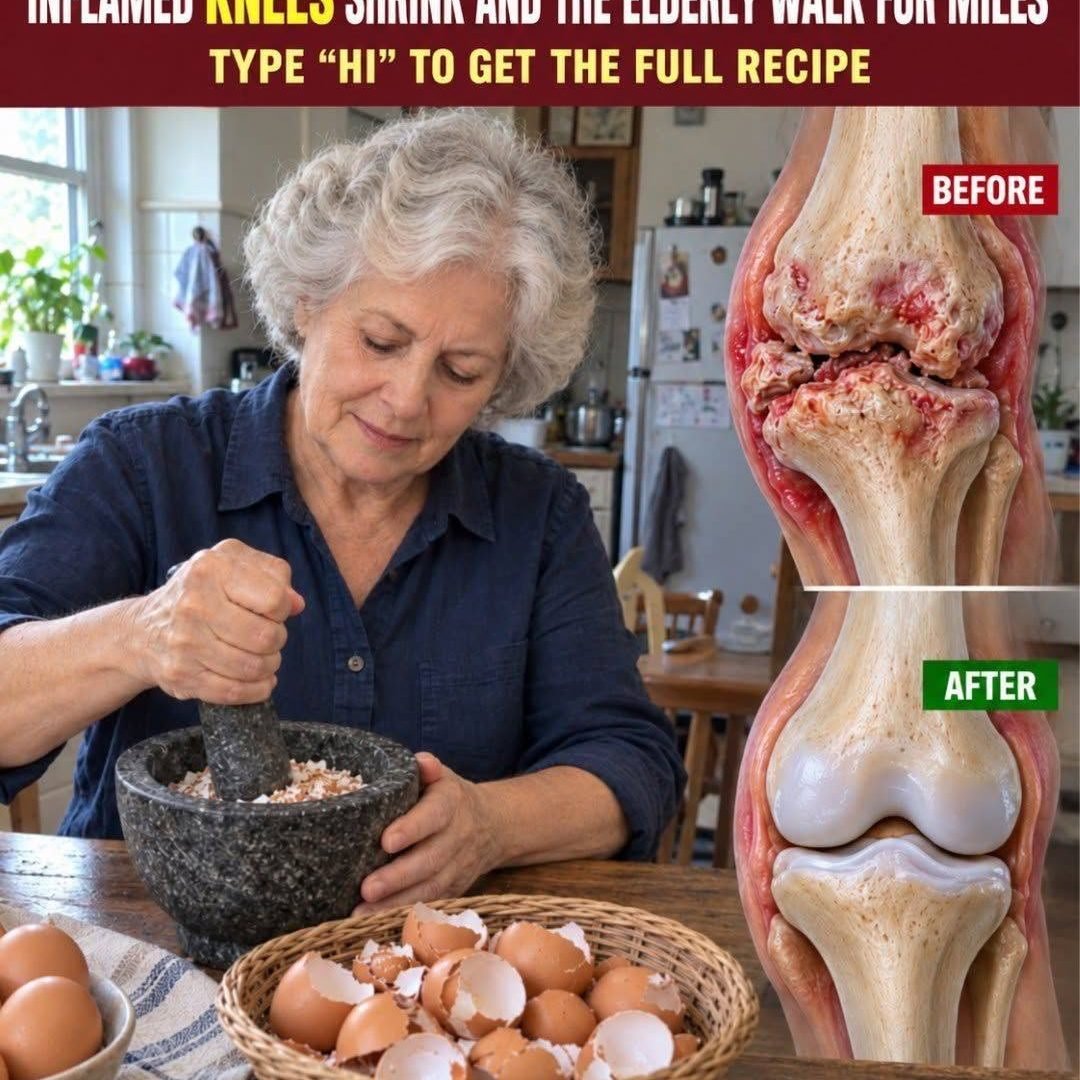
If you’ve ever peeled an egg, you’ve probably noticed the thin membrane attached to the inside of the shell.
This membrane contains proteins and other compounds and has attracted interest in nutritional and joint-health research.
However, this doesn’t mean that eating eggshell membrane will cure arthritis or eliminate joint pain.
Some preliminary research has investigated eggshell membrane supplements, but these products are very different from simply chewing leftover kitchen shells.
Again, viral health posts often take an interesting research finding and turn it into a much larger medical promise than the evidence supports.
Eggshells Can Reduce Kitchen Waste
Perhaps the simplest benefit is environmental.
Instead of sending every shell to the garbage, you can recycle it.
Eggshells can be:
Added to compost
Finely ground for suitable garden soil
Used in a carefully prepared calcium-containing plant-water experiment
Added to a worm bin in modest amounts
Disposed of through a local composting program
The goal isn’t to find a magical use for every shell.
It’s simply to get a little more value from something that would otherwise become waste.
What Eggshells Cannot Do
Be skeptical of claims that eggshells can:
Cure diseases
Replace medication
Guarantee bigger vegetables
Automatically prevent blossom-end rot
Kill every garden pest
Eliminate slugs
Make plants flower for years
Repair damaged roots
Replace balanced fertilizer
Detoxify the human body
Cure arthritis
Reverse osteoporosis without appropriate medical care
Eggshells have legitimate uses.
They don’t need exaggerated claims.
A Better “Eggshell Routine” for Gardeners
If you regularly cook eggs, here’s a simple routine.
After cooking: Rinse the shells.
During the week: Let them dry thoroughly.
Once you have enough: Crush them.
For compost: Add the crushed shells.
For garden soil: Grind them finely if you specifically want to recycle their calcium.
For plants with suspected nutrient problems: Don’t guess. Check the soil and plant symptoms first.
For tomatoes: Prioritize consistent watering and healthy root conditions rather than relying on eggshells to prevent blossom-end rot.
This approach is much more useful than blindly following viral gardening hacks.
The Bottom Line
The eggshells in the image aren’t worthless trash.
They contain a substantial amount of calcium carbonate and can have practical uses in gardening and composting.
Boiling eggshells can help sanitize them and can produce a mild calcium-containing water that some gardeners use on plants. Finely grinding the shells is generally more useful than scattering large pieces because smaller particles break down more readily.
But eggshells aren’t a miracle fertilizer.
They won’t automatically fix yellow leaves, guarantee healthy tomatoes, or eliminate garden pests.
And if you’re considering consuming eggshell powder for calcium, that’s a separate nutritional question that requires much more careful preparation and attention to safety.
The smartest way to use eggshells is simple:
Clean them. Heat-treat them when appropriate. Dry them. Grind them finely. Use them modestly. And don’t expect one kitchen scrap to solve every gardening problem.
Sometimes the best household “hack” isn’t a miracle at all.
It’s simply finding a useful second life for something you were about to throw away.